We all knew it would start up again—the shootings on a massive scale, the unnatural silence in the evenings, the siege mentality—but for the moment, for today, Karachi was getting back to its feet, as it had always been able to do, and that didn’t just mean getting back to work, but getting back to play: friendship, chai, cricket on the street, conversation.
The K word...
“We all knew it would start up again—the shootings on a massive scale, the unnatural silence in the evenings, the siege mentality—but for the moment, for today, Karachi was getting back to its feet, as it had always been able to do, and that didn’t just mean getting back to work, but getting back to play: friendship, chai, cricket on the street, conversation. I couldn’t help feeling that, in the midst of everything that was happening, Karachi had decided to turn around and wink at me. And in that wink was serious intent: yes, the city said, I am a breeding ground for monsters, but don’t think that is the full measure of what I am.” - Kamila Shamsie, Kartography.
Academic discourse on Karachi, arguably about the most important city of Pakistan, is thriving like ever (as usual) to agonising degrees. Books, documentaries, op-eds; the city has been garnished aplenty with all (with most telling us there’s no hope for the city). But while strategic experts and cringe-worthy TV anchors dive head first into ‘objective’ reporting on the city’s affairs, they often neglect the spirit of the city. The usual sights, sounds and smells that form the defining feature of any city are just so convenient to brush off when it comes to Karachi. But, beneath the gloomy reporting and exaggerated doom, this city remains, quintessentially, just another mega city. And so it took me just a while to realise that when you’re in this city of 24 million, it’s rarely about the headline inspiring events than it is about the very basic street life. Mad, energising and lively. Here’s presenting you some impressions about Karachi, as seen through my small-town eyes…
 amalgamation of salt, sea, garbage, excreta and possibly mangroves and palms; the aroma hits you right in the head as you land in Karachi, ferociously brushing against the inners of your nostrils and swirling your entire olfactory apparatus into motion. It only lasts some hours, though, thankfully, and then your standard response to anyone complaining about stench comes out to be, “Smell, what smell?!”
  the city among ethnic lines is troublesome, and especially with regards to certain no-go areas. (“We are nearing Surjani Town now. Hide your phone. We are nearing Lyari now. Hide your head!”)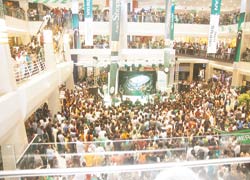
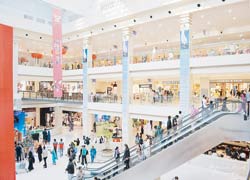 Malls dot the city like crazy. No other city of Pakistan even comes close to Karachi’s solid association with the erection of high-rising shopping malls. They are everywhere and gainfully visited. You might easily navigate through Karachi avoiding some dangerous area, but to be in the city and shun all malls is downright impossible. Also, if you ever get lost in Karachi, the odds are in favour of you having lost your track in a multi-storeyed building than having been abducted by a militant outfit.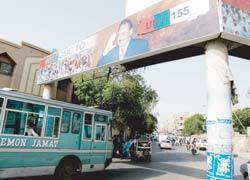
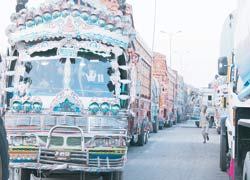 How Karachi totally, desperately, longingly needs a mass transit project. Despite there being no new project on the cards for good, even plans to revive the Circular Railways have faced the axe. While Lahore is bracing itself for the second one, a train after the buses, Karachi seems to be content with its objectionable intimacy with W11. Okay, those things are great, but probably for heritage tours or something. Or the Karachi Museum, in all honesty!
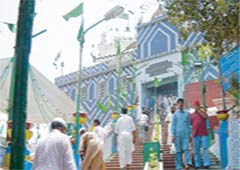 The shrine of Abdullah Shah Ghazi, cloaked as it is in the fables, of protecting the city from sea-storms and floods; and how it remains eternally in a state of construction. This time, as is true for the last one, development projects are in works around and in the shrine. It’s a little disconcerting to see the shrine shrouded by heaps of concrete all around, but then there are the pigeons. And those things, with their automated flights and springy motion, remain the only reminder of this place’s promise.
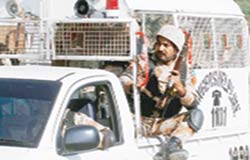 Since my photoreceptors are screwed up and can’t delve much into colours - I won’t go about the fancy details, but did the Rangers really need that paint company to put its ad so brazenly on the check-posts? Of all the outrage directed at some local films regarding in-your-face placement of ads, some could’ve been rightly re-directed here!
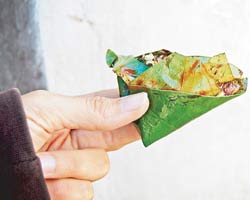 Paan is to Karachi what spinach is to Popeye: sacred, indispensable and omnipresent. As I’ve written before, it’s wrong to allocate tobacco a status other than a food supplement in Karachi. Almost every person you talk on the roads of Karachi to usually listens to what you’re saying, then leisurely decides on either swallowing or spitting out the red liquid that’s already formed a tsunami inside his mouth (his ultimate choice being the latter), and then replies with a crimson tongue. And I’ve always wondered if this is due to paan and gutka overdose that Karachiites have been programmed to producing unusual sounds, like putting an ‘N’ in Karachi.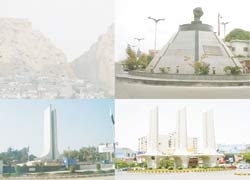
 The disconnect that exists between different neighbourhoods of Karachi is remarkable. This, ostensibly, can be found in any city with the dimensions that our city by the sea boasts of; but owing to the ethnic and linguistic boundaries within Karachi - the disconnect here is often impersonal. Sohrab Goth might be burning, and Defence would be excessively occupied with shopping in its impressive Sunday bazaar (the closing of which, unfortunately, has left a vacuum in Karachi’s weekend to-do list). Quaidabad would be brimming with milad’s lightning and mehfils; and Clifton would be breezily doing its own thing. And this perhaps is essential to Karachi’s survival, and its distinct identity as a city of such supreme madness and potential!