For someone who cherishes her sleep, 7 a.m. is not the finest hour of my day. However, I managed to surprise myself and my roommates when I jumped out of bed to greet the second day of Young Leaders Conference (YLC) with unusual enthusiasm.
Exploring realities at YLC 2016
For someone who cherishes her sleep, 7 a.m. is not the finest hour of my day. However, I managed to surprise myself and my roommates when I jumped out of bed to greet the second day of Young Leaders Conference (YLC) with unusual enthusiasm. Sleep was forgotten, makeup routine skipped and breakfast gobbled up as quickly as possible - for all my thoughts were centred at only one event that awaited me that day.
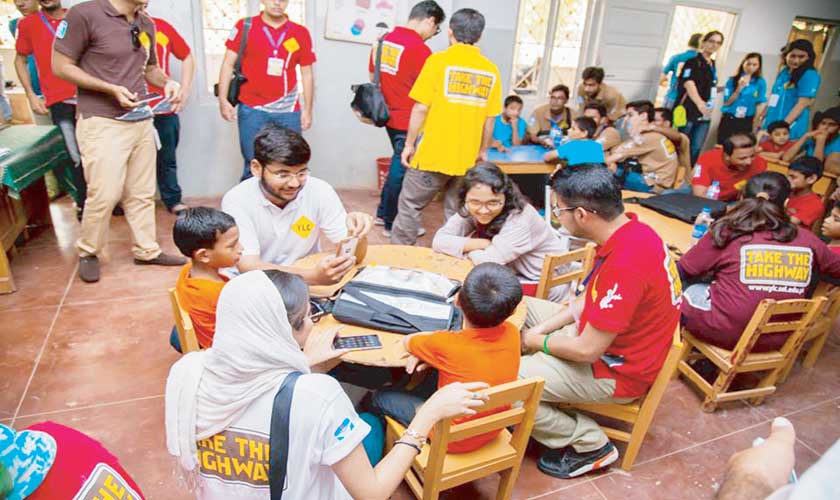
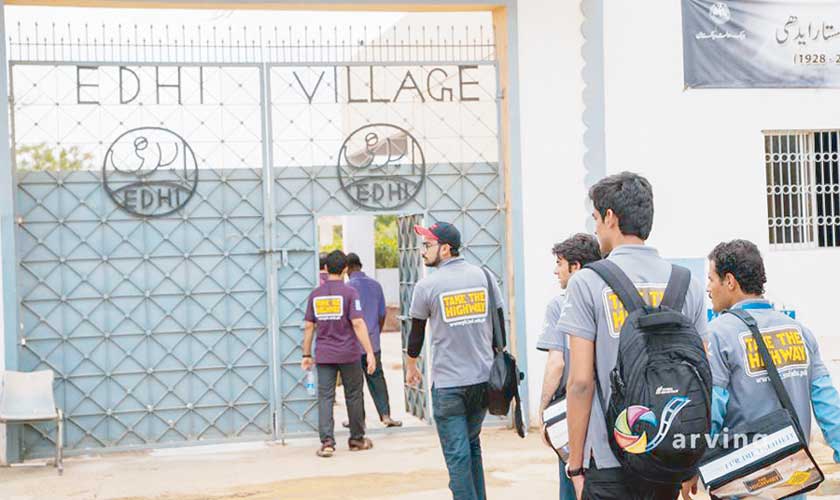
Patience is not one of my best traits, and yet I was able to exercise a ton of it that morning, when we uncomplainingly sat through a couple of sessions before venturing off to our destination. The excitement of visiting Edhi Village was increasing by the second and I felt a new spring in my step.
Shireen Naqvi (fondly known as Shi-Pa), one of the co-founders of the School of Leadership, led us through a session before the much anticipated field trip. Sharing insight on the man that was Abdul Sattar Edhi, an inspiration to many in our nation, Mrs. Naqvi related her personal experiences with him and his organisation. I sat through the hours long sessions, wondering which acts of the man struck me the most. Was it the way he refused heavy checks from all governments except his, or that he had 80 lakhs in rupees coming in to his organisation every day, and yet he chose a life of extreme simplicity at his humble home in Meethadar? I can’t be sure, but one of Shi-Pa’s stories which mercilessly tugged at my heartstrings was one she had witnessed firsthand.
Flashback to 23 years ago:
a life less ordinary
While walking along the roads of Meethadar, an extremely displeasing smell wavered into her nostrils, causing her to instinctively wrap her dupatta around her nose and run far away from the source. All that mattered was putting a great deal of distance between her and the source of the horrific smell. Another pedestrian in the vicinity seemed to have experienced the same smell, but instead of cringing, Shireen saw his face contort into an expression of curiosity and excitement. Quite taken aback, she watched this mysterious man defy the laws of human nature and make his way toward the source rather than away from it.
Who in their right minds would want to know where such disgusting matter resided? Confused and utterly bewildered, she started observing the man from her safe zone.
The mysterious man started walking towards a pool of stagnant, sewage water. He bravely took a sniff inside, then abruptly took off his slippers and dived head first into the water. The silent observer could not believe her eyes. What was happening, and more importantly, why? From her vantage point, she saw the man emerge from the water. This time, his expression gave away a feeling of contentment and satisfaction, as he pulled the body of a child from the depths of the water.
The baby could not have been more than a year old. Ignoring the pungent smell of maggots that emerged from the rotting corpse, the man cradled the child in his arms and within a few minutes, had him gently cleaned up in his own home. Paying no heed to his clothes, dirty and stained, he hugged him to his chest and began to walk purposefully towards his destination. Our witness followed him all the way to a graveyard, where he was seen digging a grave with his own hands, assisted only by the keeper of the yard. He recited the necessary funeral prayers, buried the unnamed and went on his way.
No cameras, reporters or journalists were present at the scene. This was probably one of the many untold stories of Abdul Sattar Edhi.
Shireen Naqvi played her role well. I was completely mesmerised by Pakistan’s favourite humanitarian who went out of his way to help the living and the dead. Now more than ever, I wished to see the village he had built for the homeless, the orphans and the differently abled. My earlier excitement at visiting the Edhi Village had gone up by a storm, and I was well prepared for what was about to come. Or I thought I was.
The calm before the storm
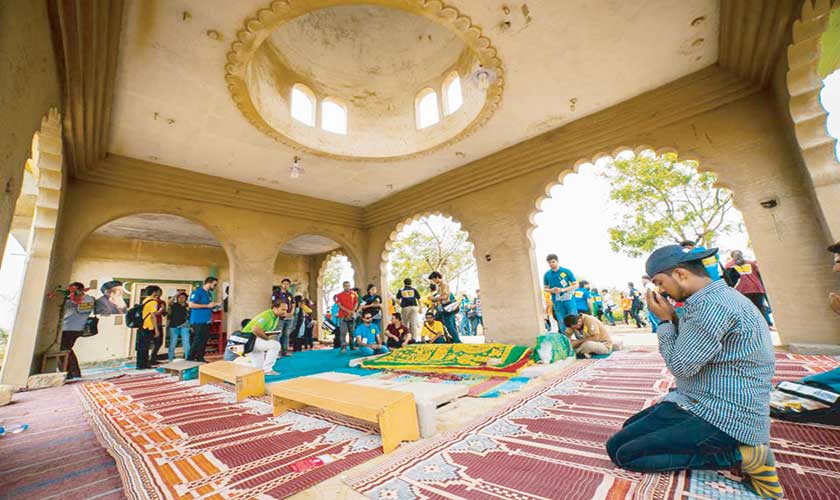
It is difficult to focus on one aspect of the Edhi Village. The huge area of land is home to people of all ages who were abandoned by their families due to a variety of reasons - ranging from physical impairments to poverty-stricken homes. I walked along the corridors of this homely and simple place. Every tree that was planted, toy that was displayed, and seat that was placed had its purpose in the place. We arrived early and so were fortunate enough to meet some students during their school hours. The shy smiles they gave us and the happy stories they related were a stark contrast to the place they resided in.
Falling into conversation with the teachers was easy. One of them taught the fourth grade and was happy to tell me that she felt motherly protectiveness for all her children at the Village. ‘They fight and cry and laugh and have fun like normal kids,’ she said and added, ‘I love being a part of their lives.’
In contrast to the cheerful setting of the school, was the gloomy home of the physically and mentally impaired. While I had spent most of my time at the school talking to the children, and chatting away about childlike things, I was at a complete loss in this new area. My eyes scanned the plain, tiled room where residents crowded on the floor. I want to say that I reciprocated their excitement upon seeing us, but it would be cruel to lie.
Gearing up for the ride
The sight was, to put it simply, rather pathetic. I stood at a side, observing the actions of my friends and wishing that helping came as naturally to me as it was to them. What do you say to a person who you’re not sure can understand you? My experience at Darul Sukoon could not have helped me communicate here, and I felt smaller than ever in a crowd that was foreign to me.
I was surrounded by people who were somehow differently abled than I was. Some were lacking limbs, others sight, some had not aged mentally. They crawled on the floor, pushing themselves to eagerly welcome us. Arms reached out for handshakes and smiles brightened the room that was starting to physically hurt my heart.

From my corner, I saw a participant sitting beside a man who could not even move his head, let alone the rest of his body. Bees swarmed on his half-naked body, and the boy tried to wave them away. He did it once, twice and then again for the third time. I felt the hair at the back of my neck rise up. Was this the fate of the man lying before me - too helpless to even protect himself from the wrath of innocent flies? Overcome by pity, I averted my gaze and raced out of the room. ‘I hope I’m never put into such a position of complete dependency,’ I thought, unaware of how soon I’d be expected to face my fears.
The highway is bumpy
Mere hours later, I walked down to the dining hall, clad in semi-formal kurti, walking daintily towards what I expected to be a fine night. The earlier events had been shamelessly compartmentalised to the very back of my head and I felt there was absolutely no need to dig out my horrors just yet.
Unfortunately for me, I was not allowed to forget that easily. When I reached my destination, I was completely caught off guard - along with my fellow participants. The management team stood solemnly at the entrance. With small pieces of black cloth, they started to bind us. Some were blindfolded, others had their legs tied together, and I had my hands secured firmly behind me.
‘Go on, it’s dinner time,’ nodded the Enabler when he was done tying me up. I was still too confused to follow instructions. Only when I realised that my friend was blindfolded and could not see, did I force my feet to move towards her and try my level best to guide her up the staircase using only my voice. The fear was evident on her face. One wrong move, and she could trip her way down to a serious injury. ‘Stay close to me,’ she begged, and I desperately tried to reassure her.
When we finally made our way upstairs to the dimly lit dining hall, we came face to face with a scene far worse than the one I saw at the Edhi Village. My very own friends, people I had been laughing with just hours ago, were crawling on the floor, hanging on to their friends, and desperately trying to move around with only each other as support. Everyone was differently-abled.
On the announcement of dinner, there was no sign of the usual rush towards the buffet tables. My hands were not very useful, so I was entirely dependent on my friends to feed me, and they in turn were relying on me to guide them across the floor. With teamwork, blunders, and a lot of spills on our evening clothes, we managed to get through the meal with as much grace as was possible. Other people were not so lucky.

Scanning the room made my stomach churn. Two guys, both blindfolded, were attempting to fix themselves a plate working only by their instincts. Enablers were walking around, feeding spoonful(s) to anyone and everyone. My roommate was at the other end of the hall, trying to crawl with her right hand bound to her leg. A boy I had never noticed before, was hopping around, asking strangers if he could be of any assistance with only his one working hand. All around me, perfectly fit people were tasting the bitter truth of every differently-abled person’s reality. ‘I have lost my appetite,’ was overheard, and I could not help but sympathise with the speaker. A question sprang to my mind - for how long do the disabled ignore their pangs of hunger? The ones who are out on the street, who have no friendly faces willing to guide and support them through something as simple as dinner.
I tugged at my folds, desperately wishing to break free. My shoulders were hurting, and I despised the fact that I had to ask my friend to move the hair from my face. Immediately, I was reminded of the man with the flies, and for the first time I felt something different. Earlier, I was overcome by pity for someone whom I had unconsciously categorised as an unknown specie, living in another world - one I could easily turn my face away from. Several years of walking past them at roadsides had desensitised me; I had mastered the art of ignorance. This time it was different. I was not standing beside him. I was him.
The thing about empathy is that we all like to believe we feel it, but unless we’re physically pushed head first into the same situation, it isn’t really there. I barely lived an hour of the man’s reality, with my external surroundings far different from his, so I wouldn’t be totally right to say that I faced his struggles completely. However, it is undeniable that a peek into his life greatly helped me understand that his world and mine are very much one and the same. I am by no means any better than him, only blessed and privileged by circumstances which I can’t really claim credit for.
The blinds come off
If anyone of us thought the world would be right again after an hour of this experience, he was severely mistaken. As the eyes eagerly opened up to welcome light, they were greeted with an unexpected air of darkness and gloom. The mood was subdued. Many could not voice their emotions during this time. Umair Jaliawala, the trainer and CEO of YLC, took this opportunity to help people express their deepest sentiments right after the activity. There was no lecturing, no declaration of things we should or shouldn’t do; no one stood up to make grand speeches about the fate of country. Only simple, raw feelings were expressed and emotions given a platform to flow freely. In their own unique way, participants stood up to voice their sense of realisation when they finally related their situation with those whom they had met with earlier that day. By the end of the session, there wasn’t a dry eye in the room.
‘I didn’t know what I was doing,’ said Anooushey Khan, breaking down into tears, ‘People came up to me, and I couldn’t even choose what they were feeding me. Somebody put a spoon of rice in my mouth, another made me eat salad. I couldn’t walk until someone held my hand; even then I was afraid. But, I had to trust other people for there was nothing I could do on my own.’
The people behind this exercise had achieved their purpose. Making us ride one of the most daunting emotional roller-coasters had us geared up for what was to come in the following days. We were meant to feel, for only when we feel the importance of being privileged, will we be able to make the most of our abilities.
The entire night had been overwhelming. I was tired, emotionally exhausted, and wanted nothing more than to escape to the safety of my room. But my friends had other plans. When overcome by emotion, we sought relief in each other and closed the night with hugs and many thanks for the mutual support that let us survive through this task together. It is safe to say that on my 15-minute walk back to my room, I thanked my Creator for the pain I was able to feel in my legs.