Allah’s Apostle (S.A.W) said, “I am only a human being, and you people (opponents) come to me with your cases...

BITS ‘N’ PIECES
Narrated Um Salama (R.A):
Allah’s Apostle (S.A.W) said, “I am only a human being, and you people (opponents) come to me with your cases; and it may be that one of you can present his case eloquently in a more convincing way than the other, and I give my verdict according to what I hear. So if ever I judge (by error) and give the right of a brother to his other (brother) then he (the latter) should not take it, for I am giving him only a piece of Fire.”
Sahih Bukhari, Volume 9, Book 89, Number 281
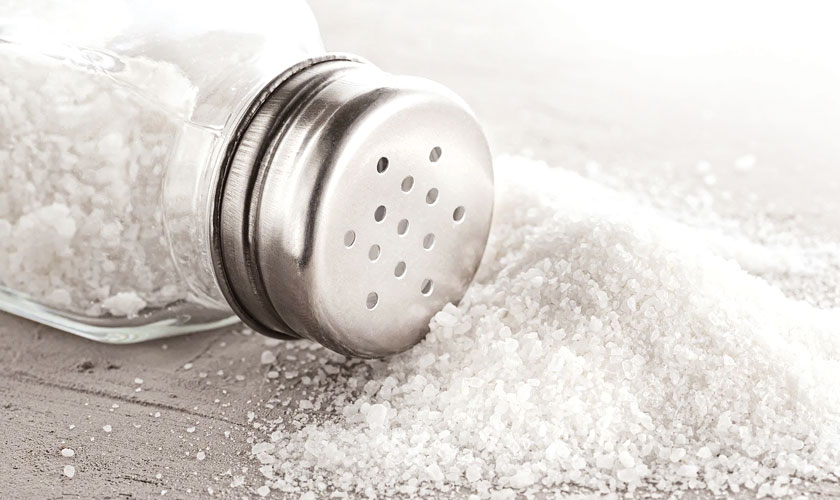
Long before coins and paper notes became the standard form of currency, civilisations across the world relied on a variety of natural resources to trade and transact. Among these, one of the most fascinating and universally valued commodities was salt. Known for its crucial role in preserving food and enhancing flavour, salt was so valuable in ancient times that it was quite literally worth its weight in gold - and in many societies, it was used as currency.
The word ‘salary’ itself has roots in the Latin word salarium, which was the allowance given to Roman soldiers to buy salt. While some historians debate whether Roman soldiers were actually paid in salt, it is generally agreed that salt was considered so essential and costly that it influenced the development of monetary terms and compensation. Salt was indispensable for food preservation in an age without refrigeration, making it a strategic resource, especially for armies on the move and communities living far from coastal salt supplies.
In ancient China, salt was one of the earliest government-controlled commodities. During various dynasties, the Chinese state maintained a monopoly on salt production and trade, using it not only to generate revenue but also as a medium of exchange in remote provinces where coinage was scarce. Salt cakes were sometimes stamped and used as standardised currency.
In sub-Saharan Africa, salt was traded in slabs and was often exchanged for gold - demonstrating just how prized it was. The Sahara salt trade routes, especially those linking places like Taghaza in Mali to the wider continent, are well-documented examples of how salt served as a form of wealth and currency. Caravans carried heavy loads of salt across vast deserts, and the salt was often worth more than the gold it was exchanged for.
Even in medieval Europe, salt was so expensive and heavily taxed that it sometimes caused unrest. The gabelle, a salt tax in pre-revolutionary France, was one of the many grievances that led to public discontent before the French Revolution. Salt’s economic and political influence cannot be understated - it was central to trade, taxation, and even conflict.
Salt’s role as currency gradually diminished with the advancement of coinage systems and modern banking. Yet, its legacy survives in language, culture, and history. Phrases like ‘worth his salt’ still reflect the high regard in which this humble mineral was once held. From the Roman Empire to the African salt caravans, salt was far more than a seasoning - it was a symbol of value, survival, and human ingenuity.