Quarantine
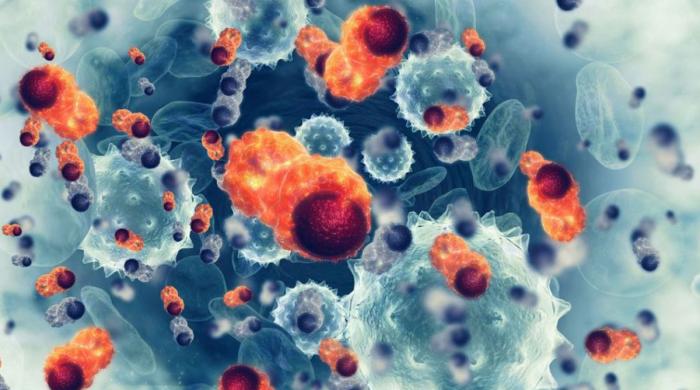
If you have not heard the word Quarantine before, either you are lucky enough to never have a virus in your computer, or you never had an antivirus installed in your computer – in which case please do, because it will find your computer and it will take away everything you hold dear (on your computer, at least). The forced segregation of the infected from the uninfected so that the uninfected doesn’t get infected, while quarantine has its applications in medical science as well as computer science, the term itself precedes the concept of computers.
The word “Quarantine”, like many good things including Pizza, came from medieval Italy. However don’t let the idea of a pizza fool you here, for the events that popularized this word were not that good, or appetizing for that matter. The event I am referring to is the Black Death of the 14th century Europe.
After the fall of the Roman Empire in 5th century, Europe was submerged into the Dark Ages for centuries. It was not a good time to be living in: superstition ruled over reason and brutality outperformed justice.
Things gradually turned better towards the beginning of the 14th century. Most importantly and prominently, European trade expanded towards the East due to Mongols who opened the trade routes of the Central Asia and ended the Islamic monopoly from the Silk Road, through their unified empire. But along with silk, spice and other goods, the trade route also carried with it an invisible good (can I call it bad instead?) from China to Europe: the Plague.
In 1347, the port of Sicily witnessed a strange ship full of corpses. The residents of the town tried to banish the plagued ship from their harbour but it was too late. The unseen enemy had already crept into the city. And this is when the western world’s worst biological disaster of the recorded history began.
The disease spread at startling speed throughout Europe and infected almost every city and town of the continent. It was the last nail in the coffin to the agricultural and commercial superiority of medieval Europe.
Highly contagious as the epidemic was, it wiped out almost 30% population of the whole continent within a few years. In some cities, it was like half of the people you knew today were dead tomorrow. Like every natural calamity, this one too was attributed to God’s wrath punishing the world for its sins. People turned to religious zealots who, in a mad frenzy and hysteria, perpetrated torture and murder of those who were considered offenders of God. A search for witches began. So if you managed to survive the disease, the resulting famine and mass killings were likely to get you.
It is believed that the fairytales like Pied Piper and Hansel & Gretel that show the desperation for getting rid of rats (which were the primary agents for the transfer of disease) and starvation to the extent of cannibalism, also have their roots in the Black Death era. There is a strong possibility that the children’s poem “Ring a ring o’ roses” originated in the same times when people, too scared of a red rash on their skin (ring of roses) which was an indicator of the disease, used to carry herbal poises in their pockets to ward off the foul smell of disease and death, as well as avoid the company of people who coughed or sneezed (a-tishoo) to eschew infection lest they “all fall down” and die.
Having realised that the disease came from the East through trade ships, the Doge of Venice decreed that all ships entering the city must remain isolated first outside the city – originally at a nearby island – to see if plague symptoms developed. Since the decree stated that ships should stay out for forty days, and Italian for forty is “quaranta”, this rule came to be known as “quarantine”.
The isolation principle did not last as long as its word “Quarantine”, which stuck in language and still reminds us of a sinister episode in human history.