
Indian coronavirus vaccine 'highly effective': study
The WHO said the Indian-developed vaccine has a 78-percent efficacy rate after two doses over a month
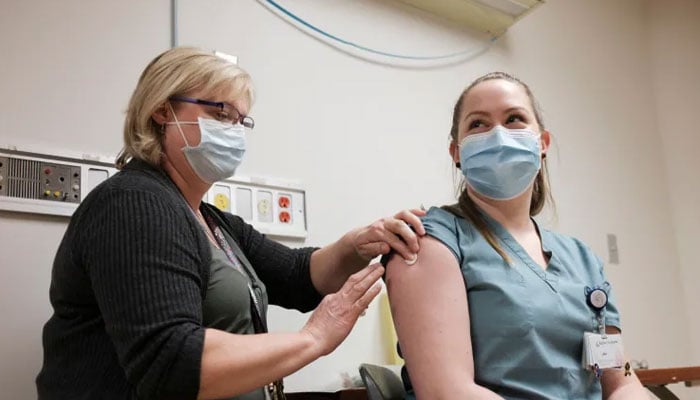
PARIS: Covaxin, the first Covid-19 vaccine developed in India, is "highly efficacious" and presents no safety concerns, according to a study published in the Lancet on Thursday.
Covaxin, developed by Bharat Biotech, gained emergency approval from the World Health Organization last week and has already been cleared for use in 17 countries.
The UN body has described it as "extremely suitable for low- and middle-income countries due to easy storage requirements".
Some of the other approved vaccines must be stored at very low temperatures, which throws up logistical and cost problems.
Covaxin "was highly efficacious against laboratory-confirmed symptomatic Covid-19 disease in adults," the report said.
The jab was also "well tolerated with no safety concerns raised in this interim analysis", it added.
The Indian-developed vaccine has a 78-percent efficacy rate after two doses over a month, according to the WHO.
It has joined the anti-Covid vaccines produced by Pfizer/BioNTech, Moderna, AstraZeneca, Johnson&Johnson, Sinopharm and Sinovac on the WHO-approved list.
The roll-out of Covaxin can "increase the finite global manufacturing capacity, and improve insufficient supply of vaccines which disproportionately affects low-income and middle-income countries", said Chinese researchers Li Jingxin Li and Zhu Fengcai, who did not take part in the study.
They did however mention certain limits to the study, saying that as the trials had been conducted solely in India, there was a less ethnically diverse study group.
Also, the studies were carried out between November 2020 and January 2021, before the more contagious Delta variant of the virus became widespread.
But despite the trial dates, the researchers involved were able to identify which of the patients were infected with the Delta variant. For this sub-group the study found that Covaxin still provided protection against Covid, but was slightly less effective.


-
 All you need to know guide to rosacea
 -
 Prevent cancer with these simple lifestyle changes
 -
 Experts reveal keto diet as key to treating depression
 -
 Skipping breakfast? Here are some reasons why you shouldn't
 -
 Sciences reveals shocking body response against heart attack
 -
 Anti-inflammatory teas to keep your gut balanced
 -
 Emma Stone reveals she is ‘too afraid’ of her ‘own mental health’
 -
 5 simple rules to follow for smooth, healthy hair