
Kerala battles 'rat fever' outbreak after worst floods in a century
Kerala is battling an outbreak of a bacterial disease that authorities suspect has killed dozens of people since mid-August after the worst flooding in a century.
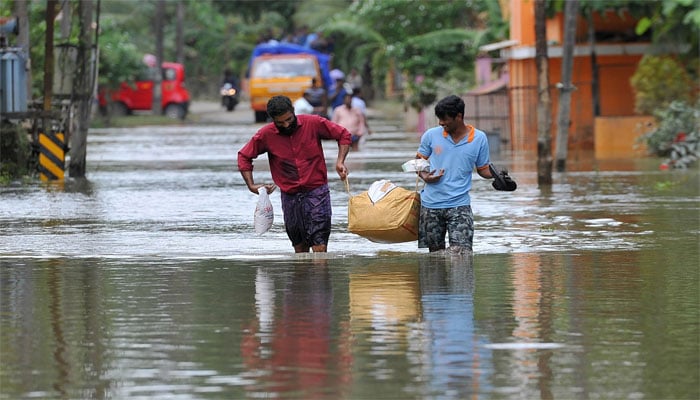
NEW DELHI: Kerala is battling an outbreak of a bacterial disease that authorities suspect has killed dozens of people since mid-August after the worst flooding in a century.
A health ministry spokesman said as of Sunday there had been nearly 200 confirmed cases of what is locally called rat fever - the waterborne disease leptospirosis transmitted via the urine of infected animals, with symptoms including muscle pain and fever.
The surge in cases comes after torrential rain beginning on Aug. 8 flooded almost the entire state, killing hundreds of people, destroying thousands of homes and causing at least 200 billion rupees ($2.81 billion) worth of damage.
The health ministry began distributing preventive medicine last month and warned about the outbreak of leptospirosis and other waterborne diseases such as typhoid and cholera, Health Minister K.K. Shailaja told reporters.
Local media reported three leptospirosis deaths on Monday.
“The victims had unfortunately not taken preventive medicine,” the minister said.
Overall, nine deaths from the disease have been confirmed, but the number may rise to over 40 pending full medical reports, the ministry spokesman said.
FAST INFECTION
Leptospirosis rarely spreads from person to person and can be treated with common antibiotics.
“In the past week, we have seen about 30 deaths in Kozhikode and Wayanad,” said Mohammed Javeed, internal medicine specialist at a private hospital in Kerala, referring to two of the worst flood-affected districts on the state’s southwest coast.
Javeed said the state has leptospirosis cases every monsoon season as paddy fields fill with water, increasing the chance of infection for farmers, especially through wounds such as cuts.
Of particular concern, however, is that some of the victims this year did not have usual symptoms such as mild jaundice, blood in urine or bleeding spots on the skin, he said.
“This time it is a fast, progressive infection,” Javeed told Reuters. “The recent deaths indicate clearly the threat of an epidemic.”
Medical professionals are continuing to dispense preventive medicine in the form of tablets which need to be taken once a week for a month, Javeed said.




-
 Poll reveals majority of Americans' views on Bad Bunny
 -
 Man convicted after DNA links him to 20-year-old rape case
 -
 California cop accused of using bogus 911 calls to reach ex-partner
 -
 'Elderly' nanny arrested by ICE outside employer's home, freed after judge's order
 -
 key details from Germany's multimillion-euro heist revealed
 -
 Search for Savannah Guthrie’s abducted mom enters unthinkable phase
 -
 Barack Obama addresses UFO mystery: Aliens are ‘real’ but debunks Area 51 conspiracy theories
 -
 Rosie O’Donnell secretly returned to US to test safety