Tokyo: Japan on Saturday launched the third satellite in its effort to build a homegrown geolocation system aimed at improving the accuracy of car navigation systems and smartphone maps to mere centimetres.
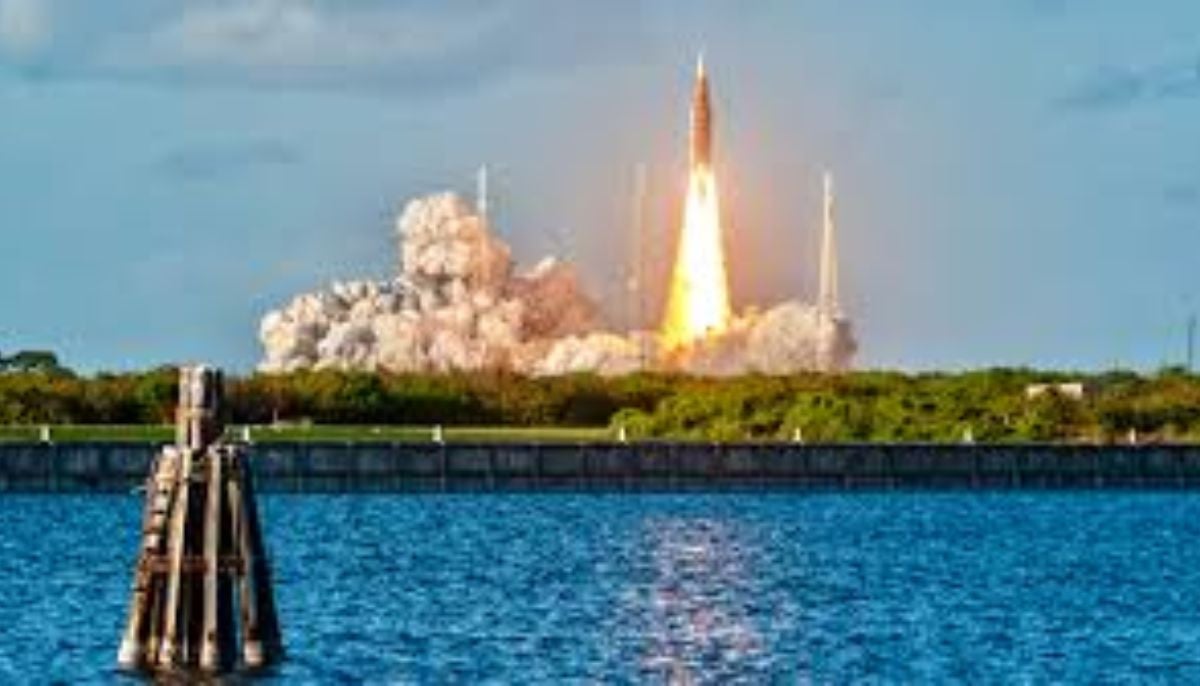
An H-IIA rocket blasted off at about 2:30 pm (0530 GMT) from the Tanegashima space centre in southern Japan, according to the Japan Aerospace Exploration Agency (JAXA).
The rocket successfully released the "Michibiki" No.3 satellite about 30 minutes after launching.
"The rocket flew as planned, and the agency confirmed that the Michibiki No.3 was released with no abnormalities 28 minutes and 37 seconds after the launch," an official statement said.
The launch was initially scheduled last week but was postponed due to a technical glitch.
Satellite geolocation systems, initially designed for the US military, now power countless civilian applications, from car navigation to internet browsing on mobile phones.
Japan relies on the US-operated Global Positioning System (GPS). Saturday´s launch was part of a broader plan to build a domestic version with four satellites focusing on the country and wider region.
The first satellite was put into orbit in 2010 and the second was launched in June.
The fourth is to be launched by March 2018 to start up the service.
The Japan-built system will still need to operate in tandem with GPS.
Though GPS is widely used in Japan, having supplementary satellites is important in a country where mountainous terrain and high buildings may interfere with its signals.
Michibiki, meaning "guidance" in Japanese, will cover the Asia-Oceania region and is intended for civilian use.
Japan plans to boost the number of its satellites in orbit to seven by around 2023.


-
 Meet the ‘last titan’: Giant new dinosaur identified from fossils in Thailand
 -
 Can we finally find aliens? Scientists reveal a surprising new ‘organizational’ approach
 -
 Study reveals how to tell real alien life from chemical fakes
 -
 Scientists find hidden third ancestral group in Japanese genomes
 -
 SpaceX ‘Space Junk’ is on a collision course with the Moon, scientists say
 -
 Do you know what happened on May 10, 1967? NASA's M2-F2 disaster explained
 -
 Why the Southern Ocean is melting: Antarctica’s sea ice resilience reaches a breaking point
 -
 Giant black holes are cosmic ‘Frankensteins’ built by mergers, new study reveals