Why NASA scientists believe Scotland holds clues to Mars’ ancient past
1.2-billion-year-old Scottish rocks help NASA solve a Mars mystery

NASA scientists, Goddard Instrument Field Team and collaborators travelled to the Scottish Highlands to find major clues regarding Mars' ancient past.
According to scientists, Scotland's rocks are significant to unravel the mystery surrounding ancient microbial activity. The connection between Scotland and the Martian past is surprisingly strong.
The Stoer formation offers a rare combination of environments comparable to ancient Martian lakes or rivers alongside evidence of microbial life from 1.2 billion years ago prior to the existence of land plants.
Mars has a watery past marked by mudstones and siltstones which are rich in clay minerals. By studying Scotland’s rocks, the researchers could look into preservation of ancient microbial activity.
At the heart of this research lies “reduction spots” documented by NASA’s Perseverance rover in Jezero Crater.
Scientists searched for and collected samples of red sandstone with gray-green "reduction spots," which can indicate ancient microbial life interacting with rocks.
The Martian mystery deepens with reduction spots, which can sometimes form from ancient microbes interacting with rock. For scientists hunting for biosignatures, the physical and chemical clues left behind by past life, these spots could be invaluable targets.
After collecting these samples, scientists will assess these samples using advanced tools to help interpret rover data and Martian samples related to these spots.


-
 Can cancer drugs be made in space? Here’s what the new mission aims to find out
 -
 SpaceX Falcon 9 successfully launches Bandwagon-5 mission with 32 payloads
 -
 Europe launched 8 orbital rockets last year, can it rival Starlink?
 -
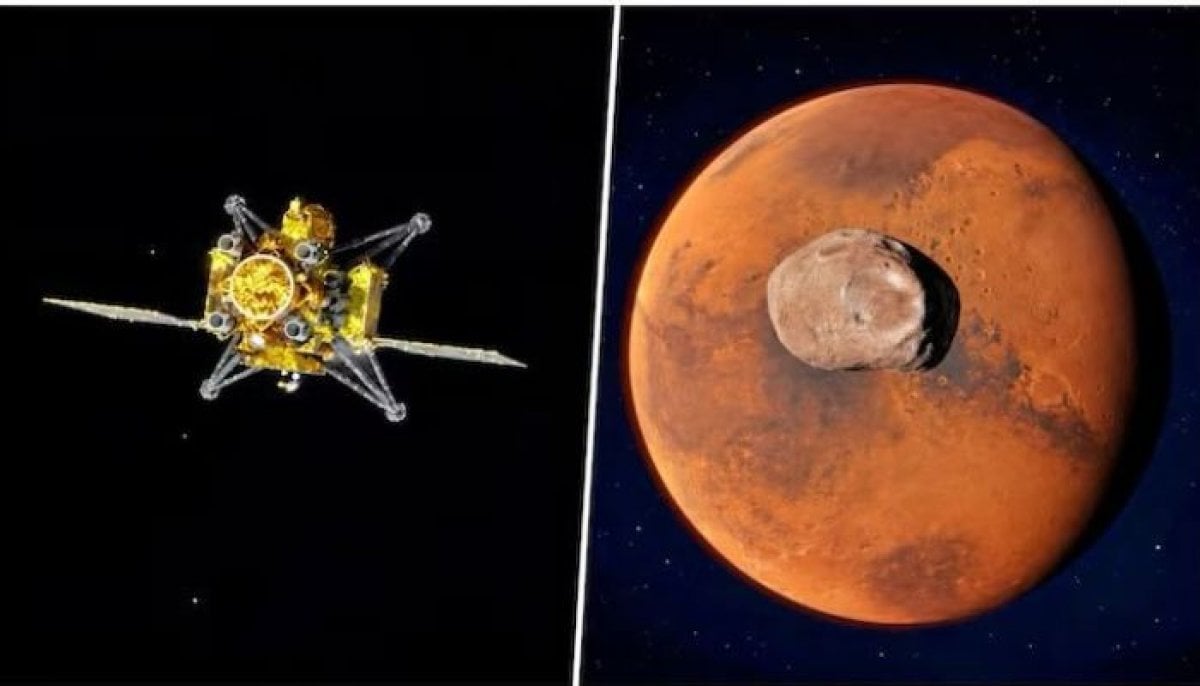 Japan launches world’s first mission to bring sample back from phobos
 -
 Orionid meteor shower 2026: Peak date, viewing tips and what to expect
 -
 Why Mars looks blue in NASA’s unedited curiosity panorama?
 -
 Blue Origin upgrades new Glenn rocket launch infrastructure to take on SpaceX
 -
 NASA’s next Mars mission targets Phobos and Deimos, not Red Planet