GlobalFoundries sees 'strong' demand for China's optical modules
The US chipmaker cites surging demand as data standards shift to 200 gigabits per lane
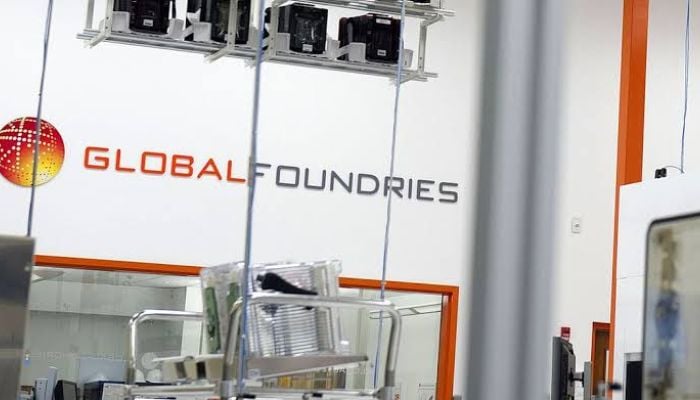
US contract chipmaker GlobalFoundries is reporting robust demand for optical modules made in China, a trend driving the company to expand its manufacturing presence in the country to better serve local clients amid a global data centre construction boom.
Shankaran Janardhanan, senior vice-president of GlobalFoundries' photonics and radio frequency division, told the South China Morning Post that demand in the optical networking module segment was strong, speaking at the company's recent annual tech summit in Shanghai.
He said surging appetite for Chinese-made optical modules, the components used to transmit data inside high-performance data centres, helped drive the company's heavy bet on photonics technology. Chinese optical module makers are now shipping in volume to US hyperscalers as the industry standard shifts rapidly from 100 to 200 gigabits per second per lane.
In the US, Microsoft, Amazon, and Meta Platforms, along with Chinese firms Alibaba and Tencent, are making progress in optical connectivity for scaling up AI data centres.
Meanwhile, Nvidia is developing the same field by incorporating silicon photonics technology in its chips in order to overcome the limitations of conventional electrical connections when it comes to bandwidth.
As far as whether pluggable modules, near-packaged optics, or co-packaged optics will prevail remains to be discussed in the industry, Janardhanan highlighted that the challenge here is more about the manufacturing side.
To this end, GlobalFoundries is launching solutions related to silicon photonics and advanced packaging technologies, such as its own co-packaged light engine "Scale".
GlobalFoundries has been working in China for 12 years and has strong connections with China's automotive chip industry. This month, the company announced that it has opened an office in Guangzhou in order to strengthen its manufacturing collaboration with a foundry in China named Zen Semi with regard to 40 nanometre automotive chips.
Janardhanan called the collaboration a demonstration of how knowledge transfer along with manufacturing capacity can be successful, stating that future expansions would be determined on a case-by-case basis. China President Victor Hu stated that the opening of the office in Guangzhou was designed to bring manufacturing capacity closer to customers.
Janardhanan pointed to physical AI, covering humanoid robotics, autonomous vehicles, and smart devices, as a potentially massive market ahead.
He said China is moving quickly on real-world physical AI deployment, and that GlobalFoundries is combining its semiconductor technology with processor IP and software capabilities to position itself as a broader technology partner as that ecosystem develops.


-
 Missed iPhone Duo pre-orders? Apple Store walk-ins may be out of luck
 -
 TikTok bans 3-hour Musk documentary account over 'violations'
 -
 AI could boost US GDP to $44 trillion by 2030, Anthropic model forecasts
 -
 What Anthropic's draft AI bill would let Washington block?
 -
 Apple reshuffles legal team with two former Meta executives
 -
 Elon Musk reveals Tesla Roadster’s most ‘unexpected’ new feature
 -
 Google's Waymo to launch first Canadian robotaxi service in Toronto by 2028
 -
 UK regulator targets Microsoft’s business software over competition concerns