Two spacecraft create fake solar eclipses to uncover a hidden solar mystery: What to know
Probe-3 is one of the world’s first precision formation flying missions
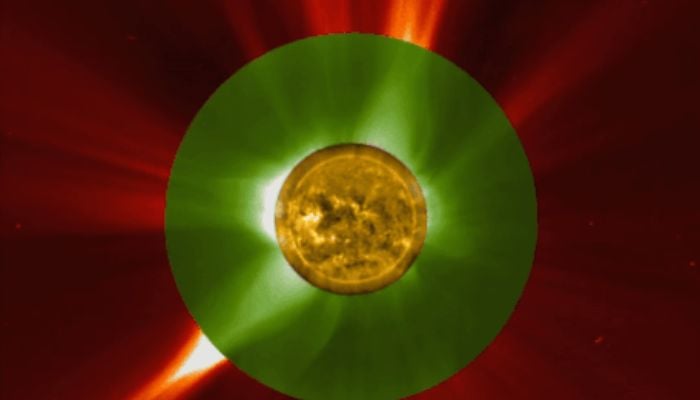
We all have witnessed the recent total solar eclipse this week, which revealed a white corona glowing around a lunar silhouette-a view that has helped transform solar science for generations.
But the interesting part is that scientists no longer have to wait for the moon to provide that rare opportunity.
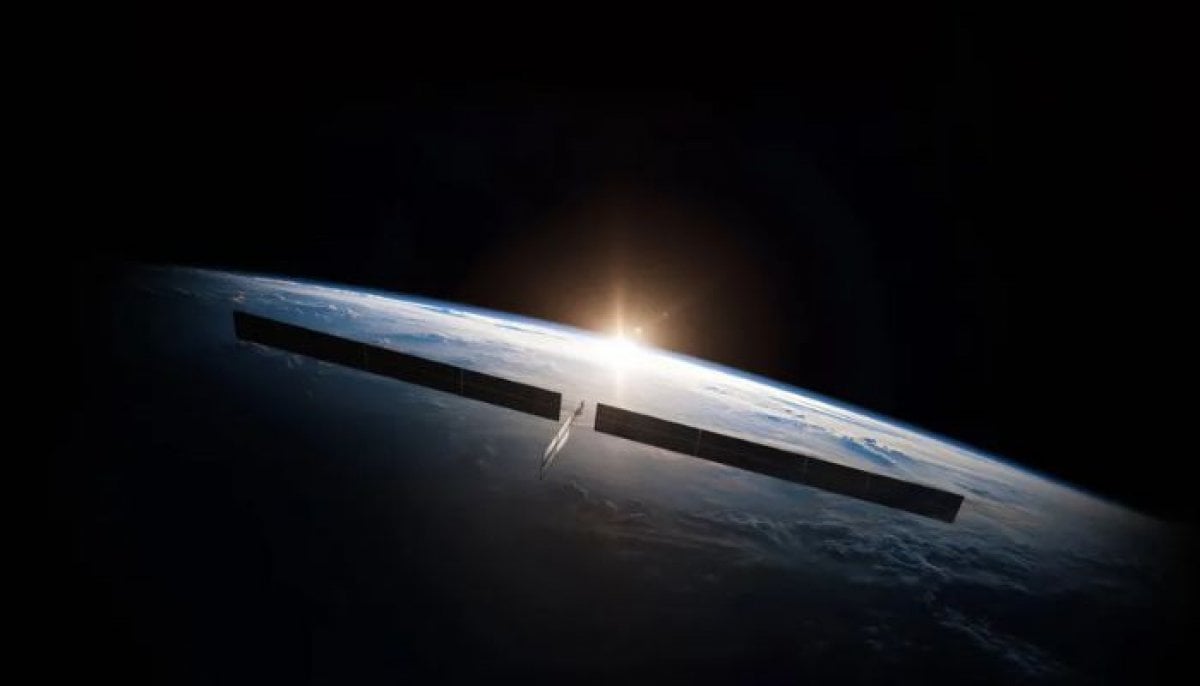
The European Space Agency’s Proba-3 mission is now creating an artificial solar eclipse by flying two spacecraft in an impeccable alignment that lasts up to five hours at a time, offering an unparalleled view of the corona with early results revealing new insights about the solar wind.
The only opportunity to study the unique solar corona window comes during a total solar eclipse when the moon blocks the intense solar disk.
Proba-3 consists of two separate spacecraft that fly in formation with exceptional precision while maintaining their relative positions to within just a few millimeters over distances of 472 feet.
Unlike a natural total solar eclipse which commonly lasts only a few minutes at one location on Earth. Notably, Proba-3 can create space-based coronagraphy lasting up to six hours per orbit.
This helps scientists to study slight modifications in the solar corona for much longer periods than during a brief natural solar eclipse. It is crucial to note that how the solar wind forms and accelerates is one of the greatest enduring mysteries in solar physics.
Proba-3’s is the primary source of the solar wind, superheated plasma which surpasses temperatures of more than a million degrees Celsius.
The mission has already astonished researchers since its first artificial solar eclipse in orbit. Nonetheless, total solar eclipses have yielded major scientific advancements for more than a century including the landmark observational validation of Einstein’s general theory of relativity in 1919.


-
 China’s bold Mars plan: Map entire Red Planet by 2028
 -
 Swiss drought reveals Roman secrets that could redraw ancient maps
 -
 SpaceX’s Starship engine failure raises questions over NASA’s moon mission
 -
 SpaceX Starship Flight 14 reaches orbit after successful insertion burn
 -
 Asteroid Bennu: NASA samples reveal how it was born from fire and ice
 -
 Harvard scientists detect mysterious radio signal from planet outside our solar system
 -
 Scientists may have found a way to grow food on Mars
 -
 Why Earth’s 24-hour day isn’t quite as fixed as you think