Can AI design jet engine? MIT students find out
MIT's JARVIS Challenge had 31 students build working jet engines with AI copilots, testing where AI helps engineering
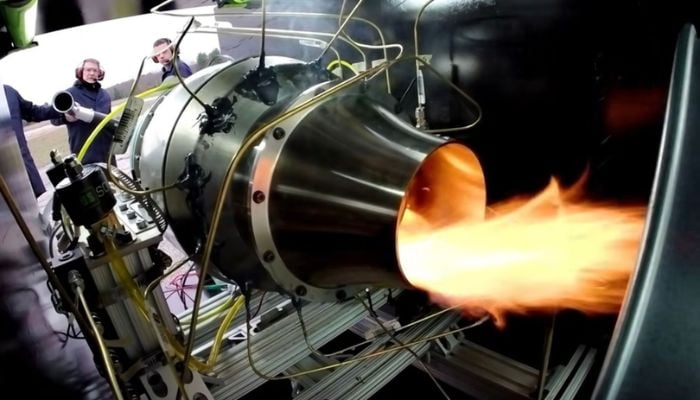
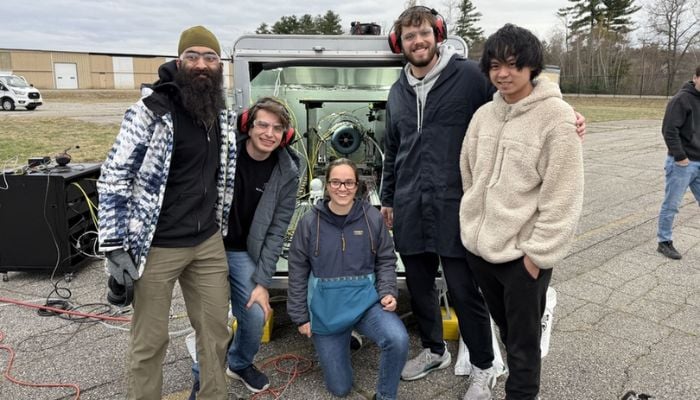
Thirty-one Massachusetts Institute of Technology (MIT) undergraduates spent four weeks this year designing, building and hot-firing small jet engines with AI as their primary design partner, in an experiment meant to answer a narrower question than "Can AI build things?": Can it hold up when the thing is safety-critical hardware, not code?
The result, released by MIT's Gas Turbine Laboratory in 2026, complicates the assumption that AI tools scale evenly from software to physical engineering.
What was JARVIS's challenge?
The JARVIS Challenge, standing for Jet-engine AI Research and Validation Intensive Sprint, took place at the MIT Independent Activities Period and divided MIT students from virtually all engineering disciplines into seven teams.
The majority of them had not even looked inside a gas turbine, and the youngest among the students were still lacking knowledge of thermodynamics.
Each of the teams used MIT Parley, a platform integrating frontier large language models, and thus enabled the organisers to monitor precisely how students were prompting the AI system, which specific models they selected and what the cost of each individual question was.
Financial support from MIT Lincoln Laboratory and sponsors such as Safran and Voyager Technologies provided teams with an unlimited use of AI.
Early on, AI proved useful for summarising textbooks, teaching unfamiliar software and sourcing vendors.
That usefulness dropped sharply once teams moved into detailed CAD work and combustor prototyping, where hallucinations and a lack of physical intuition became liabilities rather than conveniences.
"AI is a helpful tool, great at finding information, helping organise things, and writing well, but it can't do design," said Elizabeth Tupaj of Team 811 Crew, one of two teams that reached full engine testing.
Vendor relationships, not AI searches, ended up determining which teams could source parts on a tight timeline.
However, the winning team, 811 Crew, was also the one most reluctant to rely on the AI, opting instead for a crew made up of those students who were previously familiar with turbomachinery and propulsion.
The other finalist, the Fast and Fractured team, relied extensively on AI in trade studies and designs but was constantly delayed by the vendors prior to rotor seizure.
MIT Department of Aeronautics Professor Andreea Bobu said it best: Teams required sufficient competence to spot mistakes of the AI and sufficient curiosity to actually use it, and the fastest team had both.


-
 Trump makes false claim about Bank of Canada while defending Canada tariffs
 -
 Trump pushes US Supreme Court to revive blocked mail ballot rule as voting begins
 -
 Canadian skyrunner Kalie McCrystal goes missing after reaching Matterhorn summit
 -
 Trump wants New Mexico to be renamed ‘New America’, after ‘Lake America’ fiasco
-
 OpenAI develops automated AI ‘research intern’ ahead of schedule: What to know
 -
 Apple iPhone September 9 launch event: What to expect
 -
 Your AI agent can now trade your money: Should it?
 -
 AI banned for 600,000 NYC students this school year
 -
 Trump’s former AI Czar says ai debate is shifting to open vs closed
 -
 Is your forgotten login a hacker's backdoor? Check now
 -
 WhatsApp tests AI content labels, unofficial app warnings
 -
 Berlin reportedly launches crisis response after hackers publish stolen data