Australia’s under-16 social media ban fails first age checks: report
Study highlights challenges in verifying users’ ages as Australia prepares to enforce restrictions on social media access for under-16s
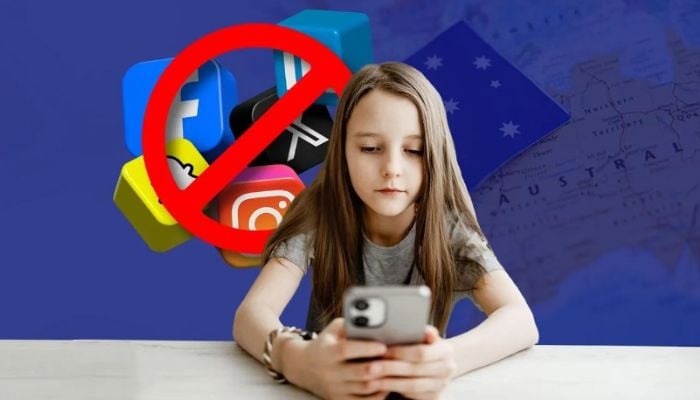
Australia’s landmark under-16 social media ban, which officially went into effect in December 2025-is facing severe skepticism after a critical study revealed that the system is failing at its very first line of defense, specially "age-verification checks."
Under the world-first legislation, Australia's new social media law has mandated that platforms including Instagram, Snapchat,TikTok and YouTube bar people under 16 years from having accounts.
Operators were advised to take "reasonable steps" to comply as the Australian government has recommended using multiple checks to determine users' age.
The legislation also states that platforms that systematically fail to take "reasonable steps" to enforce the age restriction face massive fines.
However, the ban has been widely criticised, with studies suggesting most people under 16 are still able to access the platforms, prompting Australia to double the maximum fine last month and warn of court action against tech giants for non-compliance.
A team of software testers, which last year trialled age-assurance software on more than 1,000 Australians, found that platforms did not ask for age proof on any of the 50 accounts it opened after the law came into force and on which it declared the age as 16, the researchers told Reuters.
The previously unreported finding reveals a largely overlooked flaw while the process has so far focused on the accuracy of photo-based age-assurance software.
The report elaborated initial vetting stage which guesses a person's age range based on their general online activity, does not appear to be picking up young users for further checks.
Andrew Hammond, director at testing firm KJR, which ran the original trial in 2025 said, "You should be asked to demonstrate how old you are, and not once have we been asked to verify our age or use age-assurance measures."
Hammond added all 50 test accounts are active and have been distributed among nine of the 10 platforms that are subject to the age restrictions, including Meta's Instagram,Snapchat, TikTok and YouTube.
One account which signed up to Elon Musk's X claiming to be 16 was served pornographic content.
Notably, none of the platforms let users sign up if they declared they were under 16. But just one, Australia-based live-streaming platform Kick, refused to let users create an account without proof of age, the follow-up study found.
A Kick spokesperson said it would not be feasible to rely on age inference as the platform was new and did not have enough data to guess user ages.
This comes as after an initial claim that Australia's ban had wiped some 4.7 million suspected underage accounts in a month, the rollout has faced near-constant reports of non-compliance.
By March, the government warned of potential enforcement lawsuits against five platforms, and last month said it was doubling the maximum fine, accusing the platforms of setting the ban up to fail.


-
 Canadian YouTuber builds camera to track police vehicles: What to know
 -
 Google Gemini access is changing: What users need to know
 -
 WhatsApp update blocks logins on outdated phones: Here’s what to know
 -
 Vance says Microsoft replaced laid-off workers with foreign hires: What the visa data shows
 -
 Hollywood takes aim at Zuckerberg, Musk and Altman over AI fears
 -
 Amazon CEO points to Netflix as data centre backlash grows
 -
 Atlassian's CEO says AI can't be paused: Here's his reason
 -
 3 things to know before you set up a Google passkey