Starmer faces political storm over defence spending after John Healey resignation
Healey’s resignation escalates tensions over UK defence spending as Starmer defends budget decisions amid growing political backlash
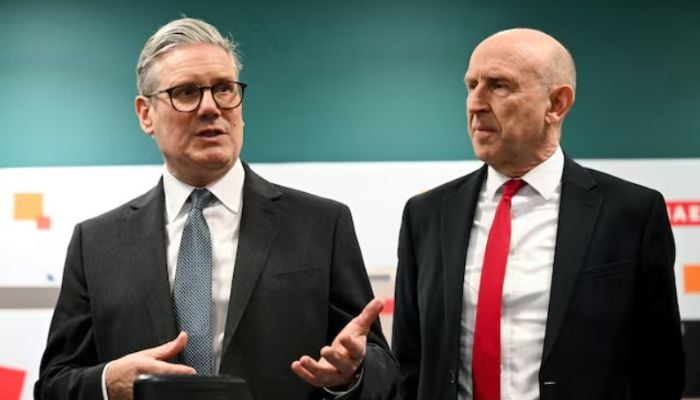
UK PM Keir Starmer clearly defines its position after Defence Minister's resign amid rising pressures.
Starmer has told BBC he has a "duty" to stay on as prime minister as he justified his decisions on defence spending.
Speaking the day after two of his defence ministers quit in a row over funding, Sir Keir insisted he had made "hard-edged" choices, including getting every department to make cuts to pay for defence.
In a veiled warning to potential leadership challengers in his own party, he said: "Whoever is prime minister is going to face the same prevailing winds as I am facing, none of that is going to change."
Asked if he wanted to lead Labour into the next election, he said that was what he wanted to do, but acknowledged, "I need to turn things around."
He said he did not want to "plunge" the country into the "chaos" of a leadership election but added: "If it does happen, I will fight."
"Let me be clear that this is not about personal vanity, it is not about stubbornness, it is about a very deep sense of duty," he said.
"I was elected to serve this country notwithstanding difficult circumstances - that is what I am doing."
He added that he had a "very sound platform" and that his government had stabilised the economy, increased defence spending and invested in public services.
Healey's resignation was triggered by an ongoing internal row over funding of the government's defence investment plan (DIP).
Healey said that, under the plan he had seen, defence spending would only rise to 2.68% of GDP in 2030 when he believed it needed to be at 3%. In comparison, Germany plans to spend 3.7% of its GDP on defence by 2030.
In his resignation letter, Defence Secretary John Healey made scathing criticisms, accusing the PM of being "unable" to commit to the spending needed to keep the country safe.
While PM Starmer said he was grateful to Healey for his work but rejected his analysis, arguing that defence spending was his "number one priority" and would continue to be so at future spending reviews.
Notably, the latest news comes as Starmer likely to face a challenge to his leadership in the coming months, most likely from Greater Manchester Mayor Andy Burnham if he wins a seat in parliament at a special election next week, and Wes Streeting, who resigned as health secretary last month.



-
 New Jersey approves landmark consumer protection law against 'surveillance pricing'
 -
 Typhoon Noul kills 10 after making landfall in southern China
 -
 Massive wildfires threaten Bordeaux, straining firefighters across France and Spain
 -
 Europe wildfire: Over 300,000 flee as France, Spain battle massive blazes
 -
 Berlin Pride tragedy: German police hunt suspect after van-ramming leaves 1 dead and 16 injured
 -
 Andy Burnham vows to challenge Trump ‘if right for Britain’
 -
 Paul Rushforth, Ottawa real estate broker and CFRA radio host, dies at 52
 -
 Trump administration faces lawsuit over cancelled clean energy grants