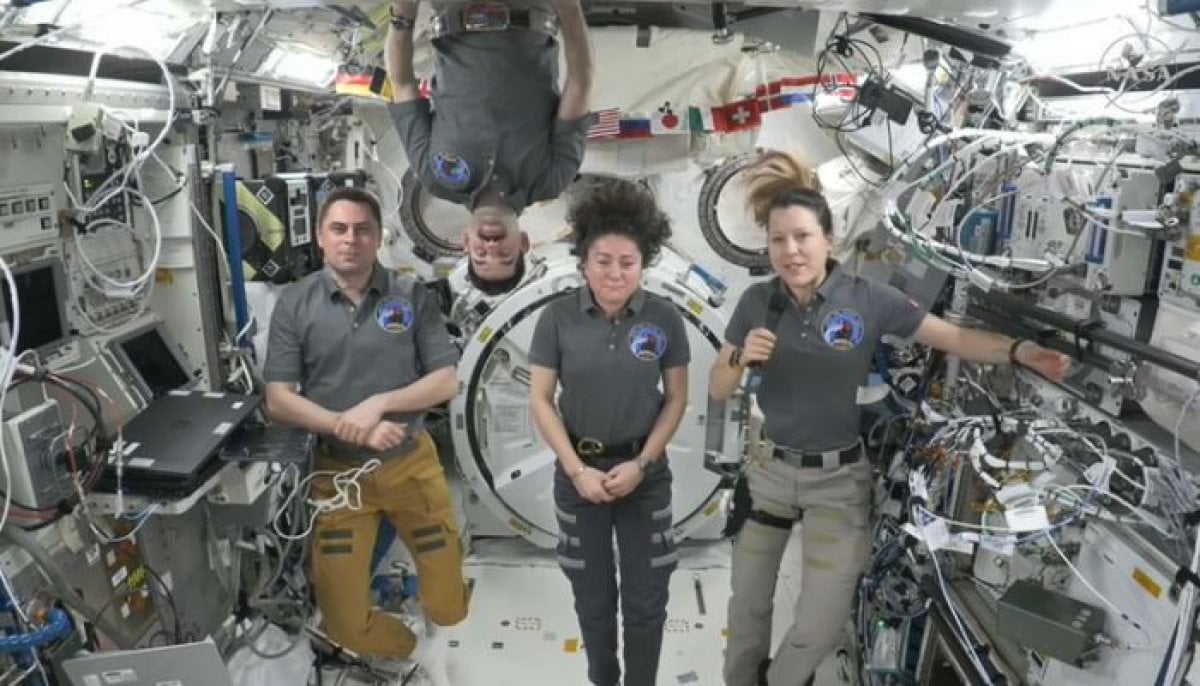
How to Watch Blue Origin’s first reused new Glenn launch
Blue Origin's NG-3 mission flies refurbished New Glenn booster for the first time, carrying massive direct-to-cellphone satellite to orbit

Blue Origin's New Glenn rocket is launching from Cape Canaveral on Sunday to deliver an important achievement which exceeded the value of its actual cargo: the company performed its first demonstration of booster reuse through its spaceflight operations.
The NG-3 mission launched during a window opening at 7:25am EDT from Launch Complex 36, with the NG-2 first stage, nicknamed "Never Tell Me the Odds", at the base of the stack.
The company intends to demonstrate that New Glenn can perform SpaceX Falcon 9 missions through its capacity to recover and reconstruct reusable boosters for subsequent flights.
New Glenn reaches a height of 322 feet (98 metres), which exceeds Falcon 9 by nearly 100 feet, and its first stages can operate for a minimum of 25 missions.
You can watch the Blue Origin’s first reused new Glenn launch live on its official YouTube page.
What changed between Blue Origin's NG-2 and reused NG-3 booster?
Blue Origin didn't simply patch up the NG-2 booster and roll it back to the pad. All seven BE-4 engines were replaced with a fresh set, and the vehicle received several upgrades, including a new thermal protection system on one of the engine nozzles, before being integrated in early April. CEO Dave Limp confirmed on April 13 that the original NG-2 engines are being preserved for future flights.
The BE-4s burn liquid oxygen and liquid methane, the same methalox propellant used by SpaceX's 33 Raptor engines on Starship's Super Heavy booster, making New Glenn one of only two orbital-class rockets operating on that fuel combination. A 19-second static fire on April 16 was the final check before Sunday's launch.
The New Glenn payload for NG-3 will be the BlueBird 7 spacecraft that represents the second Block 2 spacecraft manufactured by AST SpaceMobile, an American company constructing a constellation of satellites with a direct link to mobile phones operating in LEO orbit.
The spacecraft will have an antenna measuring 2,400 square feet (223 square meters), similar in size to that of the previous Block 2 BlueBird 6, launched by an Indian LVM3 launcher last December.
The success of NG-3 extends past the milestone of reusable boosters. Blue Origin is counting on New Glenn to send its Blue Moon lander to space. The Blue Moon Mk1 has already been tested inside the vacuum chamber of NASA’s Johnson Space Center and is being transported to NASA’s Kennedy Space Center for qualification activities.


-
 Astronomers find most distant fast radio burst ever recorded
 -
 Draconid meteor shower tonight: Best time and places to see it
 -
 ‘A dream for 50 years’: Why world’s first nuclear clock could change timekeeping
 -
 NASA Curiosity captures strange ‘wind-carved’ Mars landscape in dawn image
 -
 NASA's Crew-12 Dragon begins return trip from space station
 -
 Mysterious ‘phoenix planet’ found around the remains of a dying star
 -
 First possible evidence of Planet Nine found in infrared data
 -
 Elon Musk announces SpaceXAI rebrand to SpaceXSI following presidential order on 'Super Intelligence'