'Blank Book’ revolt: How authors are fighting AI copyright violations
Anthropic has set a legal precedent by settling a $1.5 billion class-action lawsuit with authors
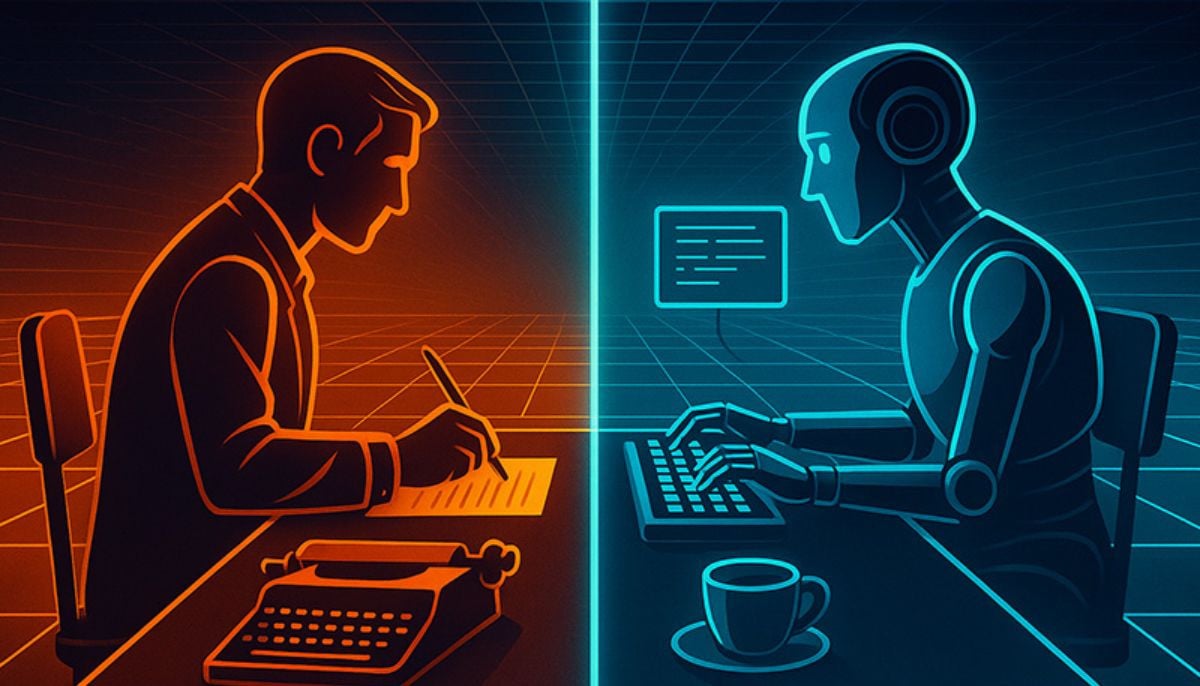
For years, AI has been reading the world’s library behind closed doors, devouring and consuming a plethora of human literature and creative work to perfect its prose.
Now, the authors are not sitting silently. In fact they are determined to reclaim the ownership of their narrative and protect the soul of their creative works.
Writers’ battle against copyright violations is not just a legal one; it revolves around high-stakes efforts to protect the sanctity of the soul on the pages and the future of human imagination.
Given the surging use of AI for unauthorized data scraping, the authors have taken an initiative to protect their ownership rights and prevent AI models from training on their data without permission and compensation.
Now, authors are drawing a line in digital sand through an unusual “blank book” revolt, demanding their creativity be compensated not just consumed.
Approximately 10,000 authors, including high profile names like Kazuo Ishiguro and Richard Osman, have contributed to an "empty" book titled Don’t Steal This Book.
Other notable names also include Slow Horses author Mick Herron, the author Marian Keyes, the historian David Olusoga, and Malorie Blackman, the writer of Noughts and Crosses.
Organized by composer Ed Newton-Rex and distributed at the London Book Fair, the book showcases only a list of authors’ names to symbolize the exploitation of their work.
The protest aims to pressure the UK government ahead of the March 18 deadline, when ministers must deliver an economic impact assessment regarding the proposed changes to copyright law that could favor AI firms.
At the core of the issue lies the authors' argument that tech companies thrive on their stolen data, allowing the AI models to compete with original creators and threaten their livelihoods.
“This is not a victimless crime – generative AI competes with the people whose work it is trained on, robbing them of their livelihoods. The government must protect the UK’s creatives, and refuse to legalise the theft of creative work by AI companies,” Ed Newton-Rex said.
Publishers are also planning to launch an AI licensing initiative through Publishers’ Licensing Services that will provide legal cover to AI companies to use their published works.
Anthropic has set a legal precedent by settling a $1.5 billion class-action lawsuit with authors over the use of pirated books for training purposes.
To address the grievances of authors, the UK government is considering several options for copyright law. The first option includes requiring AI firms to seek licences for using copyrighted works. In the second option, the AI companies must be allowed to use copyrighted work unless authors specifically "opt out."
The government is also considering commercial research in which AI companies will be exempted from copyright waivers. But the authors believe that such an option could easily be exploited.
A government spokesperson said, “The government wants a copyright regime that values and protects human creativity, can be trusted, and unlocks innovation. We will continue to engage closely with the creative sector on this issue.”


-
 Big tech, AI data centers driving US power bills to record high
 -
 China's DeepSeek developing AI chip to cut reliance on Nvidia: Report
 -
 Beijing wants to curb overseas access to China's leading AI models: Here's why
 -
 Anthropic study reveals the hidden 'mind' of Claude AI
 -
 Can Australia's under-16 social media ban really work? Study raises doubts over age checks
 -
 US states demand $1.4 trillion in penalties from Meta ahead of youth safety trial
 -
 Why the US cyber agency is using Anthropic’s Mythos to audit government code
 -
 US Supreme Court declines to block app store age-verification law