From loss to algorithm: How AI is changing the way humans grieve
In 2024, digital afterlife industry was valued at $22.46 billion, catering to humans' emotions
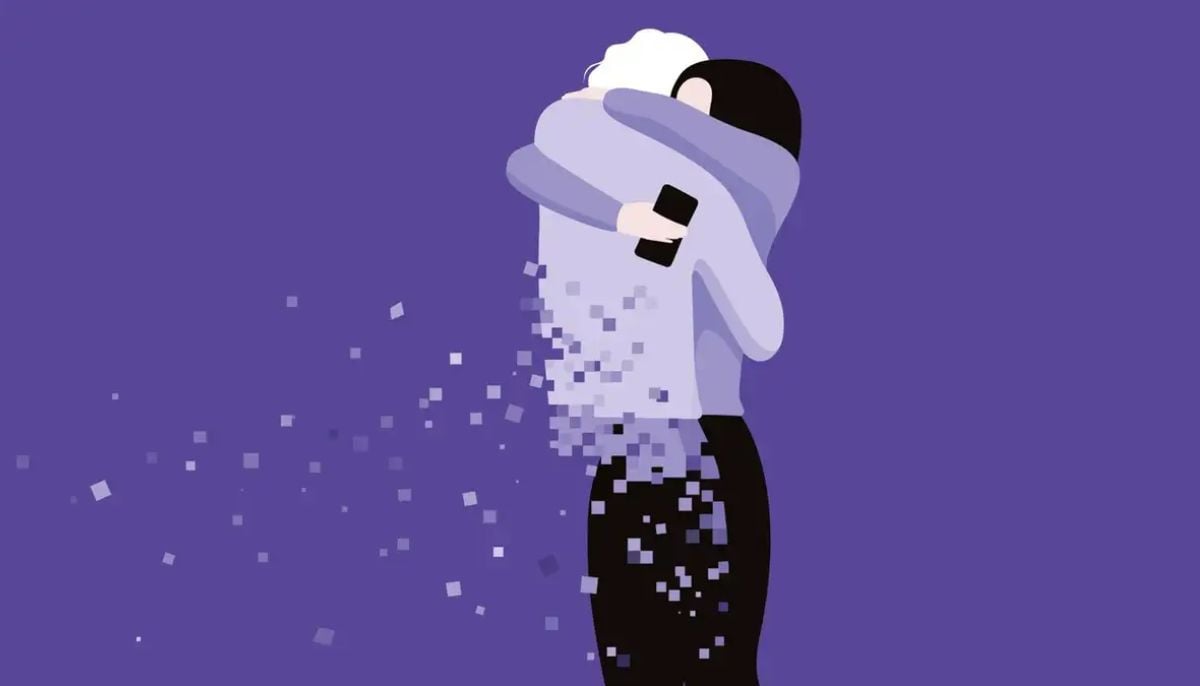
Losing your loved ones is one of the most painful experiences a person encounters in life. And what is more difficult is processing the grief and accepting the void that beloved ones leave behind.
Humans resort to tattered photos, pressed flowers, saved messages and bittersweet yet fading memories to fill the void and accept the painful reality of loss.
With acceptance comes peace and courage to deal with loss.
But today, the veil between life and death is being rewoven with algorithms. The memories which are naturally meant to fade with time, become more concrete with the boom of the “digital afterlife.”
It is not wrong to say that humans have entered the era of digital immortality where AI resurrection technology can scrape a person’s texts, voice notes, and social media footprints to create a “living and breathing” digital twin.
With enough chat logs and voice clips, AI can easily simulate a soul, turning a final goodbye into an eternal “seen” receipt.
It’s more like doing FaceTime with your loved ones, asking for their advice, chatting with the deceased , and satisfying your craving to erase the pain of their absence.
Compared to dealing with heart-piercing pain of loss, such a way out seems easy and soothing. But it also raises chilling questions: Are humans tricking themselves into a dangerous fantasy of eternal remembrance? Are we raising the future generations who do not know how to mourn in real life?
Digital afterlife– A billion-dollar industry
The concept of “digital afterlife” is not just an idea taken from Black Mirror’s episode. To one’s surprise, it has become a multimillion dollar industry where the digital footprints of dead ones can be harvested to develop an interactive “digital twin.”
In 2024, the industry was valued at $22.46 billion and it is expected to triple by 2034 due to people's rising inclination towards digital immortality.
Grief technology, commercialized tech frontier
Big tech firms have played an important role in popularising grief technology and digital mourning . For instance, Microsoft holds a patent for chatbots that mimic actual people, including the dead ones.
Similarly, Amazon has also patented advanced voice-cloning techniques that mimic the voices of deceased people closer to reality.
Recently, Meta has also secured a patent that would allow the tech firm to take over the dead person’s social media account, thereby simulating their activity.
“The language model may be used for simulating the user when the user is absent from the social networking system, for example, when the user takes a long break or if the user is deceased,” the patent says.
When mourning goes digital
Rewriting the meaning of death & grief
In natural terms, grief is the price humans pay for love. For most of human history that price has been paid in the currency of absence. Unfortunately, in today’s tech-dominating times, digital mourning replaces the natural grieving process and algorithmic immortality challenges the beauty of life which lies in its finitude.
Companies like StoryFile, HereAfter AI and Eternos have disrupted the grieving process by offering sophisticated simulations, such as realistic voice cloning in deadbots, interactive avatars, and posthumous services.
The cost is alteration of the natural grieving process. According to Mary-Frances O’Connor, a neuroscientist and author of The Grieving Body, when humans rely on digital simulations, they stifle their abilities to reconcile with the reality of death and teach them to deal with mourning through shortcuts based on algorithms.
Cody Delistraty, author of The Grief Cure, argues that "Grief is individualised. You can't put it through the sieve of a digital avatar and expect to get something really positive."
Memory distortions
Humans always want to remember their loved ones through the memories they have lived, not artificially created for them.
AI resurrection is all about overwriting and contaminating these memories.
According to Julia Shaw, a criminal psychologist who specialises in false memories, memories help humans to survive the difficult times. In the emerging crisis of AI psychosis, humans are more prone to feeding themselves “false memories.”
In the case of AI hallucinations, the deadbots might say things the person never would have said, thereby “vandalizing” the actual memory.
“AI is a perfect false memory machine,” Shaw said.
A world without final goodbyes?
Edina Harbinja, a UK-based professor at the University of Birmingham's Law School, voiced her concerns, “It does affect not just legal issues, but a lot of very important social, ethical, and deeply philosophical issues as well.”
Given the psychological, emotional, and ethical toll of AI-powered digital afterlife, it is not strange to think that humans are living in a world where final goodbyes have become obsolete and the grave is no longer a boundary but a data source for tech giants.
What’s more unsettling: the trend of “GriefTech” is not going to subside as AI is on the trajectory of advanced evolution with the possible culmination in “Singularity” and “Artificial General Intelligence” voiced by various tech moguls, including Elon Musk.
Ultimately, AI resurrection suggests a future where mortality is merely a technical glitch and final goodbye is just another data point in an eternal loop coupled with “endless mourning.”
If AI is rewriting the finality of death, then what it truly means to be human will also be rewritten.


-
 Iran restores 90% of missile facilities after strikes, US intel says
 -
 PCOS renamed PMOS: What new diagnosis means for millions of women’s health
 -
 EU cracks down on social media’s addictive design practices with new legislation
 -
 ‘Godzilla’ El Nino warning: Rare weather pattern could make 2027 hottest year ever
-
 AutoScientist lets AI models train themselves faster
 -
 Alibaba shares fall after sharp decline in core profitability
 -
 Adobe Premiere is finally coming to Android this summer, Google confirms
 -
 Meta Connect 2026: Mark Zukerberg hints at major wearables
 -
 Claude Code's creator runs ‘few thousand’ AI agents overnight on his phone
 -
 China leads new healthcare alliance to expand its dominance across Asia-Pacific
 -
 How AI is making internet sound same, study reveals
 -
 Did Elon wanted majority of OpenAI? Altman's testimony reveals new details