New START treaty expiring soon: Is the world headed for new US-Russia nuclear arms race?
New START is set to expire on February 5, 2026
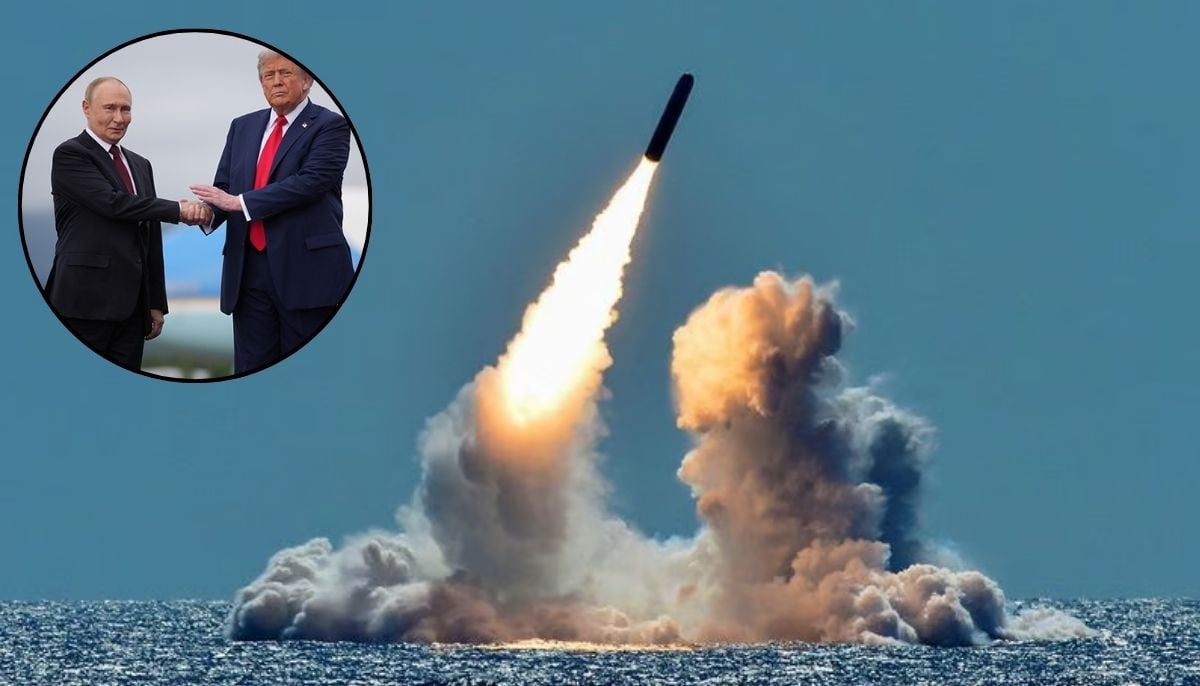
To the world, the word 'destruction' is synonymous with the scarred landscapes and nuclear shadows left in the wake of the Second World War. Only with the help of nuclear treaties, the international community has managed to restrict nuclear proliferation.
Unfortunately, all hell is going to break loose as the last US-Russia nuclear arms control treaty, New START, is set to expire on February 5, 2026 with no negotiations on the agreement on the horizon.
If the treaty expires, both the US and Russia will be legally exempted from binding limitations on strategic nuclear forces for the very first time since the 1970s.
It would also push the countries away from nuclear restraint, making the world a more dangerous place.
Given the importance of nuclear treaty in the conflict-ridden world, the question comes to mind: Is the world headed for a new US-Russia nuclear arms race?
New START treaty: A cap on nukes
The New START treaty came into existence in 2010, signed by US President Barack Obama and President Dmitry Medvedev.
Under the treaty, the limits on strategic nuclear weapons were imposed. It also caps the number of deployed strategic warheads at 1550 on each side, up to 700 deployed intercontinental ballistic missiles, submarine-launched ballistic missiles, and heavy bombers, and 800 launchers.
The treaty also established transparency and introduced on-site inspection to ensure compliance.
Duration of treaty: Is extension possible?
Initially the treaty was signed for a 10-year term starting from 2011. The text only allows a one-time extension of the treaty for the period of five years. In 2021, the extension was approved at the eleventh hour, ensuring that each side sticks to warheads limits.
Potential proposals on table
In September 2025, Russian President Putin suggested to informally extend the treaty for another year, so both countries can work on the future treaty framework. The US President Donald Trump has yet to formally respond.
Earlier this month, Trump responded, “if the treaty expires, it expires,” and it should be replaced with a better one.
While talking to The New York Times Trump suggested that after expiration, a better agreement could be crafted along with China’s participation in the framework.
On the other hand, the US politicians argue that the US should free itself from the binding treaty as it will help it to counter China and build strategic defense capabilities under the “Golden Dome.”
Trump also proposed complete “denuclearisation” with both China and Russia. However, China contended that it would not join disarmament talks as it possesses far less arsenal.
According to an estimation, China has a nuclear arsenal of 600 warheads, while Russia and the US each have inventories of over 5,000 warheads.
If the treaty expires, what will happen?
The New START treaty has been successful in placing the limitations on both Russia and the US. But, its expiration without any alternative will give greenlight to countries to start an arms race.
The nuclear arms control experts have raised concerns that the void will raise nuclear risks at a time when the world is grappling with heightened international tensions caused by wars in Ukraine and the Middle East.
Nikolai Sokov, a former Soviet and Russian arms negotiator, said, “With no new treaty, each would be forced to act according to worst-case assumptions about the weapons the other is producing, testing and deploying…if you've got an unregulated arms race, things will get quite destabilising.”
The recent times are more crucial as the countries are racing to build cutting-edge defence missiles, submarines, and various nuclear-capable systems.
For instance, Russia has developed state-of-the-art systems, such as the Burevestnik cruise missile, the hypersonic Oreshnik and the Poseidon torpedo.
Similarly, the Trump administration has announced plans for a space-based “Golden Dome” missile defence system that can bring a major shift in strategic defence balance.
Moreover, China’s nuclear arsenal is also growing with an estimated 600 warheads. According to the Pentagon, China will have more than 1000 nukes by 2030.
The expiry also comes ahead of the 2026 Review Conference of the Nuclear Non-Proliferation Treaty (NPT). The disappearance of the nuclear restraint in the form of a treaty will encourage the other countries to abandon the caps, deepen divisions between nuclear and non-nuclear states, and jeopardize the credibility of NPT.
On the whole, the world could witness proliferation of nukes in the absence of nuclear treaties at a time when world order is in transition; unilateralism is overshadowing multilateralism, and geopolitical conflicts are straining international cooperation.


-
 Greenland, Denmark reaffirm Arctic island’s sovereignty after Trump’s ‘permanent control’ claim
 -
 Putin sends message to Europe amid Ukraine conflict: ‘No aggressive intentions’
 -
 Trump signs Russia sanctions bill into law: Is Ukraine peace deal at risk?
 -
 Trump claims US gains ‘permanent control’ over Greenland security in new Arctic deal
 -
 UK pushes EU to include British firms in 'Made in Europe' industrial scheme
 -
 Bill aimed at protecting Americans from data centre energy costs blocked in Senate
 -
 ICE officer, accused of shooting Venezuelan man and lying to investigators, pleads not guilty
 -
 Trump officials move migrants children to unlicensed Texas facilities, raising deportation fears
-
 New UFO files reveal chilling details of 1952 ‘flying saucer’ incident
 -
How a ‘millisecond’ software glitch caused six hours of chaos across UK airports
-
Russia takes over Nestlé and Auchan operations amid growing nationalisation campaign
-
Zelenskyy launches ‘Carpathian Eight’ initiative as Russia-Ukraine conflict escalates