Hong Kong scientists harness AI to better predict extreme weather
Artificial intelligence can now predict thunderstorms and heavy downpours up to four hours in advance
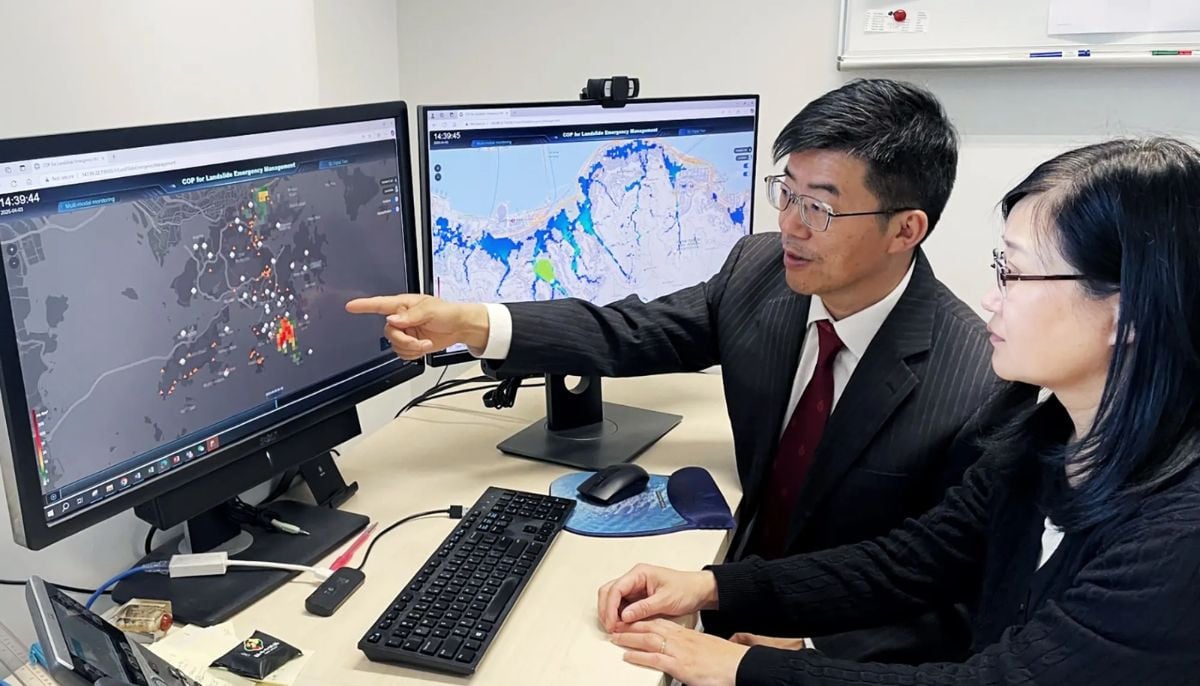
The integration of artificial intelligence into our daily lives is accelerating, and its application in weather forecasting is a significant advancement. Scientists in Hong Kong recently achieved a breakthrough by introducing an AI-driven system capable of predicting thunderstorms up to four hours in advance, a major improvement over the traditional range of 20 minutes to two hours. This represents a vital strategy for responding to the increasingly frequent extremes of weather events linked to climate change.
How will the new AI model predict heavy rainfall
The newly developed system seeks to predict heavy rainfall as described by scientists in their work published in the Proceedings of the National Academy of Sciences last month. The model utilizes generative AI techniques-specifically diffusion models-by injecting noise into training data, so the system learns to reverse the process, ultimately delivering a more precise and clearer forecast.
Scientists are hopeful that using AI and satellite data will enhance severe weather forecasts and help us better prepare for the future. The team has further proposed developing the project in collaboration with China’s weather authorities as the system refreshes forecasts every 15 minutes and has improved accuracy by more than 15%.
The China’s Meteorological Administration and Hong Kong’s Observatory are collaboratively working to integrate the model into forecasts.
How the Deep Diffusion model predicts heavy rainfall up to four hours early
Hong Kong scientists have built a new AI framework, called the Deep Diffusion Model based on Satellite Data (DDMS). It was trained using infrared brightness temperature data collected between 2018 and 2021 by China's Fengyun-4 satellite. Satellites can be used to detect cloud information earlier than traditional radar-based forecasting systems.


-
 Google launches Gemini 4 Argon as its new frontier model
 -
 Bill Gates has a plan for AI taking human jobs: Tax robots
 -
 OpenAI’s new API to give AI agents a watchdog
 -
 Google challenges EU ruling that could open its search services to rivals
 -
 US added jobs, but that doesn’t mean companies are hiring
 -
 Google Play to turn your game library into playlists
 -
 WhatsApp Channels may move to chats tab in new test
 -
 Android Auto's Razr calling bug just got worse with Gemini