Pentagon’s 2026 National Defense Strategy: Which country tops US security priorities?
The 34-page document releases on Friday
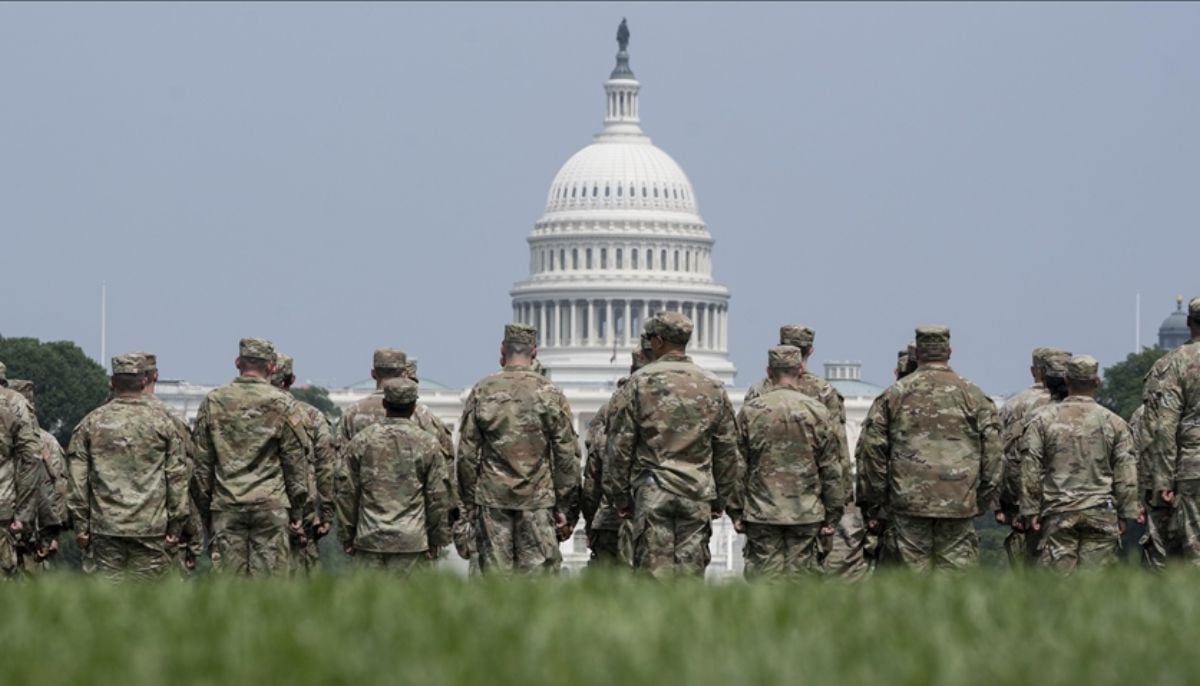
The US Defense Department has released its 2026 National Defense Strategy (NDS) on Friday, outlining a paradigm shift in US defense priorities in the document.
The new strategy also focuses on homeland security, burden-sharing by allies, and deterrence through military strength.
Prioritising ‘warrior ethos over nation-building’
According to Defense Chief Pete Hegseth’s memorandum, the strategy focuses on reviving warrior ethos, signalling an end to prolonged foreign interventions and nation-building.
The new approach refocuses the armed forces on their core role of deterring and winning the wars that impact US interests.
A ‘realistic’ approach to China
The document promotes a “clear-eyed” realism related to China’s military build-up.
"About China, we will also be clear-eyed and realistic about the speed, scale, and quality of China’s historic military build-up. Our goal in doing so is not to dominate China; nor is it to strangle or humiliate them,” the document says.
Instead of direct confrontation, the goal is a balance of power by preventing allies including China from dominating the US and expanding military-to-military communication to reduce conflict risk.
The strategy also calls for achieving “a decent peace” through strength.
The 2026 NDS downplayed China as Pentagon’s top security priority. However in the 2022 NDS document, the US named the "multi-domain threat" posed by China as its top defence priority.
‘More limited’ role in deterring North Korea
The Pentagon also predicts a “more limited” role in deterring North Korea, thereby entrusting South Korea with responsibility to take care of this task.
“South Korea is capable of taking primary responsibility for deterring North Korea with critical but more limited US support,” said the National Defense Strategy.
“This shift in the balance of responsibility is consistent with America’s interest in updating US force posture on the Korean Peninsula,” the document added.
South Korea hosts about 28,500 US troops in combined defense against North Korea’s growing aggression.
Russia as ‘persistent threat’
In the newly-released policy document, the Pentagon defines Russia as a “persistent but manageable threat” specifically to NATO’s eastern states.
It emphasizes that European allies must take their responsibility for their own traditional defense.
Enhanced homeland defense priorities
The strategy expands the military’s domestic mandate, focusing on border security, narcotics, strategic geography, and technical & cyber defense.
Implementing burden-sharing with allies
The key feature of the document is the “burden-sharing” element which calls for allies to boost defense spending and take greater responsibility for regional security, reaching a new global benchmark of 5 percent of GDP for security.
Reviving US industrial base
The strategy also presents a “once-in-a-century” revitalization of the US defense industrial base. The revival will be important for sustaining military readiness and ensuring national security necessity.


-
 Multiple injured in supermarket stabbing attack in South Korea’s Incheon, investigation underway
 -
 Fugitive businessman Alvaro Pulido arrested in $2bn Venezuela corruption scandal
 -
 German labour minister steps down after stepdaughter's death and political attacks
 -
 Trump could fire Kimberly Guilfoyle as US ambassador to Greece over misconduct reports
 -
 Elon Musk spends millions to become top political donor to keep Republicans in power
 -
 Mark Carney warns Alberta against separation in Thanksgiving message from Edmonton
 -
 Florida and Alabama face widespread power outages as Hurricane Isaias moves north
 -
 Reform UK pledges to suspend UK asylum system for up to 5 years
-
 Mamdani launches first major NYPD use-of-force review in nearly a decade
 -
Ilhan Omar accuses Trump of political intimidation after federal agents search her home
-
OPEC slashes 2026 oil demand growth forecast to 400,000 BPD, citing weaker momentum
-
Cornell 7 ‘loophole’ in assault case exposes a deeper legal problem