Taiwan, TSMC to expand US investment: A strategic move in global AI chip race
US-Taiwan trade deal encompasses tariff cuts and investment expansion
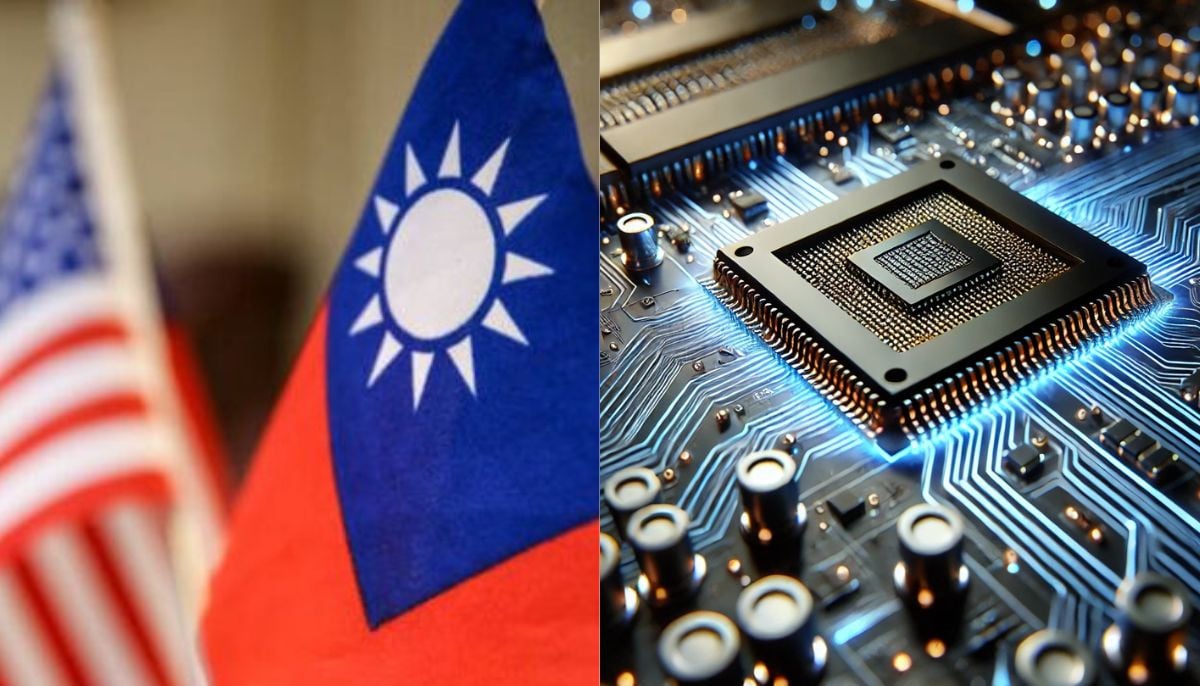
Taiwan has struck a significant trade deal with the US under which Taiwanese companies will invest $250 billion, aiming to boost the production of chips, semiconductors, AI and energy in the United States.
According to this trade deal signed on Thursday, the US will cut tariffs on many of Taiwan’s exports, in turn the country will increase its chip-manufacturing related investments in America.
"In this negotiation, we promoted two-way Taiwan–U.S. high-tech investment, hoping that in the future we can become close AI strategic partners," Vice Premier Cheng Li-chiun said.
In another development, TSMC, Taiwan Semiconductor Manufacturing Co., is planning to expand its multibillion-dollar investment beyond the already committed $165 billion in Arizona.
Earlier, the world’s largest contract chipmaker committed $165 billion aiming to boost Washington’s capabilities to rebuild domestic chip manufacturing to dominate the global and competitive AI race.
As reported by CNBC, TSMC Chief Financial Officer Wendell Huang expressed the company’s plan to ramp up its investments in Arizona to meet demand for AI chips.
Huang said, “We have strong conviction on the AI mega trend, and that is the reason we are stepping up the capital expenditures to expand in Taiwan and in the U.S. Not just to expand, but also try to accelerate where it is possible to satisfy or narrow the gap.”
The remarks came after TSMC’s CEO C.C. Wei’s comments, announcing the plans to buy more land in Arizona to build a massive group of chip-making factories.
However, the further details of the upcoming investment are still unknown.
U.S. Commerce Secretary Howard Lutnick told CNBC in an interview on Thursday, “he objective was to bring 40% of Taiwan's entire chip supply chain and production to the United States. If they were not built in the United States, the tariff was likely to be 100%.”
Foundation of ‘close partnership’
Cheng dubbed the deal “win-win”, paving the way for close partnership with the US and enhancing investment in Taiwan. However, both countries do not share formal diplomatic ties.
"We believe this supply-chain cooperation is not 'move,' but 'build.' We expand our footprint in the U.S. and support the U.S. in building local supply chains, but even more so, it is an extension and expansion of Taiwan's technology industry,” Cheng explained.
As reported by Reuters, Taiwan’s recent trade deal and an expansion of investment in the US could irk China.
China considers democratically-ruled Taiwan as its own territory and vehemently condemns high-level US-Taiwan exchanges. However, Taipei rejects Beijing’s sovereignty claims.


-
 Brazil approves law giving separated couples joint custody of pets
 -
 From AI self-preservation to ‘peer preservation’: New study raises alarm over hidden risks
 -
 Is alien hybrid breeding program real? Matt Gaetz’s shocking claims spark debate
 -
 NASA Artemis II historic rocket launch: Spacecraft successfully enters Earth orbit
-
 Pam Bondi, dubbed Trump's Ghislaine Maxwell, gets fired
 -
 Macron slams Trump: ‘Neither elegant nor up to standard’ over mockery
 -
 Storm Dave: Everything you need to know to stay safe this Easter weekend
 -
Brazil approves law giving separated couples joint custody of pets
-
 'Poisoned' Mount Everest climbers expose guides' million-dollar fraud scheme
 -
NASA Artemis II historic rocket launch: Spacecraft successfully enters Earth orbit
-
 Vanessa Trump remains loyal to Tiger Woods after DUI arrest: Report
 -
 Pink moon 2026: when to see April’s full moon and why it won’t look pink in the sky
-
 Reese's Peanut Butter Cups to return to classic chocolate recipe following public backlash
 -
TDSB vice principal jobs cut as board removes 40 roles amid funding loss, enrolment decline
-
Earthquakes hit Indonesia off Ternate, triggering tsunami warning that is now lifted
-
NASA Artemis II rocket launch: Canada’s Jeremy Hansen makes history in first lunar mission in decades