A red pixel in the snow: How AI helped to crack the mystery of a missing mountaineer
When securing remote areas for missing walkers and climbers, AI can do the job in a matter of hours in some cases, potentially saving lives
The intriguing story of the “Red Pixel in the Snow” is a spectacular real-world example of how AI can solve mysteries.
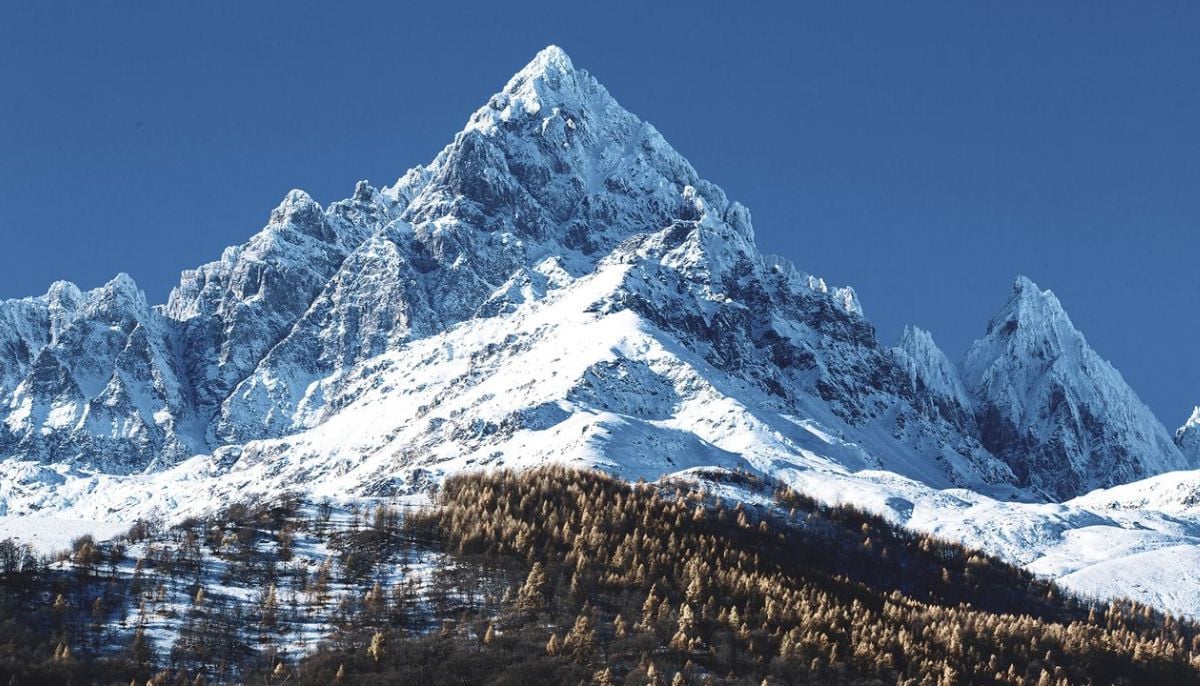
In September 2024, Nicola Ivaldo-an orthopedic surgeon and skilled mountaineer-suddenly vanished while climbing Monsivo, the highest peak in the Cottian Alps, Italy.
The 66-year-old was the subject of an intense search by rescue teams, who spent weeks using helicopters and ground crews to find them.
The winter storms forced them to call off the search in October, and the case remained a mystery for nearly a year.
However, in July 2025 the search was officially resumed as Italy’s National Alpine and Speleological Rescue Corps (CNSAS)returned to the mountain. Cell phone signal data was used to signal data to narrow the search to 183 hectares on the dangerous North Face.
The investigation involved two drones that were sent into the Perotti Canal, an area deemed too dangerous for human rescuers to enter. In a matter of hours, the drones captured 2,600 high-resolution images.
Analyzing these images would have been difficult and could have taken humans months. Instead, according to the BBC, the AI flagged is a tiny, anomalous cluster of bright red pixels against the grey rock and white snow. The rescuers suspected it might be Ivaldo’s red climbing helmet.
The mission was marked by the pilots as a human achievement enabled by technology as the body was located in a spot where humans could not safely look. The technology enables them to scour deadly areas without putting the lives of people at risk on steep and unstable rock.
In this connection, a mountain rescuer himself is collaborating with geomatic team at Politecnico Torino University, “Our idea is to develop a more complex software, able to analyse all the data sets from the search activities and to manage the teams on the field and the drones inside the same system.”
He further said, “The future challenge will be to incorporate these complex analyses directly on the board of the drones and during the SAR flight.”
The recent success has led to a push for AI-drone integration globally and the use of thermal AI to detect the body.
Additionally, other research teams are working with rescue organizations to use AI in different ways to improve search operations.


-
 Peter Dinklage tapped for unexpected role far different from 'Game of Thrones'
 -
 'Spider-Man' producer forced to eat her words after Tom Holland and Zendaya defy dating warning
 -
 Richard Gere's son Homer Gere lifts lid on one 'cringey' thing about dad
 -
 Sadie Sink guarded her secret 'Spider-Man' role from the public but told select few
-
 UK lawmaker sues Musk's xAI to stop Grok generating sexualised images
 -
 Apple unveils Klarna-powered ‘Apple Upgrade’ plan for iPhone, Mac and iPad in US
 -
 Apple dethrones Nvidia as world's most valuable company: Will it last?
 -
 Google hit with new legal threat after record $1 billion EU fine
 -
 Anthropic CEO Dario Amodei breaks silence on open-weight AI ban debate
 -
 Meta accused of disregarding teen harm research in landmark child safety trial
 -
 China reaches major milestone as domestic DUV chip tools enter mass production
 -
 China vs US tech rivalry escalates as Beijing accuses Washington of ‘AI hegemonism and distillation’