Gemini update brings AI images, videos to Google TV
Gemini on Google TV adds visual AI tools, deeper content discovery, and hands-free TV controls
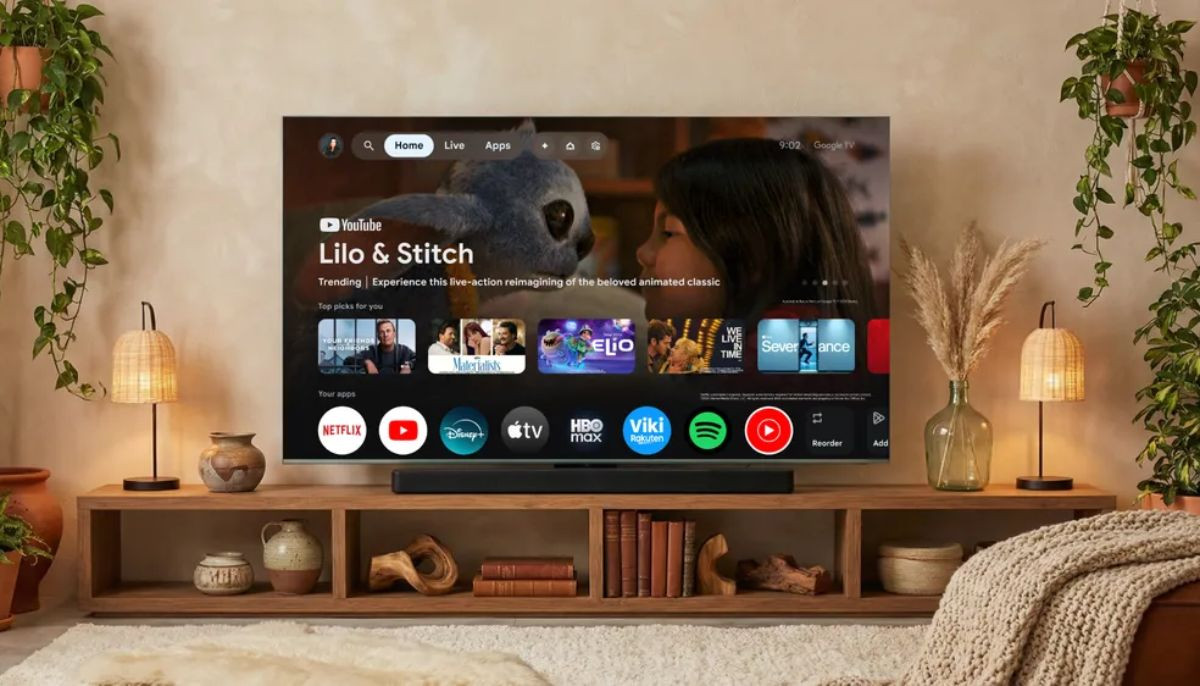
Google is rolling out a major update to Gemini on Google TV, making the AI assistant more visual, interactive and useful for everyday viewing. Announced in early 2026, the update introduces new AI-powered tools, expanded voice controls, and richer on-screen responses.
This feature will initially roll out to select models of Google TV that are produced by TCL, followed by other Google TV models.
One of the most notable additions is the Nano Banana and Veo, tools from Google that will use AI to create images and videos on the TV itself. Consumers can use the AI to produce video or even enhance their own personal photos.
The Gemini service is also now compatible with Google Photos, where one can generate stylish slideshows of pictures based on particular events or moments.
When one asks Gemini for a memory, it is capable of extracting pictures based on that memory and creating a pictorial story out of it.
Moreover, the responses are starting to become more graphical. They will include images, video context, and sports updates, along with answers.
Users will also be able to request "deep dives" on a topic, which will provide on-screen explanations in addition to other graphical items. This is all in an effort to make Google TV searches more engaging.
Apart from the fun, Gemini has new capabilities with the addition of the voice control feature. Consumers can control image and audio settings with phrases such as "the screen is too dim" or “I can't hear the dialogue.” Gemini will automatically tweak brightness or volume without navigating menus.


-
 Google Gemini access is changing: What users need to know
 -
 WhatsApp update blocks logins on outdated phones: Here’s what to know
 -
 Vance says Microsoft replaced laid-off workers with foreign hires: What the visa data shows
 -
 Hollywood takes aim at Zuckerberg, Musk and Altman over AI fears
 -
 Amazon CEO points to Netflix as data centre backlash grows
 -
 Atlassian's CEO says AI can't be paused: Here's his reason
 -
 3 things to know before you set up a Google passkey
 -
 Trump's super intelligence rebrand: Why Musk, Benioff signed on