Legal experts say Anthropic has strong case against Pentagon blacklisting: Here's Why
Legal experts said the apparent contradictions in the government's position are strong evidence that the Pentagon's decision was arbitrary
AI venture Anthropic has recently filed a lawsuit against the Pentagon after it has taken a decision over the defense department.
Anthropic's lawsuit challenging its Pentagon blacklisting is likely to test the reach of an obscure law aimed at guarding military systems against sabotage, and legal experts say the artificial intelligence lab appears to have a strong case that President Donald Trump's administration overstepped.
Anthropic said in its lawsuit filed on Monday that the Defense Department's decision to exclude the company from military contracts by designating it as a supply chain risk violated its free speech and due process rights and was aimed at punishing the company for its views on AI safety in warfare.
The designation could cut Anthropic's 2026 revenue by multiple billions of dollars and cause reputational harm, company executives said Tuesday.
In labeling Anthropic as a supply chain risk, the Pentagon invoked a rarely used law that allows it to bar companies from certain contracts if they risk exposing military information systems to enemy infiltration.
The law has never been tested in court or used against a U.S. company, according to a Reuters review of legal databases.
Courts often defer to the executive branch's judgment on national security, and that will likely be the centerpiece of the government's defense. But five national security law experts told Reuters the Pentagon may have overstepped.
"It's not at all clear that the statute can even apply to an American company where there's no foreign entanglement," said University of Minnesota Law School professor Alan Rozenshtein.
The Defense Department said it does not comment on pending litigation.
Exquisite Technology, 'Anthropic':
Anthropic, which is incorporated and headquartered in the U.S., said it is not an "adversary," which the Trump administration has defined in executive orders to mean China, Russia, Iran, North Korea, Cuba and Venezuela, according to Anthropic's lawsuit.
The company also said Defense Secretary Pete Hegseth gave no explanation for how Anthropic's Claude AI tool constituted a supply chain risk despite its continued use by the U.S. military and Hegseth's own praise of Claude as "exquisite" technology that the Defense Department would "love" to work with during a February 24 meeting with Anthropic cited in the lawsuit.
The military has used Claude as recently as last month during strikes on Iran, according to Reuters reports.
Hegseth designated Anthropic a national security supply chain risk on March 3 after the company refused to lift restrictions on Claude that prohibit the military from using it for autonomous weapons or domestic surveillance.
In a February 27 social media post announcing the designation, Hegseth accused Anthropic of cloaking itself in the "sanctimonious rhetoric of 'effective altruism'" to "strong-arm the United States military into submission."
Anthropic has said AI is not reliable enough for autonomous weapons and that it opposes domestic surveillance as a matter of principle. The Pentagon has said that Anthropic's restrictions could endanger American lives.
Legal experts said the apparent contradictions in the government's position are strong evidence that Hegseth's decision was arbitrary.
"The government was simultaneously threatening to use the Defense Production Act to force Anthropic to sell its services, using its services in active military operations, and saying it's too dangerous to use them in government contracts," said University of Minnesota Law School professor Alan Rozenshtein.
"Not all of these things can be true," he said.


-
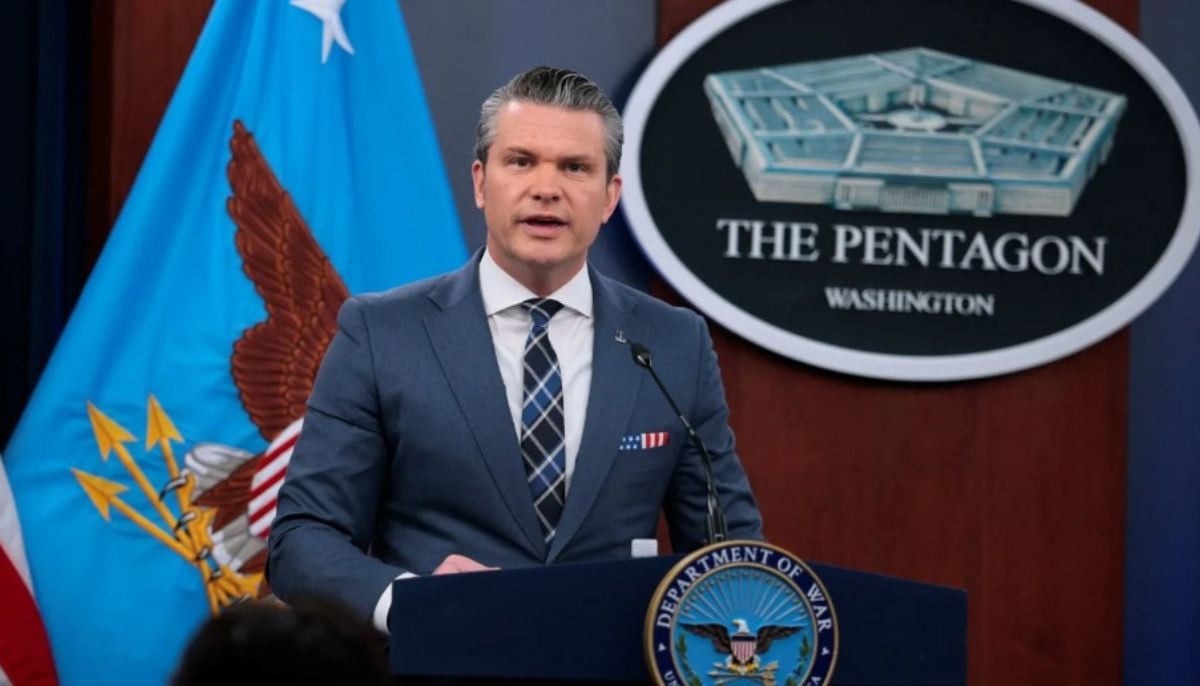 Pentagon to adopt Palantir AI as core US military system after dispute with Anthropic
 -
 Elon Musk found liable in fraud lawsuit by Twitter shareholders over $44 billion deal
 -
 US allows 30-Day sale of Iran Oil in bid to curb rising global energy prices
 -
 Pinterest considers social media restrictions for under-16s following Australia’s ban over child safety concerns
-
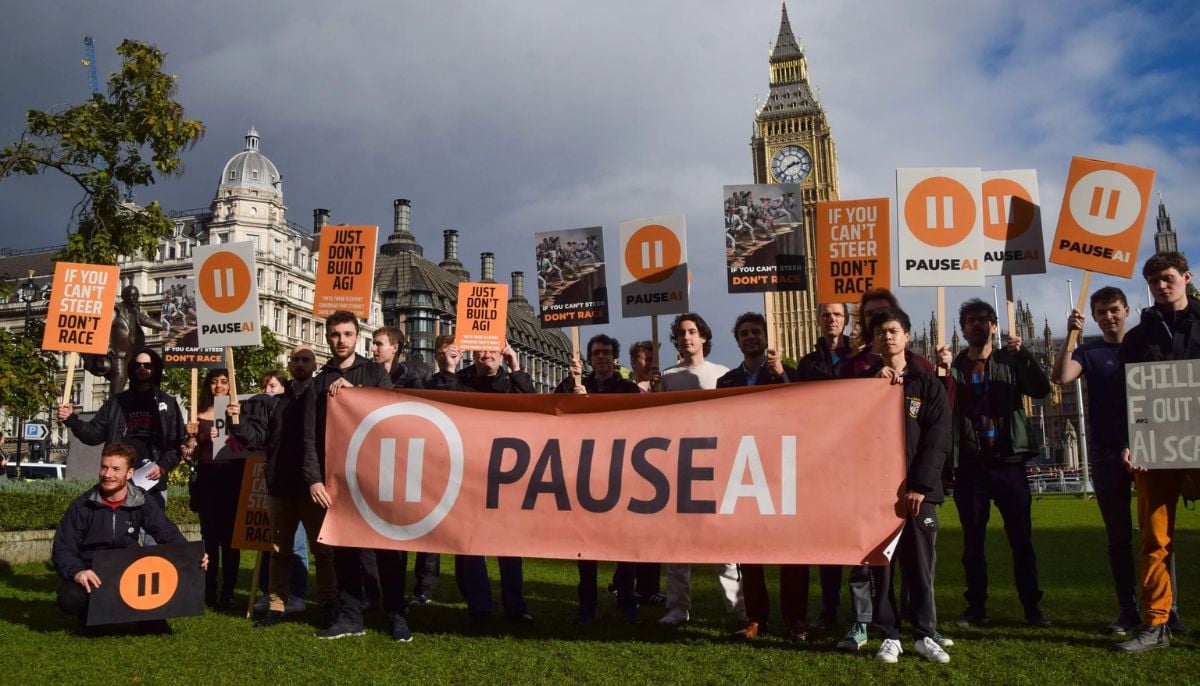 Creators push ‘human-made’ labels as AI content floods internet
 -
 AI with human traits may be safer, Anthropic study finds
 -
 Pavel Durov: Russia’s anti-VPN measures triggered payment failure
 -
 Meta pauses Mercor work after major data breach
 -
 Sam Altman's OpenAI buys TBPN to expand communication strategy and shape AI public debate
 -
 DeepSeek V4 model bets on Huawei chips as demand surges
 -
 Quantum computing threat: Why global cybersecurity could collapse soon
 -
 AI cyberattacks set to outpace human hackers, experts warn
-
 Why Google launched the Gemma 4 AI model: Here’s everything to know
 -
Microsoft to power Japan’s AI future with massive $10B investment
-
AI won’t replace jobs, it will evolve them, says Nvidia CEO
-
From human to machine: 15% of American accept AI in leadership roles
-
From AI self-preservation to ‘peer preservation’: New study raises alarm over hidden risks
-
OpenAI caught funding child AI group without disclosure
-
New AI tool targets extremism, redirects ChatGPT users to real-world help
-
Has X disabled the ability to copy video links?
-
Experts call on Google to ban Youtube AI videos for kids
-
Apple turns 50: Tim Cook reflects on five decades of impact