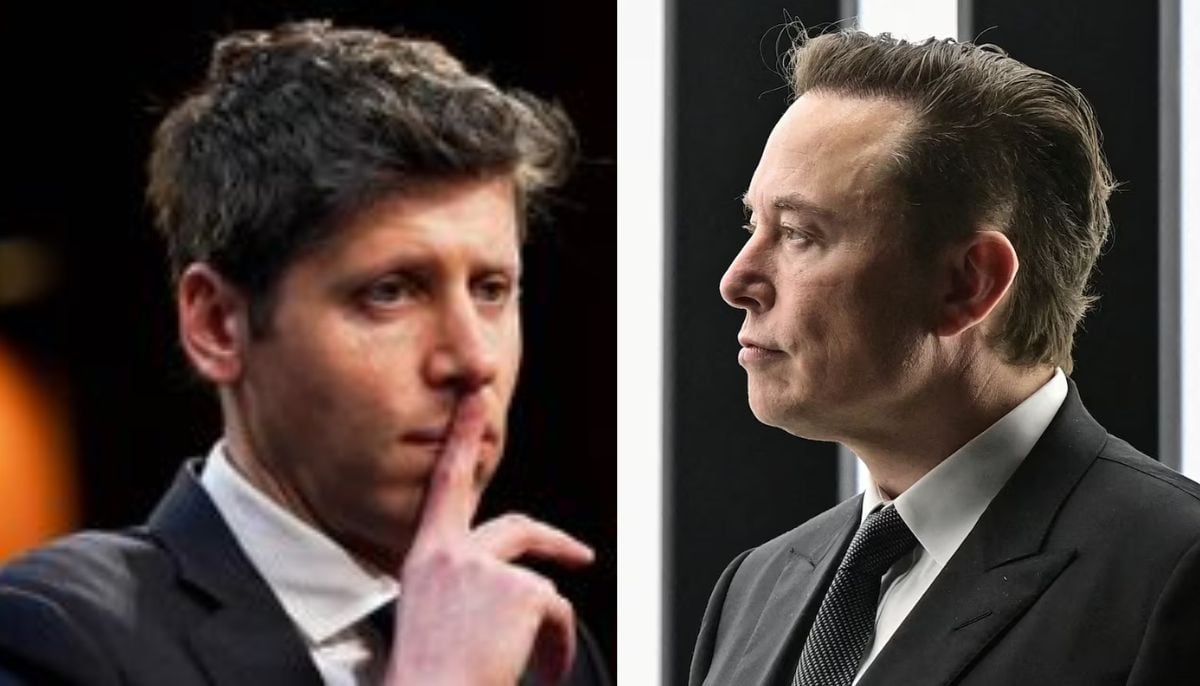
Inside tech giants’ billion-dollar deals powering 2025 AI boom
The burgeoning spending in AI chips and cloud computing has skyrocketed companies’ valuations

In 2025, the world witnessed an artificial intelligence boom driven by the billion-dollars tech giants’ investment in AI infrastructure.
The burgeoning spending in AI chips and cloud computing has skyrocketed companies’ valuations, thereby taking the US stock indexes to new heights.
However, the massive surge in circular deals has raised the concerns regarding the bursting of the “AI bubble” among tech experts and financial institutions.
Billion-dollar circular deals fueling AI boom in 2025
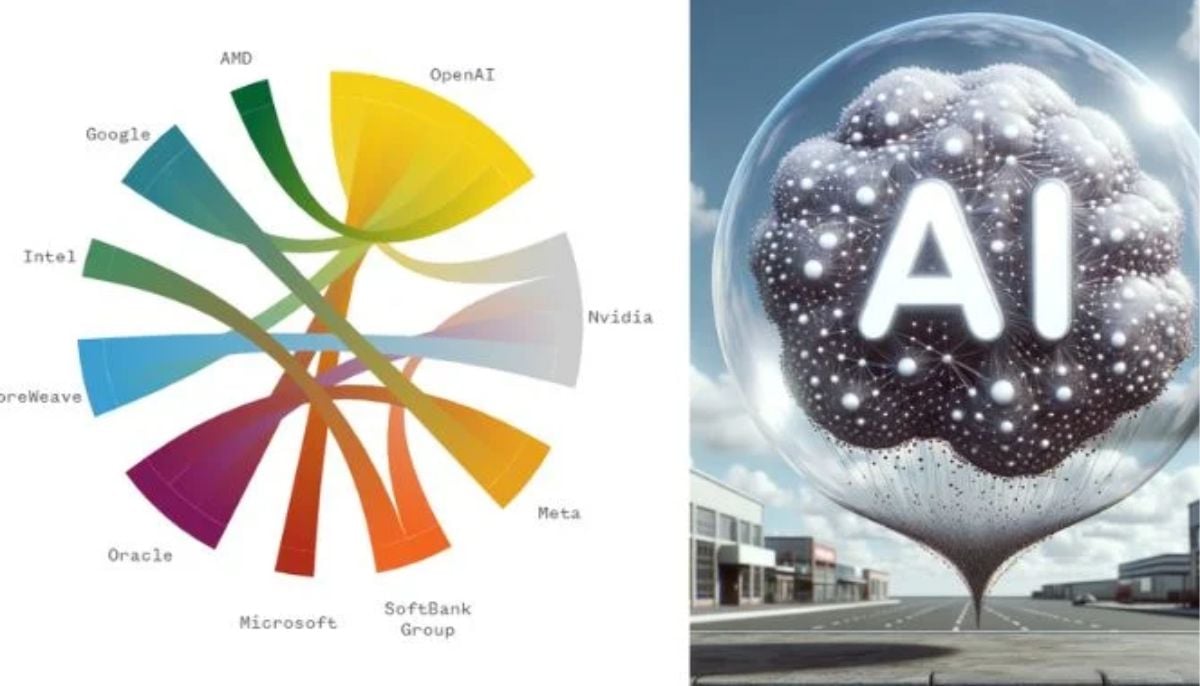
OpenAI deals with other tech firms
OpenAI has entered into key deals with significant tech firms. Amazon is in talks to invest more than $10 billion inOpenAI, aiming to sell its AI-powered chips and computing power to ChatGPT maker and signalling a major shift in the competitive AI landscape.
Similarly, Disney has announced a $1 billion investment in OpenAI. It will also allow the tech giant to use characters from Pixar, Marvel, and Star Wars franchises in AI video generator Sora.
Under the three-year licensing agreement, Sora and ChatGPT will generate videos featuring Disney characters such as Mickey Mouse, Cinderella, and Mufasa early next year.
OpenAI has made a deal with Broadcom for producing its first in-house AI processors.
Advanced Micro Devices (AMD) and OpenAI joined the partnership with the announcement of a multibillion-dollar deal.
Under this agreement, OpenAI will buy AMD’s chips, in turn the company will be entitled to take a stake of as much as 10 percent in the semiconductor giant.
In addition, Nvidia has invested $100 billion in OpenAI in a bid to establish state-of-the-art 10 gigawatts of AI data centers equipped with millions of Nvidia GPUs.
OpenAI is also collaborating with Oracle over the biggest cloud deal, under which the tech firm will buy $300 billion worth computing power for 5 years. CoreWeave also signed a five-year contract worth $11.9 billion with OpenAI.
The deals are further complicated by the joint venture named Stargate between OpenAI, Oracle, and SoftBank, aiming to build additional data centers.
Meta key deals
Meta has also partnered with the firms who are already the customers of OpenAI. For instance, Meta has signed a $14 billion deal with CoreWeave to acquire the computer power.
As reported by Reuters, the Facebook parent company also partnered with Google for a 6-year cloud computing deal.
Oracle is also in talks for a multi-year cloud computing deal worth about $20 billion.
Google deals with other firms
Google is planning to invest $40 billion in new three data centers in Texas through 2027.
Google also hired the Windsurf’s staff members and will pay $2.4 billion as a part of license fee for using the technology.
Nvidia deals
Recently, Nvidia has agreed to license technology from AI startup Groq for its AI-powered chips for $20 billion in cash. The acquisition of assets marks Nvidia’s largest-ever purchase.
Moreover, Anthropic, Microsoft, and Nvidia have also signed a deal in which Microsoft will invest up to $5 billion and US-based chipmaker up to $10 billion in Anthropic.
In turn, Anthropic will provide up to 1 gigawatt of computing powered by Nvidia’s Blackwell GPUs.
CoreaWeave also signed a $6.3 billion initial order backed by Nvidia. The chipmaker has committed to purchasing any of CoreWeave’s cloud capacity that remains unsold to customers. Nvidia has also invested $5 billion in Intel.
The growing concerns of AI bubble
Given the massive AI-based deals, the concerns related to the AI bubble have been gaining ground since the middle of the year, giving it resemblance to the 2008 financial crisis.
According to an analysis conducted by MacroStrategy Partnership, the current AI bubble is larger than the past crises, 17-times more bigger than the 1990s dot-com bubble and four times the scale of the 2008 financial crisis.
In 2025, the IMF and Bank of England also issued warnings against the bursting of the AI bubble based on the sudden rise in companies’ valuations.


-
 Iran restores 90% of missile facilities after strikes, US intel says
 -
 PCOS renamed PMOS: What new diagnosis means for millions of women’s health
 -
 EU cracks down on social media’s addictive design practices with new legislation
 -
 ‘Godzilla’ El Nino warning: Rare weather pattern could make 2027 hottest year ever
-
 Apple opposes EU measures to help AI rivals access Google services
 -
 WhatsApp to get ‘Incognito Chat’ as Meta expands private AI features
 -
 AutoScientist lets AI models train themselves faster
 -
 Alibaba shares fall after sharp decline in core profitability
 -
 Adobe Premiere is finally coming to Android this summer, Google confirms
 -
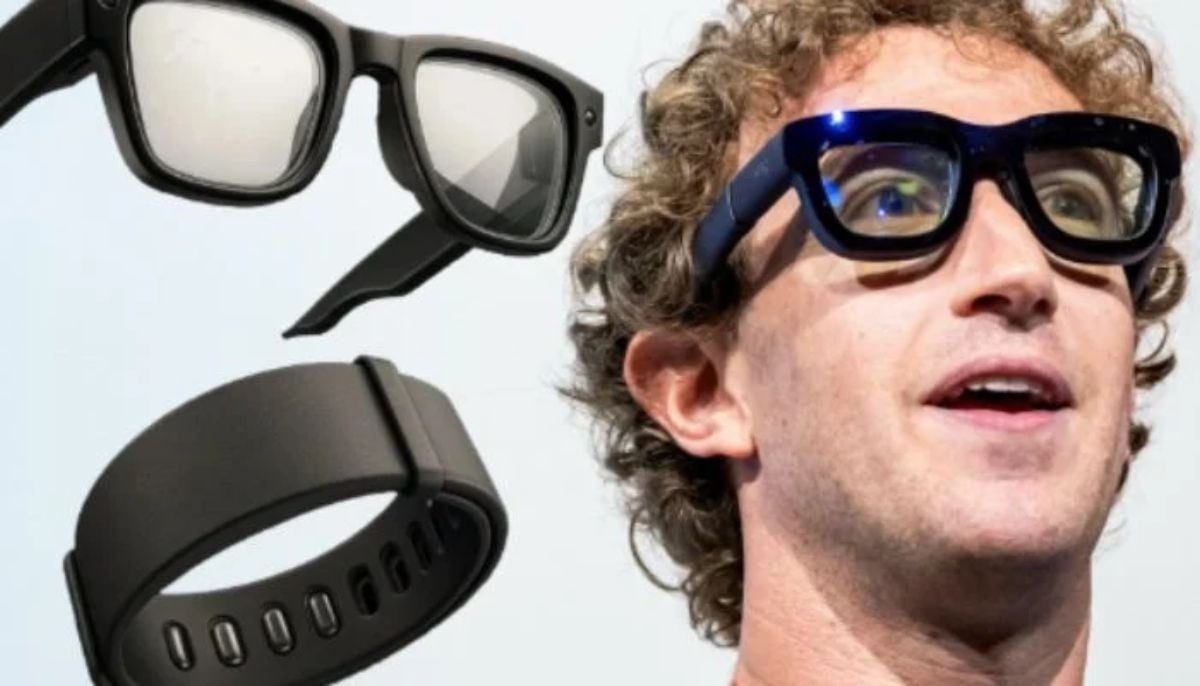 Meta Connect 2026: Mark Zukerberg hints at major wearables
 -
 Claude Code's creator runs ‘few thousand’ AI agents overnight on his phone
 -
 China leads new healthcare alliance to expand its dominance across Asia-Pacific