Global investors are turning to Chinese AI, here’s why
Global Wealth Management rated China 's tech as 'most attractive,' because of its strong policy backing, technological self-reliance, and rapid AI monetization'
While, AI boom has shifted the tech dynamic in recent years it also sparked new fears and concerns.
Global investors are increasing their wagers on Chinese artificial intelligence companies, betting on the next DeepSeek and seeking to diversify, with concerns growing about a speculative bubble in the sector on Wall Street.
As reported by Reuters, demand for China's AI companies is also being stimulated by Beijing's push for tech independence.
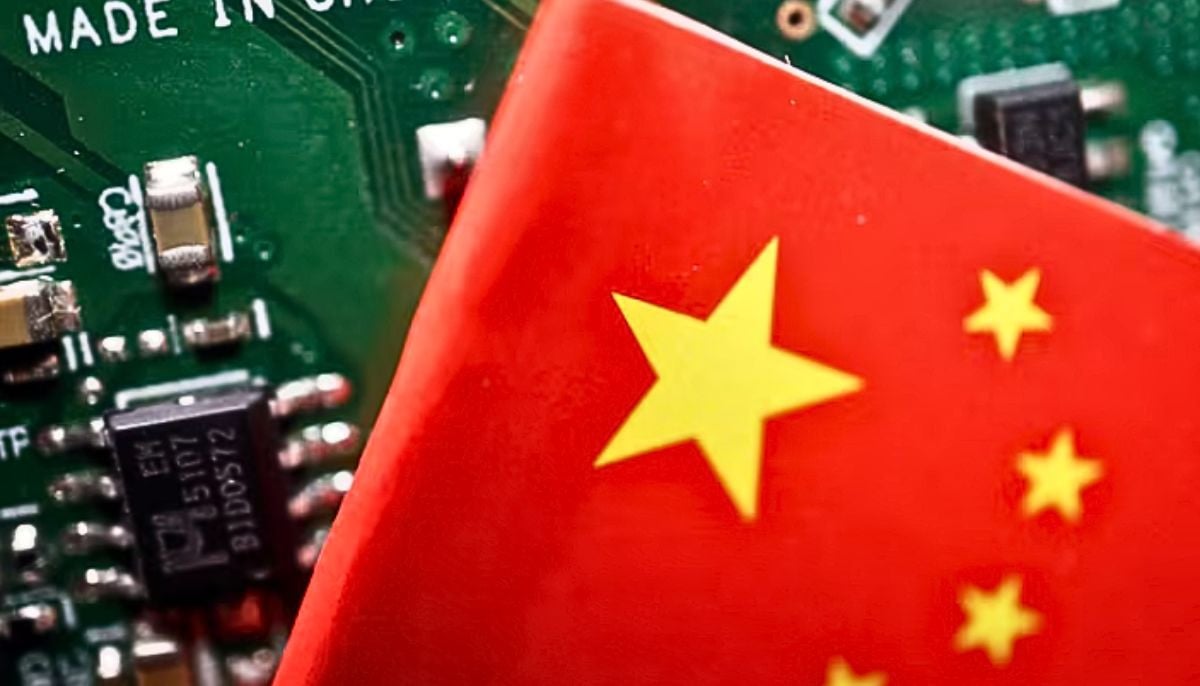
China has fast-tracked blockbuster listings of chipmakers, notably Moore threads, dubbed China’s Nvidia and MetaX-both of which debuted this month.
The global community see China closing the tech gap with the U.S. as Beijing steps up support for AI chipmakers, spurring bets on Chinese companies just as worries grow over lofty valuations on U.S.-listed AI stocks.
MetaX soared 700% in its Shanghai market debut as the Chinese AI chipmaker tapped into strong momentum triggered by Beijing's push to reduce reliance on chips from U.S. firms.
Why is Chinese AI preferred globally?
Global asset managers are increasingly eyeing Chinese AI firms as a wave of startups lists on the mainland and in Hong Kong, seeking to tap into surging investor appetite following the meteoric rise of DeepSeek, China’s answer to ChatGPT.
"While the U.S. remains the leader in frontier AI, China is rapidly narrowing the gap," said Gemma Cairns-Smith, investment specialist at Ruffer. "The competitive landscape is shifting."
Investment giant Ruffer, said it has "deliberately limited exposure" to the Magnificent Seven—the U.S. tech giants—and is looking to add positions in Alibaba for bigger exposure to China's AI theme.
The investment company is gaining exposure to the AI theme through Chinese tech giants such as Alibaba, which operates an AI chip unit, owns the large language model LLM Qwen, and is ploughing money into cloud infrastructure.
Moreover, UBS Global Wealth Management rated China tech as “most attractive,” citing investors' search for geographical diversification and China's "strong policy backing, technological self-reliance, and rapid AI monetization."
The AI race:
The tech-heavy stock index Nasdaq had given investors access to "China's versions of stocks like Google, Meta, Apple, Tesla, and OpenAI."
Jason Hsu, founder of U.S.-based Rayliant Global Advisors, said in the AI race, the U.S. has an edge in innovation, while China has advantages in engineering, manufacturing and power supply.
"For investors, the prudent and wise strategy is to capture AI opportunities and manage uncertainty through diversification,” he added.
Carol Fong, group CEO of CGS International Securities, said investors should selectively add companies that have benefited from China's "self-reliance" push in the AI and semiconductor sectors while keeping global leaders in their portfolio.
There is a hunt for potential leaders in the high-tech segments such as robotics and AI, where they see clearer policy directions and relative value as compared to their Western counterparts.
Fong suggests that “investors should balance exposure in the current fragmented, geopolitics-driven chip cycle.”


-
 Tesla drops as spending cuts raise questions about AI and robotics plans
 -
 Barclays to cut 5,000 jobs as AI reshapes banking
 -
 China's brain-computer interface market could reach $920m by 2028
 -
 Bombardier shares rise as Trump drops threat to block aircraft sales in US
 -
 OpenAI seek to raise $30 billion at $1.4 trillion valuation ahead of Anthropic IPO
 -
 Supreme Court rejects Google challenge to patent office review policy: Here's why
 -
 Netflix faces scrutiny over user engagement ahead of Q3 report
 -
 Meta and Tesla are set to report earnings next week: What to know