Is Histotripsy pioneering a new era of non-surgical cancer treatment?
Histotripsy has been explored in preclinical research for various applications, such as treating cancer, neurological disorders, and cardiovascular conditions
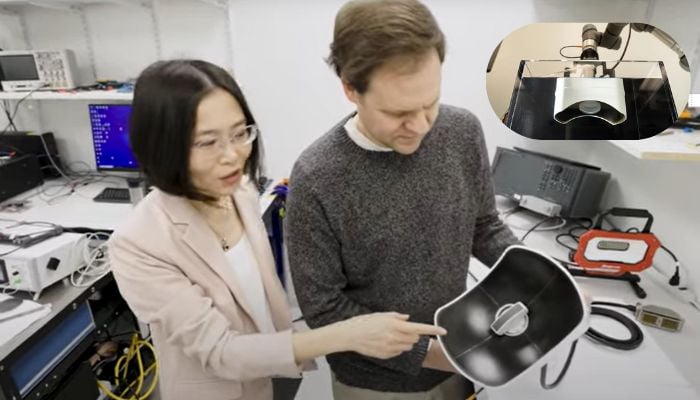
Researchers at Michigan University have discovered the first of its kind non-invasive, non-ionizing, and non-thermal ablation technology supported by real-time imaging, called histotripsy.
Ultrasound technique has long been in practice and helps physicians to see inside the body, but targeted high-frequency sound waves are offering new ways to target cancer cells.
Histotripsy kills cancer cells through a mechanical process called cavitation, rendering the target into acellular debris. The process is created by high-intensity ultrasound waves.
The tissue is naturally absorbed by the body within 1 to 2 months, leaving only a small residual scar.
Histotripsy has been explored in preclinical research for various applications, such as treating cancer, neurological disorders, and cardiovascular conditions.
Three clinical trials in humans have evaluated histotripsy for managing benign prostatic hyperplasia, liver cancer, and calcified valve stenosis.
It was approved by the Food and Drug Administration (FDA) in October 2023 for the treatment of liver tumors.
Zhen Xu sought a non-invasive method for doctors to eliminate diseased tissue when she was enrolled as a PhD student in biomedical engineering at the University of Michigan in the early 2000s.
She investigated histotripsy by using high-frequency ultrasound waves to mechanically disintegrate tissue, testing her hypothesis on pig hearts.
To her surprise, increasing the pulse frequency was not only less disruptive to the surrounding environment but also more effective on living tissue compared to her earlier approach.
Within a minute of applying ultrasound, Xu noticed a hole forming in the pig heart tissue.
Zhen Xu, who is now a professor of biomedical engineering at the University of Michigan, recalls the moment, saying "I thought I was dreaming.”
Years later Xu’s unexpected breakthrough, histotripsy has emerged as one of several ultrasound-based techniques revolutionizing advanced cancer treatment, enabling oncologists to non-invasively eliminate cancerous tumors with sound instead of surgery.
The UK becomes the first European country in June 2025 by approving histotripsy for NHS patients through its pioneering Innovative Devices Access Pathway.
Although histotripsy shows promising benefits, questions remain, particularly regarding the lack of comprehensive long-term data on cancer recurrence following treatment.
Some researchers have expressed concerns that histotripsy, by breaking up tumors in the body, could potentially spread cancer cells, allowing them to travel and seed new growths in other areas.
Histotripsy may not be effective for all cancer types, according to the study published in the International Journal of Hyperthermia.
Bone can obstruct ultrasound waves, preventing them from reaching tumors in specific areas.


-
 Ariana Grande gets a new look ahead of 'Focker-in-Law' release
 -
 Is Billie Eilish entering a new music era?
 -
 Miley Cyrus did something unexpected for her fan
 -
 Jenna Ortega makes surprising confession about 'Wednesday' success
 -
 JD Vance defends Musk on Starlink amid rising Ukraine tensions
 -
 Elon Musk invests in Ellison’s Skydance media company: Here’s why
 -
 Chris Pratt makes ‘exciting’ confession about Star-Lord comeback
 -
 The Simpsons episode ‘The Revengening’ shatters records