
Tiny butterfly breaks world record for most chromosomes
The tiny butterfly with the most chromosomes of any animal is increasingly threatened by climate change
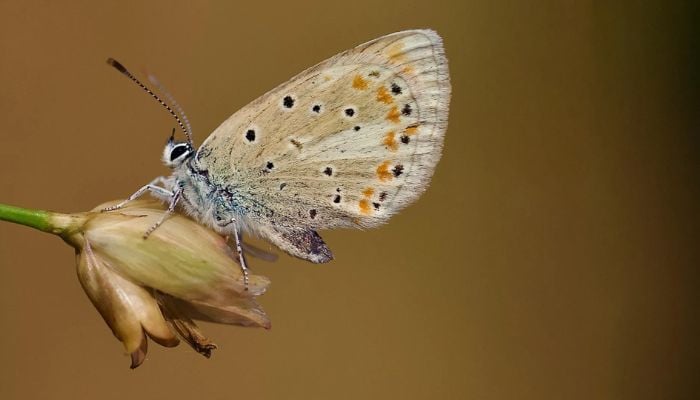
The tiny Atlas blue butterfly, also known as Polyommatus atlantica, has been genetically confirmed as having the highest number of chromosomes out of all multicellular animals in the world.
It boosts an astonishing 229 pairs of chromosomes, while many of its close relatives have only 23 or 24 pairs.
Researchers at the Wellcome Sanger Institute and the Institute of Evolutionary Biology have disclosed that these chromosomes have been broken up over time instead of duplicated.
The research study will explore spellbinding evolutionary reasons
The first genomic study was published in Current Biology, which allowed experts to explore the evolutionary reasons behind this extreme number of chromosomes.
The chromosomal changes can be observed in human cancer cells and therefore helps in understanding the process in distinct species that could help inform cancer research.
Experts have produced a gold-standard reference genome for this species; this allows researchers to compare this extreme genome with other butterflies to better analyze how species form and change gradually with time.
The practical implications will be used to seek the development of new species
In the past, it was difficult to study new species practically, so experts used the DNA of one species and compared it to others in the same family to examine which genes and traits had been retained or lost, thus making approximations.
The Atlas blue butterfly is found in the mountain ranges of Morocco and northeast Algeria. It has been surmised to have the most chromosome pairs in the animal kingdom.
This was the first time experts have sequenced the butterfly's genome to confirm the species record of having the most chromosome pairs in the animal kingdom.
The number of chromosomes has contributed to the process of new species formation and helped species adapt to their environment. Atlas blue butterflies belong to a group of species that have evolved rapidly over a short course of time.
The research study led to stimulating questions
The research study raises multiple questions to be explored in the future.
The splitting of chromosomes could help to better understand genetic diversity by allowing constant arrangement of genome parts or to give other unknown benefits.
Furthermore, comparisons need to highlight whether any genes have been preserved and to give us more valuable information on the biology of the butterflies and their evolution.
A senior author at the Wellcome Sanger Institute, Professor Mark Blaxter, said, "Genomes hold the key to how a creature comes and might to go in the future. To be able to tell the story of our planet, we must have the story of each species and see where they overlap and interact with each other and to better understand this process in the Atlas blue butterfly."






-
 Jennifer Hudson gets candid about Kelly Clarkson calling it day from her show
 -
 Bad Bunny faces major rumour about personal life ahead of Super Bowl performance
 -
 Will Smith couldn't make this dog part of his family: Here's why
 -
 Kylie Jenner in full nesting mode with Timothee Chalamet: ‘Pregnancy no surprise now’
 -
 Bianca Censori on achieving 'visibility without speech': 'I don't want to brag'
 -
 World’s first Pokemon theme park opens in Tokyo, boosts Japan tourism
 -
 AI next big trial: Elon Musk calls for ‘Galileo Test’ to prove true intelligence
 -
 5 most 'weirdest' taxes in the world that may surprise you