Tintina fault beneath Canada could unleash massive earthquake after 12,000 years
According to new research, the hidden fault in Yukon could trigger 7.5 magnitude earthquake
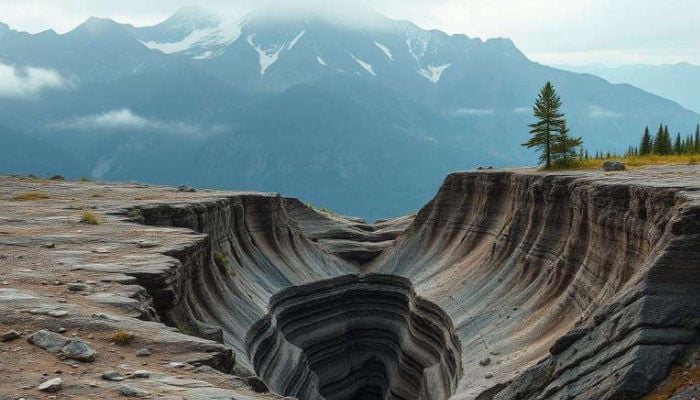
A long-forgotten and dormant geological fault in Canada’s Yukon region is at the brink of triggering a massive earthquake after 12,000 years of silence, a new study reveals.
The Tintina Fault stretches about 620 miles from British Columbia to Alaska and is thought to be dormant for at least 40 million years.
Despite being inactive for several millennia, scientists believe that it has a history of large ruptures within the last 2.6 million years. Now the hidden faultline possesses potential to trigger massive tremors.
The research was led by the researchers at the University of Victoria. During the study, they found a 130km section of the fault near Dawson City, demonstrating the earthquake induced marks on the rugged landscape.
By using the high-resolution topographic data from satellites, the team detected fault scraps and observed the ground shifts.
According to the findings published in the journal Geophysical Research Letters, the Tintina Fault could awaken a 7.5 magnitude earthquake, damaging Klondike and Dempster highways and cutting off Dawson City from the critical access routes.
Potential evidence of ancient earthquakes
The scientists have put forward the recent warning about the earthquake by measuring displaced landforms.
Glacial features that are 2.6 million years old have displaced sideways by about 0.62 miles. Those land features that are 132,000 years old are offset by 246 feet.
But 12,000 old landforms do not show any signs of displacement.
According to researchers, this long-silent inactivity is not a good sign. They estimated that the fault has built up about 20 feet of slip deficit since its last rupture.
Theron Finley, the lead author of the study said, “Though our observations indicate a substantial slip deficit, we don’t yet have a good sense of how frequently large ruptures occur on the Tintina Fault. At this point we can’t really say whether another rupture is likely in the short term, or in thousands of years.”
The Tintina Fault has not been recognised as a threat within Canada’s National Seismic Hazard Model. However, the research warns about its unpredictable nature.


-
 'The Young and the Restless' star Dee Freeman passes away at 66
 -
 Kanye West and Lauryn Hill send SoFi Stadium into total meltdown: 'GOAT is back'
 -
 Blake Lively, Justin Baldoni's legal case receives latest update
 -
 Olivia Munn raves about her 'Your Friends & Neighbors' costar James Marsden
 -
 Brian Cox launches savage attack on Johnny Depp
 -
 Misua, 'Drag Race: Philippines,' breathes her last at 27
 -
 Kelly Osbourne finds new love after Sid Wilson split
 -
 GTA 6 Trailer 3 may drop soon as fans count down