New blood type discovered in French woman from Guadeloupe
Woman inherited blood type from her parent who each had a mutated gene
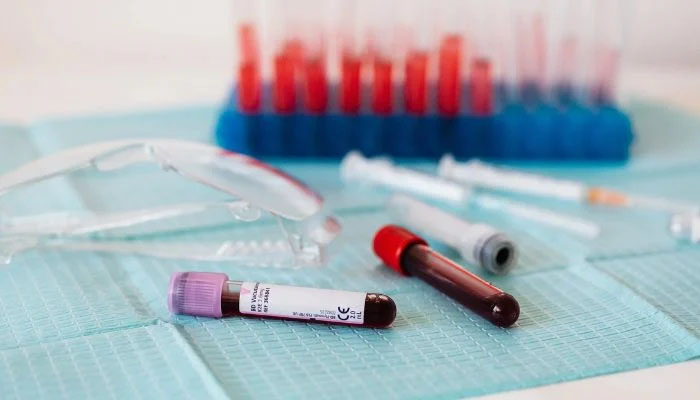
A French woman from the Caribbean island of Guadeloupe has been identified as the only known carrier of a new blood type, dubbed "Gwada negative," France’s blood supply agency has announced.
The announcement was made 15 years after researchers received a blood sample from a patient who was undergoing routine tests ahead of surgery, the French Blood Establishment (EFS) said on Friday.
"The EFS has just discovered the 48th blood group system in the world!" the agency said in a statement on the social network LinkedIn.
"This discovery was officially recognised in early June in Milan by the International Society of Blood Transfusion [ISBT]." The scientific association had until now recognised 47 blood group systems.
Thierry Peyrard, a medical biologist at the EFS involved in the discovery, told AFP that a "very unusual" antibody was first found in the patient in 2011. However, resources at the time did not allow for further research, he added.
Scientists were finally able to unravel the mystery in 2019 thanks to "high-throughput DNA sequencing", which highlighted a genetic mutation, Peyrard said.
The patient, who was 54 at the time and lived in Paris, was undergoing routine tests before surgery when the unknown antibody was detected, Peyrard said.
This woman "is undoubtedly the only known case in the world," said the expert. "She is the only person in the world who is compatible with herself," he said.
Peyrard said the woman inherited the blood type from her father and mother, who each had the mutated gene.
The name "Gwada negative", which refers to the patient’s origins and "sounds good in all languages", has been popular with the experts, said Peyrard.
The ABO blood group system was first discovered in the early 1900s. Thanks to DNA sequencing, the discovery of new blood groups has accelerated in recent years.
Peyrard and colleagues are now hoping to find other people with the same blood group. "Discovering new blood groups means offering patients with rare blood types a better level of care," the EFS said.


-
 New research suggest restricted eating hours may reduce cognitive decline in older age
 -
 Ebola spreading ‘like a wildfire’ in Democratic Republic of Congo, expert warns
 -
 CDC expands Cyclospora outbreak to nine states as cases continue to rise
 -
 UK heatwave safety: How to protect children and pets
 -
 Could weight-loss injections be increasing hair loss? Here’s what experts say
 -
 US announces $5 billion AI push to transform health, construction research
 -
 Study reveals how much coffee is safe for your heart
 -
 Doctors challenge the science behind the Pentagon’s plan for testosterone screening