'Customs duty will be slashed to 15%', PM unveils tariff reforms
Premier says this move to encourage international investment and help create new job opportunities
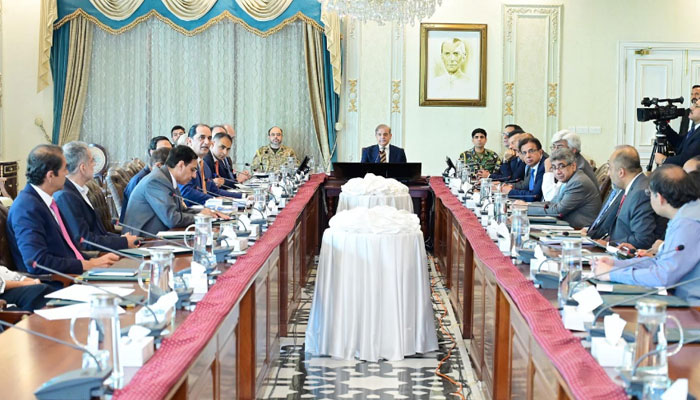
Unveiling major tariff reforms, Prime Minister Shehbaz Sharif on Friday announced that customs duty would be capped at 15%.
Chairing a meeting on National Tariff Policy, PM Shehbaz said that additional customs and regulatory duties would be phased out in the next four to five years.
“This move is being considered a major milestone toward economic improvement that will enable export-led growth. This decision is expected not only to help control unemployment but also to keep inflation in check," said the premier.
He maintained that it would also encourage international investment and help create new job opportunities.
The prime minister directed that Additional Customs Duty (currently ranging from 2% to 7%) and Regulatory Duty (currently varying from 5% to 90%) be eliminated over the next four to five years.
Similarly, the customs duty will be capped at a maximum of 15%, as currently, for some items, the rate exceeds 100%, read a statement issued by the Prime Minister's Office.
The number of duty slabs has also been reduced to four to ease legal complexities related to imports and provide a level playing field to various industries.
PM Shehbaz reiterated that his government was committed to developing a strong economy, creating employment opportunities, and doing away with inflation.
He said that after thorough consultations with national and international economic experts, a comprehensive plan for fundamental economic reforms had been formulated, and the decision to reduce customs duties was also part of those reforms.
The prime minister’s “historic decision” will open the economy to foreign investment and ensure that domestic industries have easy and affordable access to raw materials, intermediate goods, and capital equipment, read the statement.
Moreover, increased competitiveness will enable local industries to become more efficient and competitive, to assist in controlling inflation and stabilising the national currency.
The premier maintained that tariff reduction would help stabilise the current account deficit and contribute to higher revenue collection, and also formed an implementation committee on the subject.


-
 Google and Unity partner on new AI game creation platform
 -
 Sources reveal truth behind French brand Lacoste CEO getting fired ahead of Paris runway show
 -
 Canadian rents hit three-year September low after 24 months of declines
 -
 Google under fire in £1 billion UK case over app store charges
 -
 Anthropic CEO Dario Amodei pulled in $18 Million last Year, IPO filing shows
 -
 X faces pressure to reject Turkey’s broad requests to block accounts
 -
 Euro plunges to 17-month low as France debt and Spain election fuel uncertainty
 -
 OPEC+ agrees to keep November oil targets steady amid market uncertainty