
Asian Games: Nepal create history by scoring 314 in T20 match
Nepal also breaks records by scoring fastest century and fifty in a T20 match
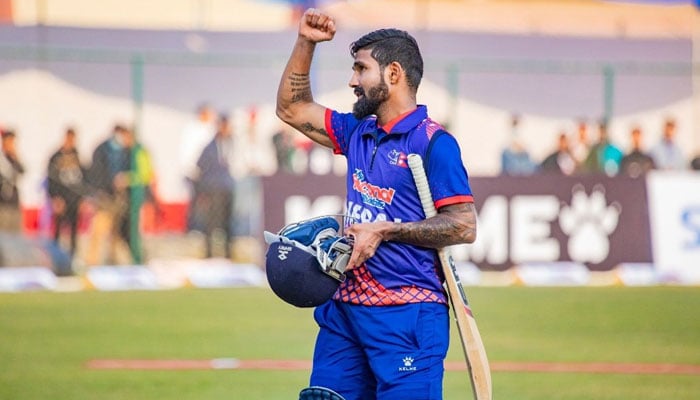
HANGZHOU: The Nepal men's cricket team kicked off the Asian Games campaign by creating history after the team scored 314 runs in the T20 match against Mongolia on Wednesday.
Nepal set a world record for scoring the most runs in T20 cricket with seven wickets in hand.
Nepal's Kushal Malla smashed a century in just 34 balls. He remained unbeaten by scoring 137 off 50 balls. Meanwhile, Dipendra Singh Airee scored a 50 with just nine balls.
The team's skipper Rohit Paudel scored 61 runs off 27 balls,
They also set a record by winning the first match with a huge margin against Mongolia by 273 runs. The Mongolian team was bowled out for just 41 runs in the 14th over of the match.
"Nepal kicked off their Asian Games campaign in spectacular fashion, clinching a resounding victory over Mongolia by a staggering 273 runs. Records tumbled in their wake, marking an unforgettable day for Nepalese cricket," wrote the Asian Cricket Council (ACC) on their official X account, formerly known as Twitter.
Before Nepal, the Czech Republic had set the record of winning by a huge margin. They achieved this feat during a match against Turkey by winning with 257 runs in 2019.
Earlier, Afghanistan had set a record for making the most runs in a T20 match. The Afghan team scored a massive 278 runs for three wickets in a T20 match against Ireland in February 2019.





-
 Breezy Johnson engaged at Olympics after emotional finish line proposal
 -
 Olympics men hockey game: McDavid, Crosby power Canada past Czechia
 -
 Ex-Arsenal footballer Thomas Partey charged with additional rape counts
 -
 Chloe Kim set for historic halfpipe gold showdown at Milano Cortina
 -
 Vladyslav Heraskevych disqualified from Winter Olympics 2026 over helmet controversy
 -
 Thomas Tuchel set for England contract extension through Euro 2028
 -
 Milano-Cortina 2026: Assessing Italy’s Winter Olympics economic growth
 -
 Victor Wembanyama’s historic first half tops Tim Duncan, sparks massive NBA reactions