Renowned physicist terms artificial intelligence chatbots a 'glorified tape recorder'
Kaku emphasized the potential of quantum computing to revolutionize healthcare
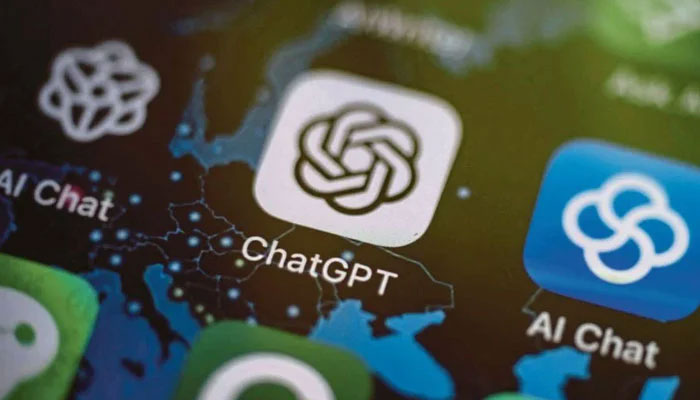
Renowned theoretical physicist Michio Kaku has challenged apprehensions surrounding new AI technology, characterizing it as a "glorified tape recorder."
In an enlightening interview, Kaku shared his perspective on the potential of chatbots, exemplified by OpenAI's ChatGPT, to be a positive force in society, bolstering productivity and understanding.
Kaku pinpointed the root of widespread unease, attributing it to chatbots' capacity to curate content from online sources, assembling human-generated fragments into responses that might be mistakenly perceived as original. While the phenomenon can lead to chatbots producing human-like outputs, Kaku was keen to highlight the crucial distinction: these programs lack the ability to independently discern truth from falsehood, relying on human guidance for validation.
The physicist took a historical approach, mapping out the evolution of computing into distinct phases. He delineated the early analog stage, characterized by rudimentary tools like sticks, stones, and mechanical devices employed for computation. The subsequent phase emerged during World War II, with the advent of electricity-powered transistors driving microchip innovation, shaping the contemporary digital landscape.
Looking ahead, Kaku envisioned a forthcoming era dominated by quantum computing. By harnessing the intricate states of subatomic particles, such as electrons, quantum computing has the potential to exponentially enhance computational prowess. In contrast to traditional binary systems reliant on zeros and ones, quantum computers leverage the intricate states of particles, enabling rapid problem-solving and intricate analysis.
Esteemed technology giants, including IBM, Microsoft, Google, and Amazon, are at the forefront of quantum computing exploration, extending access to this technology via cloud platforms. This innovation holds significant potential across various sectors, encompassing risk assessment, supply chain optimization, and machine learning applications.
Kaku's vision extended beyond the business landscape. He emphasized quantum computing's transformative potential within healthcare. Complex diseases like cancer, Parkinson's, and Alzheimer's operate at a molecular level, presenting unique challenges to conventional computational systems. Quantum computing's capacity to decipher the intricate language of molecular and quantum electron interactions holds promise for breakthroughs in treating these ailments.
Michio Kaku's insights underline the transformative potential of AI and quantum computing, reshaping industries and catalyzing scientific progress. His commentary serves to counter prevailing apprehensions surrounding AI, underscoring its potential for positive impact.


-
 US Navy helicopter goes down in Arabian Sea; One missing
 -
 Gun violence rocks World Cup celebration as US city's mayor takes drastic action
 -
 UK woman faces possible lifetime ban from owning dogs over alleged heartless act
 -
 Kemi Badenoch challenges Starmer over £298bn Defence Investment Plan at PMQs
 -
 Trump hails progress in US-Iran talks: ‘Getting along very well’
 -
 Two killed in light aircraft crash in Essex, England
 -
 Trump’s Hormuz operation sparks the biggest rift in US-Saudi relations in years: Here’s why
 -
 Netanyahu seeks to end US financial aid to Israel within decade: What’s behind the plan?
-
 Who is Melat Kiros? Democratic Socialist defeats 15-term incumbent in Colorado primary
 -
How Trump earned more than $1 billion from crypto after returning to the White House: Report
-
Why foreign investors are buying Canadian government bonds in record numbers
-
Police lay charges against 11 teens following Nooran Rezayi shooting investigation