Life-sustaining magnetic field: Radio signals detected from Earth-like planet
In quest for potentially habitable worlds, determining whether Earth-like exoplanets have magnetic fields is crucial
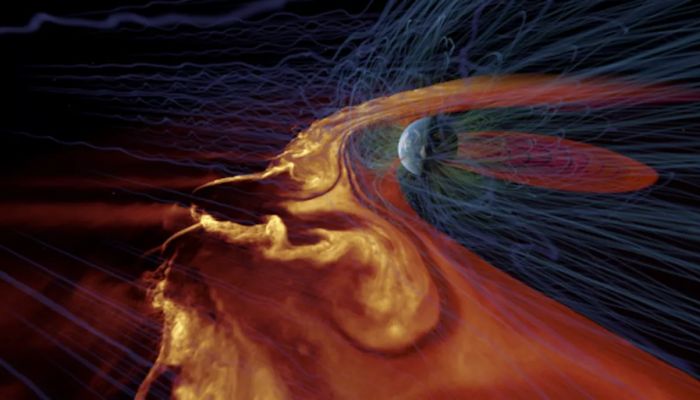
The Earth's magnetic field provides various benefits such as protection from the sun's harmful rays and the creation of beautiful auroras.
Other planets in our solar system possess magnetic fields as well. However, scientists have long questioned if Earth-like planets in other star systems have magnetic fields.
Recently, a potential answer emerged with the discovery of evidence for a magnetic field on YZ Ceti b, a rocky exoplanet located 12 light-years away from Earth. This discovery, made using the Very Large Array radio telescopes in New Mexico, marks the first possible detection of a magnetic field on an exoplanet, according to a study published in the journal Nature Astronomy on April 3.
"This research shows not only that this particular rocky exoplanet likely has a magnetic field but provides a promising method to find more," study author Joe Pesce, director of the National Radio Astronomy Observatory (NRAO), said in a statement.
The importance of magnetic fields in creating habitable planets makes them a fascinating subject for astronomers. Planets lacking a magnetic field are vulnerable to energetic particles from a star that can strip away their atmosphere, rendering them unsuitable for life.
In the quest for potentially habitable worlds in other solar systems, determining whether Earth-like exoplanets have magnetic fields is crucial, says Pesce.
Although YZ Ceti b is not a habitable planet, it provided a unique opportunity for astronomers to detect radio waves from a faraway exoplanet's magnetic field. The planet orbits too close to its star, and one year on YZ Ceti b is just two Earth days long.
This proximity allows the planet to "plow" through the star's material, and its magnetic field pushes electrically charged plasma back toward the star, creating bright flashes of energy when it interacts with the star's own magnetic field.
The radio waves observed were likely an aurora on the star, created through interactions with the planet, according to the researchers.
This finding offers a promising lead in identifying magnetic fields on Earth-like planets in other solar systems and advancing the search for potentially habitable worlds beyond our own.


-
 First possible evidence of Planet Nine found in infrared data
 -
 Elon Musk announces SpaceXAI rebrand to SpaceXSI following presidential order on 'Super Intelligence'
 -
 ISS Command changes hands in emotional ceremony
 -
 Moon water acts nothing like it does on Earth, study finds
 -
 Hawaii’s Hōlei sea arch collapses after centuries on Big Island: What happened
 -
 Solar system may have a much shorter lifespan than we thought
 -
 Singapore builds world’s ultra-precise clock outperforming US, China
 -
 NASA expands Moon base research with three new investigations