Constant heavy rains bring mudslides to Chaclacayo, Peru
As heavy rains continue to drench the region, residents fear the rising waters of Rimac would wreak havoc on them
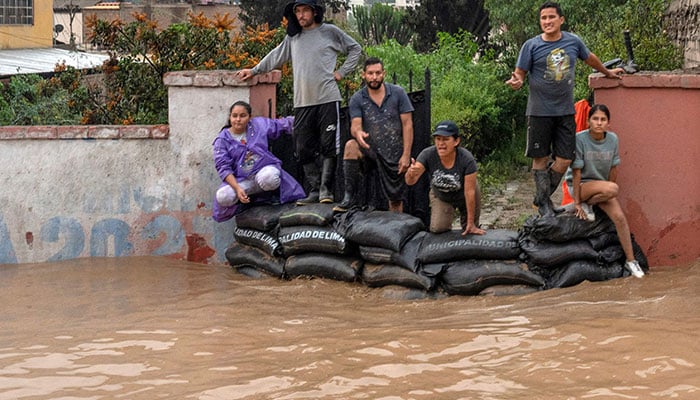
CHACLACAYO: One mudslide after another finally destroyed the house of Elvis Palomino in Chaclacayo, east of Peru’s capital Lima, where others are stacking sandbags they hope will save them from a similar fate.
As heavy rains continue to drench the region, they fear the rising waters of the Rimac -- Quechua for "talking river" -- could also turn them into casualties of the natural disasters that have claimed several dozen lives this year.
"It took my entire house, left me with nothing," said Palomino, a 58-year-old security guard with four children who lives in a middle-class suburb of brick houses.
He barely managed to contain his tears as he stood looking at the only two walls left of what used to be his family home, destroyed by torrents of mud and stone, known locally as huaicos, that swept through Chaclacayo this week.
Three other homes nearby were also razed.
"It is not easy to accept this reality," Palomino told AFP. "I do not wish this on anyone. I don’t have a bed, I don’t have a radio, all my stuff is gone."
The clothing on his back was all he had left.
The rainy season that started in January and could last until April has left 50 dead and some 8,000 affected by damage countrywide, according to relief agencies.
Unusually intense this year, the downpours have seen rivers burst their banks and caused landslides in the Peruvian Andes.
‘Frightened’ of the river
In Chaclacayo, some 30 kilometers (18.6 miles) east of Lima, rivers of mud flooded the main highway, stranding hundreds of vehicles with cargo and passengers.
Ray La Rosa, a neighbor of Palomino, said that for him, "the most worrying thing is that we are without water and electricity because of the huaicos two days in a row."
Nearby, 56-year-old Charo Matos was scooping water from her flooded house with a bucket, saying she was now "frightened" of the rising Rimac.
Authorities have set up a camp on dry ground with 15 tents to receive families evacuated from the banks of the river, as the meteorological office warned moderate to intense rains would persist until Friday.
The downpours were triggered by cyclone Yaku, a type of extreme event experts say are associated with the weather phenomenon El Nino, which warms the south Pacific and pummels the coasts of Peru and Ecuador with heavy rains.


-
 Illinois teen accused of plotting mass shooting at Hindu temple after co-workers alert police
 -
 Trump approval rating hits new low as Democrats lead Republicans by nine points
 -
 Trump overrules Pete Hegseth's plan to livestream Fort Hood gunman's execution
 -
 William Chapman, the man killed by tiger at Yorkshire zoo had schizophrenia, inquest told
 -
 Trump says execution of Nidal Hasan will not be livestreamed
 -
 Piers Morgan extols Zelenskiy after Elon Musk targets Ukrainian president
 -
 Lindsay Clancy update: Why lone holdout juror believes she was guilty
 -
 Kremlin sends strong message to Ukraine as Zelenskyy resumes strikes on Russian refineries
-
 US prosecutors hit ousted Venezuelan leader Nicolas Maduro with torture charges
 -
Jeffrey Donaldson handed 15-year sentence over child sex abuse offences
-
'Time for Zelensky to go': Elon Musk calls for Ukrainian president to step down amid Starlink dispute
-
Trump campaigns for GOP as Democratic PAC pours millions into senate races ahead of midterm elections