
UAE names oil chief as president of COP28 climate talks
Environmental activists were quick to react, warning involvement of major figure from oil industry could slow progress in fight against global warming
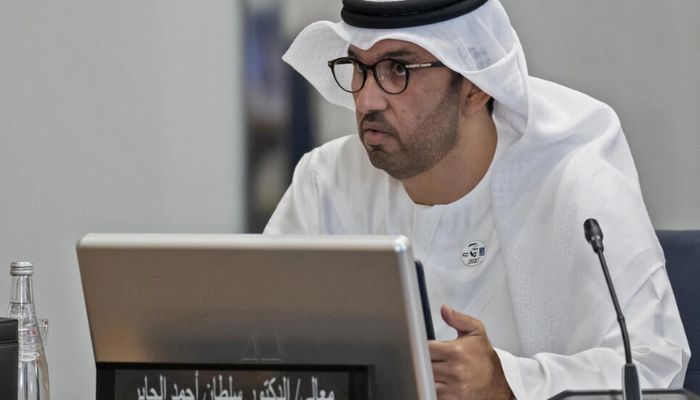
DUBAI: The head of the United Arab Emirates' national oil company was named Thursday as president of this year's COP28 climate talks, prompting fierce criticism from environmental activists.
Sultan Ahmed al-Jaber, who heads up the UAE's Abu Dhabi National Oil Company (ADNOC), will be the first CEO to take the role at the UN summit, said a statement carried by the official WAM news agency.
"We will bring a pragmatic, realistic and solutions-oriented approach that delivers transformative progress for climate and for low carbon economic growth," Jaber said in the statement.
"I sincerely believe that climate action today is an immense economic opportunity for investment in sustainable growth," he added.
Environmental activists were quick to react, warning that the involvement of a major figure from the oil industry could slow progress in the fight against global warming.
Jaber's appointment "poses an outrageous conflict of interest", said Harjeet Singh, head of global political strategy at Climate Action Network International.
"The ongoing menace of fossil fuel lobbyists at the UN climate talks has consistently weakened outcomes of the climate conference but this takes it to another dangerous and unprecedented level."
COP27, held in Egypt in November, concluded with the adoption of a hotly contested text on aid to poor countries affected by climate change, but failed to set new ambitions for lowering greenhouse gas emissions.
The UAE's hosting of this year's edition, in Dubai in November and December, has provoked concern from activists urging a shift away from oil, which produces greenhouse gases.
Too hot for humans
The UAE, one of the world's biggest crude producers, argues that oil remains indispensable to the global economy and is pushing the merits of carbon capture — removing carbon dioxide, the main greenhouse gas, as fuel is burned or from the air.
"Limiting global warming to 1.5C will require significant reductions in emissions, a pragmatic, practical and realistic approach to the energy transition and more help for emerging economies," the UAE's statement said, referring to the goal set at previous COP summits.
"The UAE is committed to multilateral cooperation and an inclusive process that brings together emerging economies with developed nations, civil society, and business to achieve the solutions and the pace of change required."
The UAE is one of the countries at the sharp end of climate change as it lies in one of the world's hottest regions, with summer temperatures nudging 50 degrees Celsius (122 degrees Fahrenheit).
According to a study published in 2021, parts of the Gulf could become too hot for human habitation by the end of this century.
Having diversified its economy over the decades, the UAE relies less and less on oil, whose revenues now make up 30% of GDP.
But the Gulf state forecasts that the oil and gas industry would need to invest more than $600 billion every year until 2030 just to keep up with expected demand.
At the same time, the UAE is spending billions to develop enough renewable energy to cover half of its needs by 2050, when it is targeting domestic carbon neutrality — which excludes emissions from its exported oil.





-
 Man convicted after DNA links him to 20-year-old rape case
 -
 California cop accused of using bogus 911 calls to reach ex-partner
 -
 'Elderly' nanny arrested by ICE outside employer's home, freed after judge's order
 -
 key details from Germany's multimillion-euro heist revealed
 -
 Search for Savannah Guthrie’s abducted mom enters unthinkable phase
 -
 Barack Obama addresses UFO mystery: Aliens are ‘real’ but debunks Area 51 conspiracy theories
 -
 Rosie O’Donnell secretly returned to US to test safety
 -
 'Harry Potter' star Rupert Grint shares where he stands politically