Beijing sees record COVID cases as China outbreak spirals
More than 28,000 new infections were reported nationwide, nearing the record high since the pandemic began
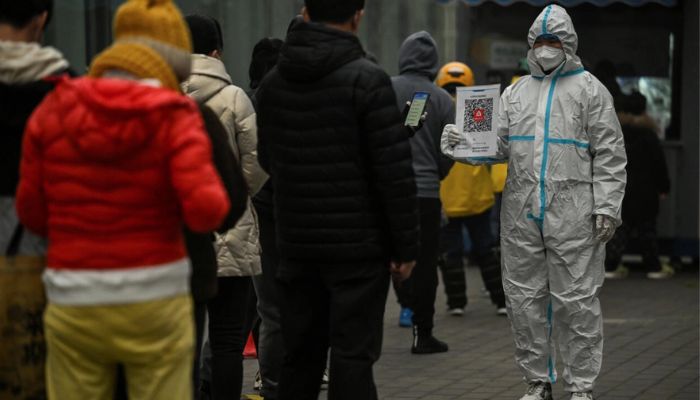
BEIJING: China's capital Beijing posted a record number of new COVID cases on Tuesday, with the city hunkering down under a tightening chokehold of restrictions that have sent schools online, closed many restaurants and forced employees to work from home.
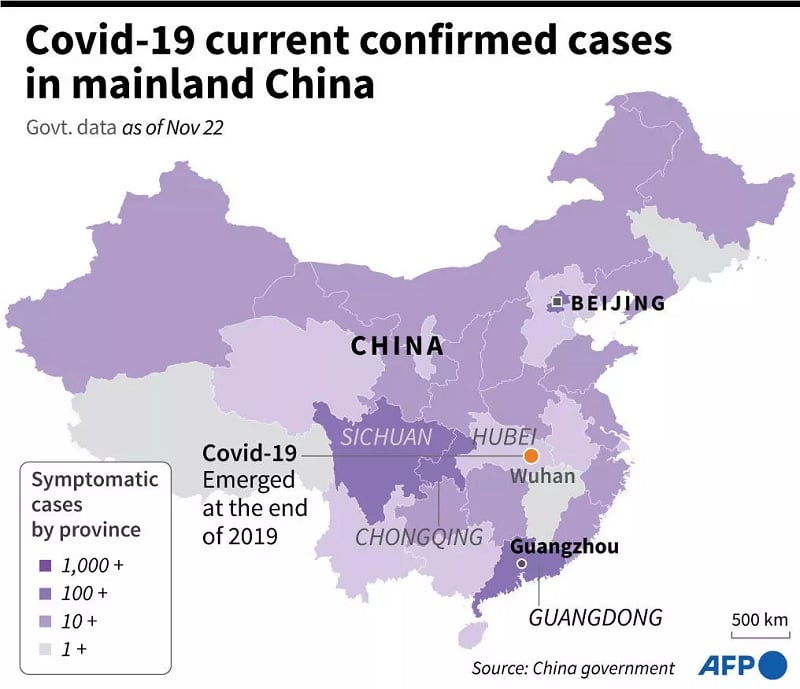
More than 28,000 new infections were reported nationwide — nearing the record high since the pandemic began — with Guangdong province and the city of Chongqing logging over 16,000 and 6,300 cases respectively, health authorities said.
New cases in Beijing have also jumped in recent days, more than doubling from 621 on Sunday to Tuesday's 1,438 — a pandemic record for the city.
The last major economy still welded to a zero-tolerance COVID policy, China enforced snap lockdowns, mass testing and quarantines to control outbreaks to great success in the earlier stages of the pandemic.
But the latest spiralling outbreak is testing the limits of that playbook, with officials keen to avoid citywide lockdowns like Shanghai´s two-month ordeal in April, which marred the finance hub's economy and international image.
Three elderly Beijing residents with underlying diseases died from COVID over the weekend, authorities said, marking China's first COVID deaths since May.
While the capital has so far avoided a blanket shutdown, there have been widely enforced snap lockdowns of individual buildings and long PCR testing queues due to the requirement for a 24-hour negative test for entry to most public spaces.
Over the weekend, authorities advised residents to stay and home and not travel between districts. And on Monday required travellers to the city to test more times after they arrive.
Many tourist attractions, gyms and parks have been closed, with large-scale events such as concerts cancelled.
China declared its most significant easing of coronavirus measures to date on November 11, billed as an "optimisation" to limit the economic and social impact of zero-COVID measures.
Among the steps was a reduction of compulsory quarantine times for international arrivals.
Multiple Chinese cities cancelled mass COVID testing last week but some later reinstated them, underlining the difficulty of controlling the fast-spreading Omicron variant.
Shijiazhuang, which had previously cancelled mass testing, began a partial lockdown Monday after cases surged, while several districts of southern epicentre Guangzhou also locked down the same day.
The limited relaxation has not marked a reversal of zero-COVID, which has left China internationally isolated, wreaked havoc on the economy, and sparked protests in a country where dissent is routinely crushed.


-
 Kremlin sends strong message to Ukraine as Zelenskyy resumes strikes on Russian refineries
 -
 US prosecutors hit ousted Venezuelan leader Nicolas Maduro with torture charges
 -
 Jeffrey Donaldson handed 15-year sentence over child sex abuse offences
 -
 'Time for Zelensky to go': Elon Musk calls for Ukrainian president to step down amid Starlink dispute
 -
 Trump campaigns for GOP as Democratic PAC pours millions into senate races ahead of midterm elections
 -
 China-North Korea bridge finally opens after 12-year delay: ‘New chapter of bilateral trade’
 -
 Zelenskyy signals new Russian refinery strikes after feeling ‘betrayed’ by Trump
 -
 Anthropic to add official US voting information to Claude ahead of midterms
-
 University of Chicago investigates reported sexual assault at off-campus fraternity house
 -
Tumbler Ridge school shooting: US grand jury indicts alleged accomplice indicted
-
Trump targets Canada again with 51st state remarks at Arizona rally
-
Alberta separation referendum draws massive early turnout as 174,532 cast ballots