
US-China standoff will have bearing on Pakistan: Maleeha
So long as US-China relations remain unsteady, it will have a bearing on Pakistan’s effort to reconfigure ties with Washington, says former diplomat
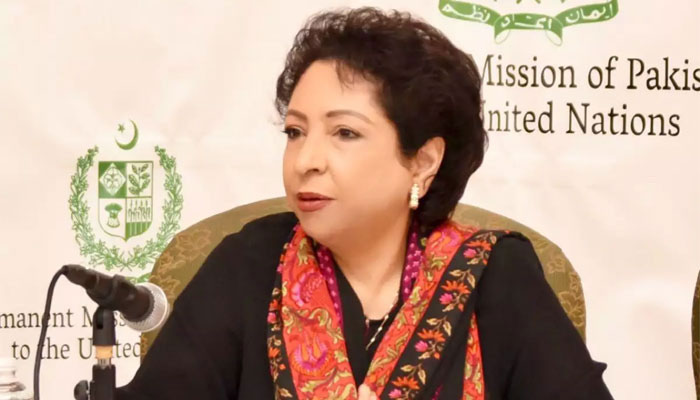
ISLAMABAD: Pakistan’s former ambassador Dr Maleeha Lodhi has said that Pakistan is seeking a reset of ties with the United States, but relations will inevitably be affected by Washington’s standoff with Beijing.
“Islamabad wants to avoid being sucked into this big power rivalry. But this is easier said than done. So long as US-China relations remain unsteady, it will have a bearing on Pakistan’s effort to reconfigure ties with Washington,” she said taking part in a discussion under the auspices of Washington based United States Institute of Peace (USIP) on “Pakistan and India at 75: Prospects for the future” on Monday.
Other participants were former Foreign Secretary Jalil Abbas Jailani while India’s former envoys to the United States Nirupama Rao, and Arun Singh.
Dr Lodhi said that redefining Pakistan-US relations would be a daunting task in the changed context of America’s military withdrawal from Afghanistan and its choice of India as its strategic partner in the region in its strategy to contain China.
“Aspects of America’s Indo-Pacific strategy also have security implications for Pakistan, not least because it injects Cold War dynamics into the Indian Ocean, which Islamabad has long sought to prevent becoming India’s Ocean,” she added.
She maintained that Pakistan’s greatest security challenges would continue to emanate from its neighborhood — from the unsettled situation on its border with an unstable Afghanistan and from troubled relations with India.
“An imposing foreign policy challenge will be to navigate the growing confrontation between the United States and China, two global powers with which Pakistan has its most important bilateral relationships. Ties with China will remain an overriding priority for Islamabad. The strategic direction the relations have taken in recent years has given this long-standing partnership added significance at a time of a fundamental change in the international balance of power brought about by China’s rise as a global power; the China Pakistan Economic Corridor (CPEC) is emblematic of it,” she explained.
The former ambassador said that managing difficult relations with India would continue to preoccupy Pakistan.
“Dialogue has been suspended for years. Trade was halted and diplomatic representation downgraded in 2019 after India’s illegal action of incorporating and bifurcating the disputed state of Jammu and Kashmir. The hope that back-channel communication between the two countries in 2021 would yield a thaw turned to disappointment when no headway was made on any front, beyond the re-commitment by both neighbors in February 2021 to observe a ceasefire on the Line of Control. This was an important development, however, as only two years earlier the two states were locked in a dangerous confrontation epitomized by the Balakot crisis, when Indian planes carried out bombing inside Pakistani territory. In view of the persisting deadlock, the future outlook for Pakistan-India relations is uncertain. Given the impasse on Kashmir, an uneasy and fragile state of “no war, no peace” is likely to continue.”
She believed that outside powers could play a constructive diplomatic role in helping Pakistan and India reinitiate a broad-based peace process, which proceeded with some promise in the past, especially between 2004 and 2008.
Jalil Abbas Jailani said that the history of Pakistan-India relations could be characterized as one of lost opportunities. “Mistrust, hostility and conflict has undermined efforts toward peace and stability. India’s position on almost every issue regarding Pakistan has hardened ever since the emergence of India as a “strategic partner” of the United States and other Western powers,” he added.
“Although issues between Pakistan and India are long-standing, progress is possible. Leaders on both sides of the border need to develop a national consensus in support of the peace process and bring all stakeholders including the core constituencies, media and opposition parties on board,” he observed.






-
 Piers Morgan Reacts To Photo With Ghislaine Maxwell
 -
 UK Data Privacy Regulators Raises Safety Concerns, Warn Against AI-generated Images
 -
 Kate Middleton, Prince William 'steeling Themselves' For Harry's Inevitable Arrival With Lilibet, Archie
 -
 Australian PM Agrees With King Charles, Backs Removing Andrew From Line Of Succession
 -
 Kiefer Sutherland's Arrest Sparks Fresh Fears As Friends 'beg Him' To Get Help After Father's Death
 -
 John Davidson 2026 BAFTA Backlash: Tourettes Action Charity Defends Him Over 'unintentional' Racial Slur
 -
 Kim Kardashian Obsessed TV Star 'Lip King' Breathes His Last At 32
 -
 Prince Harry Backtracks On Privacy Fears For Princess Lilibet: Here’s Why Public Saw Her Face Amid Andrew Drama
 -
 Prince Harry Appears To Have Bowed To Meghan Markle's Decisions
 -
 Andrew Scandal Shockwave Prompts Key Commonwealth Member To Back UK Efforts
 -
 Sterling K. Brown's Wife Reveals If She Gets 'Paradise' Spoilers
 -
 Rape Suspect Flees Aboard After Mistaken Prison Release
 -
 Jack Hughes' Patriotic Words Spark Calls For Tate McRae To Dump Her Boyfriend
 -
 Andrew Pushes For Major Deal With King Charles To Avoid Jail
 -
 50 Cent Online Trolling Tactic Exposed As He Targets Rival Rappers' Mothers In Rap Beefs
 -
 King Charles Attends 'series Of Meetings' Amid Growing Calls For His Abdication