
Remembering the humility of Anil Datta and Idrees Bakhtiar
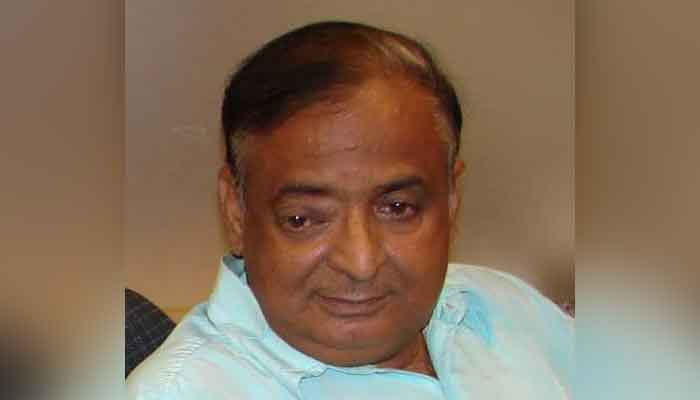
The last story Anil Datta put his name on was about Idrees Bakhtiar. Five days before his own death, Datta covered a condolence reference for Idrees, who had passed away a month ago. He wrote “glowing and affectionate tributes were heaped on the late journalist”, unaware that a similar event would be held for both of them at the Centre for Excellence in Journalism on Friday.
Starting the discussion, former minister Javed Jabbar said that in this “extraordinary” situation, when the media perhaps is in an unprecedented state of crisis due to a global change in media economics among other factors, it was an irony and appropriateness to remember these two distinguished gentlemen.
“They, despite the differences in their personalities, origins and religion — if it at all should be mentioned as a factor — had similarities and commonalities. Their reflection was in their characters of how they behaved with, looked at and listened to others. This quality in both of them was accompanied by humility,” he said.
“When I think about Idrees, the first thing that strikes my mind is his fair mindedness,” Jabbar said, referring to the ideological differences they had shared since their days at the Karachi University as students. “I never felt him getting biased, which is an essential for journalism.”
Datta was a very different person: sensitive, attentive to the details and accurate in writing, he said. “A perception I had of him was of being a lonely person. The last time I saw him in the Dolmen Mall cafeteria. I was with my friends. I saw him getting there and sitting all by himself. I would have invited him over, but we were discussing something private.”
Jabbar said that he felt bad about not meeting him then. “Datta, wherever you are, we are sending you a gift of goodwill and respect. If I could ever meet you above, then we will have coffee together, which we should have had at Dolmen.”
He prayed that both souls may rest in peace, as they were really missed. “Both of them were the core of what journalism in Pakistan should be.”
As a younger brother, Abrar Bakhtiar reflected on Idrees’s family-person side. He told everyone how at the age of 10, his brother had taken the responsibility of the family on his shoulders after their father was jailed by Ayub Khan for speaking against his dictatorship. “He guided us through life. Taught us how to behave, speak and even wear clothes.”
“Bhai Jan was an enlightened person,” he said. “You could find people from the Jamaat-e-Islami and the communist party in his social circle. He admired Maulana Maududi and had similar affection for Maulana Noorani. He had good relations with Altaf Hussain, and Benazir Bhutto called him brother. He hated extremism of any kind. He was an honest person and liked honesty.”
Journalist Qaiser Mehmood said people should have learned more from Idrees. “His work should be compiled together and taught at journalism schools.” Idrees was his mentor, and over the years their friendship grew, he said. “I have had the opportunity of being at the receiving end of his reprimanding perhaps more than anyone.”
Mehmood said he never worked with Datta, but often sat with him at the Karachi Press Club (KPC). “His loneliness had reached to an extent that sometimes he would ask us to see his mobile phone, if it was all right, because it had not rung since yesterday. We would try to give him company as much as we could. I always found him a noble and humble being.”
Sharing his memories of Datta, journalist Zia Ur Rehman said he hated computers. “He used to call it the worst invention of this century. He was a simple person. When he had problems with logging on to his desktop, he would ask me if the CIA was trying to hack into his system. Even at an old age — unlike many reporters — he would personally cover different events.”
Journalist Naeem Sahoutara said that both the personalities were honourable and their work should be passed on to youngsters already in the media or aspiring to get into it.
“Idrees taught me radio journalism. He was an institution unto himself. I often met Datta at the KPC. We may not be able to find a person like him, who had a command over writing about music and the arts like no other.”
Journalist Afia Salam, who moderated the event, said that Idrees helped shape her career. “He would call me, tell me to go to that place or meet that person for work, and I would not be able to argue. I would meet Datta at events and he was so committed to his work that he would always cross-check things before putting them into his story so there should be no errors or mistakes.”


