
Saving the economy
Pakistan today stands safely away from its dangerous outlook just two years ago
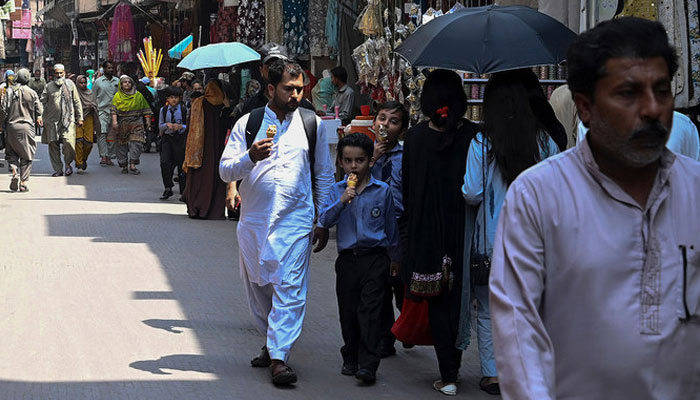
As Pakistan began another financial year this month, amid widespread scepticism, the country’s rulers presided over a sharp contrast between the mood on the streets and their self-proclaimed accomplishments.
On the bright side, Pakistan today stands safely away from its dangerous outlook just two years ago, surrounded by warnings of an upcoming default on foreign debt repayments while the rupee faced volatility. However, a subsequent return to another IMF loan programme has helped Pakistan regain solvency – albeit temporarily.
However, the gap between the mood on the streets and the corridors of power highlights a major dilemma. While Prime Minister Shehbaz Sharif and members of his cabinet claim to lead Pakistan towards greater prosperity, there is no shortage of cynics presenting powerful counterarguments.
Pakistan’s successive rulers have repeatedly failed to heed the warning signs. In a country where almost 40 per cent of the population, or approximately 100 million people, live below the poverty line, leading Pakistan with a ‘sub achha hai’ or all is well mantra can well trigger a miscalculation over the future.
In tandem with this powerful reality lies the profound challenge of climate change, widely illustrated by the ongoing rain-related disasters across Pakistan. In this widening trend, it is hard to find a region where monsoon rains haven’t created an unexpected effect. The changing weather patterns have been a powerful reminder that Pakistan’s food security is increasingly in question.
The recent downturn in Pakistan’s agricultural output, which grew by a meagre 0.6 per cent during the last financial year (July 2024-June 2025), deserves close attention for more than one reason.
The continuing losses in agriculture immediately raise compelling questions over the future of Pakistan’s crop-related cycles, dating back many centuries. It is a pertinent question in view of the devastating consequences that are certain to flow, in case issues related to food insecurity remain unresolved.
Closely related is the sizeable employment and/or income generation opportunities tied to agriculture, which make this a crucial sector for Pakistan’s economy. Unless the incomes of the poorest farmers are lifted and effectively protected, Pakistan may be forced to brace for a potentially widespread social and economic upheaval in the years to come. Simply put, Pakistan must do all it can to protect those who are already living in abject poverty with no hope for the future.
Pakistan’s industrial sector is also surrounded by compelling questions, notably as large-scale manufacturing contracted by 1.6 per cent during the last financial year. For the moment, the improvement in Pakistan’s current account was mainly facilitated by remittances from expatriate Pakistanis living worldwide. It is a continuing trend that has helped the country remain afloat.
Yet, a guarantee to protect Pakistan’s ability to meet its foreign currency obligations must eventually be tied to a robust rise in exports backed by a variety of sources. In this journey, diversification of exports ranging from surpluses in agriculture to the industrial sector is an absolute must.
And finally, this week’s official fanfare behind the launch of a simplified tax filing system for salaried individuals deserves a closer scrutiny. The biggest hole surrounding tax collections lies not with Pakistan’s already burdened salaried class. Instead, it surrounds key sectors of the economy that either do not contribute to Pakistan’s national income tax or contribute significantly below their dues.
Time and again, Pakistan has been reminded of such gaps, driven mainly by the failure of the country’s leaders to tightly enforce the writ of the state. But given the multi-faceted challenges on Pakistan’s economic front, it is now essential to change the past in favour of a more progressive future.
Ultimately, Pakistan’s ability to overcome its current economic challenges lies in its capacity to undertake long-overdue reforms vigorously. These reforms will succeed when Pakistan’s leaders establish a clear path forward and lead by example. Presiding over a bloated public sector, the government has overseen two recent cases that sent an unfavourable message.
First, the cause of reviving the state-owned Pakistan International Airlines (PIA) was akin to bringing a dead horse back to life. Even if it is eventually privatised, PIA’s large debt reportedly will remain on the government’s account as a liability. It is a case that instantly reminds one of a recommendation by well-known businessman Mian Mohammad Mansha. Years ago, he publicly called for the immediate privatisation of PIA, even for a single US dollar, provided its new owner assumed all of its liabilities, including the debt.
Second, the recently unveiled plan to revive the Karachi-based Pakistan Steel Mills with Russia’s backing is yet another case that marked a U-turn. Should Pakistan expand its footprint in the public sector, given the way its economy has deteriorated under the weight of government-owned companies? To that compelling question, the answer must clearly be in the negative.
The writer is an Islamabad-based journalist who writes on political and economic affairs. He can be reached at: farhanbokhari@gmail.com


