
Rs33.8m set aside for rehabilitation of Dilip Kumar, Raj Kapoor’s houses
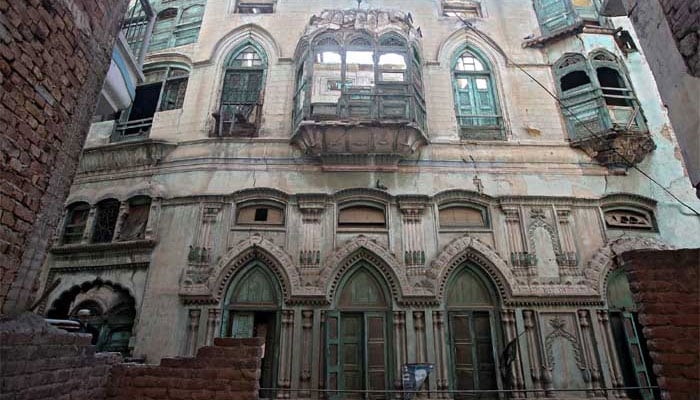
PESHAWAR: The Khyber Pakhtunkhwa government has approved a total of Rs1.04 billion for the preservation of cultural heritage and promotion of heritage tourism under the World Bank-funded KITE (Khyber Pakhtunkhwa Integrated Tourism Development) project. These projects were approved by Chief Minister Sardar Ali Amin Khan Gandapur during a high-level meeting. The wide-ranging initiatives cover archaeological conservation, protection of historic structures, museum upgradation and improvement of security at heritage sites across the province.
Among the most prominent and long-awaited initiatives is the preservation and restoration of the ancestral homes of Bollywood legends Dilip Kumar and Raj Kapoor, located in the historic Qissa Khwani Bazaar of Peshawar. A total of Rs33.8 million has been allocated for this purpose. These houses, which are declared heritage properties, have remained neglected for decades despite their immense cultural and symbolic value. Dilip Kumar, born as Yusuf Khan in 1922, and Raj Kapoor, born in 1924, spent their early childhood in Peshawar before migrating to India after Partition. Both went on to become icons of South Asian cinema and remained deeply connected to their roots. For years, the deteriorating condition of these historic buildings drew criticism from heritage activists and the local public.
In addition, Rs295 million has been sanctioned for the upgradation of museums across Khyber Pakhtunkhwa. This includes improvements in display systems, conservation labs, visitor facilities and security systems, with the goal of enhancing both the preservation of artefacts and the educational experience of visitors.
Other approved heritage conservation projects include the Baho Dheri site in Swabi District with a cost of Rs45 million. Baho Dheri is a Gandhara-period archaeological location that has received limited attention despite its significance.
In Buner District, Rs40 million has been allocated for Ranigat, a major Gandharan site with potential for archaeological tourism and academic research.
In Mardan, the Takht Bhai Buddhist monastery site, which holds UNESCO World Heritage status, has received Rs30 million for preservation and infrastructure enhancement.
A significant amount of Rs220.59 million has been allocated for the upgradation of security and protective infrastructure at major archaeological and heritage sites across the province to prevent encroachment, vandalism and unauthorised access.
The Guli Bagh site in Mansehra District has been approved for development with a budget of Rs35 million. The site holds historical value and can become a tourism and research hub with proper development.
In Dera Ismail Khan, two major sites have been included in the plan. Koh-e-Sulaiman will receive Rs155 million, while the Sheikh Badin archaeological site has been allocated Rs190 million. Both sites are significant due to their cultural, religious, and geographical importance.







-
 Karoline Leavitt Leaving The White House?
 -
 Meghan Markle Joins Fundraising Campaign For Major Cause: 'Incredibly Touching'
 -
 GTC 2026: Nvidia To Unveil Next Gen AI Breakthroughs To Outpace Rivals
 -
 Who Is Old Dominion University Shooter?
 -
 Marco Grazzini Breaks Silence On 'Virgin River' Exit As Season 8 Approaches
 -
 Prince William Under Pressure As Future King: 'Huge Burden'
 -
 AI Data Centers Faces Backlash Over Rising Power Bills
 -
 Scooter Braun Reacts To Ex-wife Yael's New Romance With Tom Brady
 -
 Buckingham Palace Finally Confirms Duchess Sophie Visited US After Meghan, Harry's Announcement
 -
 US KC-135 Refueling Aircraft Crash In Iraq Kills 4 Crew Members, Military Confirms
 -
 Elon Musk’s X Offers Verification Fix To Settle €120M EU Dispute
 -
 Cindy Crawford's Fans Raise Eyebrows Over Early Morning Jacuzzi, Trampoline Routine
 -
 Australia’s Age Verification Rules Could Affect Upcoming GTA 6 Online
 -
 Ray J Faces Fresh Lawsuit Amid Ongoing Legal Battle With Kim Kardashian's
 -
 Instagram Tests Clickable Links In Post Captions: Report
 -
 OpenClaw Mania Turns China Into Agentic AI Powerhouse, Challenging US Primacy