OpenClaw mania turns China into agentic AI powerhouse, challenging US primacy
OpenClaw was developed by Austrian coder Peter Steinberger in November
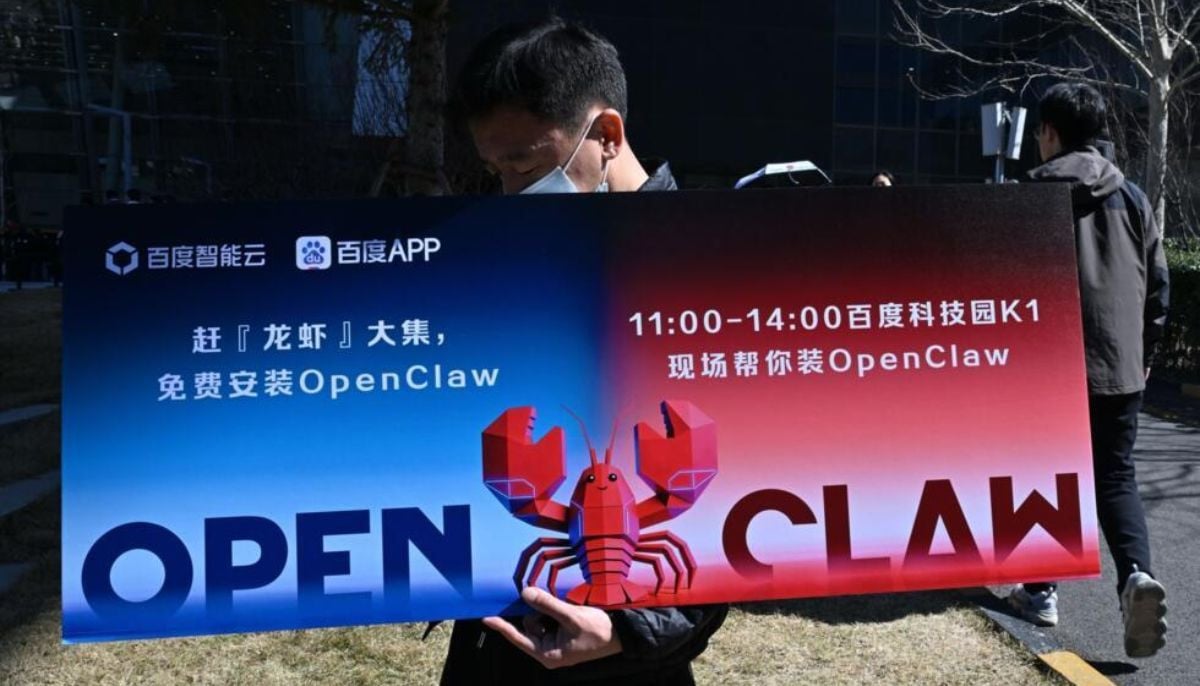
China has been experiencing OpenClaw fever as the Chinese users and tech companies are rushing to adopt this autonomous agentic AI platform despite the security risks.
Called the “ raising a lobster” trend, the widespread adoption of OpenClaw has put China at the heart of the agentic AI revolution. Various Chinese companies are launching their own versions of OpenClaw to maintain the popularity among the user base.
Earlier this week, Alibaba, Baidu, and Tencent launched on-ramp services, designed to make the installation of this software easy.
Recently, MiniMax has launched MaxClaw, a Chinese version of OpenClaw. Similarly, KimiClaw by Moonshot, ArkClaw by ByteDance, DuClaw by Baidu, AutoClaw by Zhipu, and QClaw by Tencent have been launched to extend lobster frenzy beyond tech savvy people to the general public.
According to Gary Tan, portfolio manager at Allspring Global Investments in Singapore, “If DeepSeek represented a re-rating moment for China’s tech sector driven by expectations that domestic firms could overcome compute constraints, OpenClaw may signal a very different kind of inflection point.”
“Even if Chinese companies do not control the world’s most powerful frontier LLMs, they can still compete at the application layer by building more capable agent orchestrators,” Tan added.
The surging OpenClaw mania has also triggered a stock frenzy, adding over $100 billion in market value to China’s tech sector.
Government initiatives
Some local governments are also supporting the Chinese firms and startup to capitalize on the opportunities presented by agentic AI systems.
For instance, Shenzhen’s Longgang district has sought public feedback on a draft policy, encouraging the professional platforms to offer free OpenClaw services. The administration is also proposing subsidies of up to 2 million yuan for those startups that are involved in app development.
Wuxia has also offered up to 5 million yuan in subsidies for tech breakthroughs using OpenClaw in robotics and industrial sectors.
Why lobster fever is gripping China
Gao Rui, a senior product manager at Baidu AI Cloud, said, “the low cost of deploying OpenClaw in China, subsidised by these big tech firms, is one reason behind its popularity.”
“For most people, it’s likely just the price of a cup of coffee... which is why people will probably be keen to give it a try,” Rui added.
The fear of missing out could be another significant reason for OpenClaw's success in China. Given the forward-looking nature of Chinese people, when they come across the news, they might have strong FOMO. So, the urge of trying new things is also driving its hype.
OpenClaw: A security nightmare
This week, Beijing has also warned the state agencies and enterprises of the risks posed by open-source agentic AI platforms.
Chinese cybersecurity authorities and the Ministry of Industry and IT have issued a warning, stating the “use of intelligent agents such as ‘lobster’ with caution.”
The Chinese government is wary of the "lethal trifecta" of risks: broad access to private data, the ability to communicate externally, and exposure to untrusted content.
Given the nature of security risks posed by OpenClaw, the authorities issued instructions to agencies and banks not to install the app and if they already install it, they must uninstall OpenClaw on an urgent basis.
Will China rival US tech dominance?
With OpenClaw’s surging popularity, China is emerging as a biggest agentic AI testing ground. It will also present the opportunities necessary to challenge US’ protracted dominance in the technological landscape.
Even in the US, the tech giants and AI companies have tilted their focus towards AI agents. For instance, On Wednesday, Meta has acquired Moltbook, a social network where AI agents talk and operate autonomously and humans can only watch.
Nvidia is also planning to join the agentic AI race with the launch of the upcoming next-gen open-source agentic platform, named “NemoClaw.”
Nvidia CEO Jensen Huang also called OpenClaw a “single most important release of software probably ever.”
NemoClaw will allow companies to deploy AI agents, helping the firms to automate complex tasks for their entire workforce.
OpenClaw developed by Austrian coder Peter Steinberger in November, was acquired by OpenAI.


-
 US orders immediate removal of DeepSeek AI from federal systems over national security risks
 -
 Microsoft employee reveals 'truth' about AI at Xbox amid gaming industry backlash
 -
 Your phone may have malware: Here’s how you can check
 -
 Anthropic pledges 5% of shares to new public benefit fund ahead of IPO to shape AI goals
 -
 Google Messages live location may soon show traffic jams
 -
 Can Europe wean itself off US rockets? Creotech CEO weighs in
 -
 Apple's iPhone Duo launch strategy was 'major mistake', Bloomberg’s Gurman says
 -
 WhatsApp tests new iPhone browser to open links inside app