
Call to expedite work on SEZs to foster clean energy transition
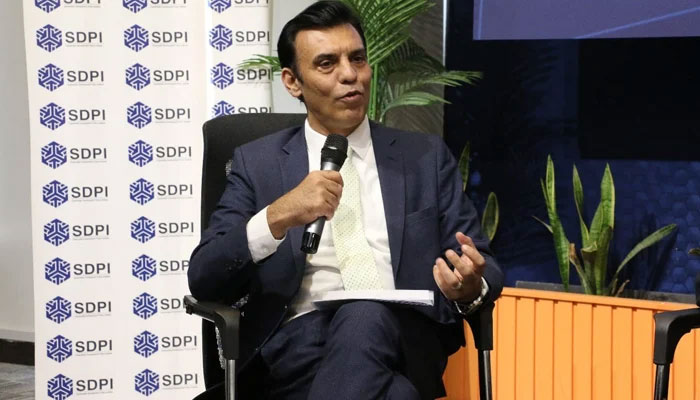
Islamabad : Dr Abid Qaiyum Suleri, Executive Director, SDPI, has insisted upon the need for community involvement and the integration of green technologies within Special Economic Zones (SEZs) to ensure sustainable development.
Dr Suleri was addressing a conference on “CPEC & beyond: how China enabled Pakistan’s energy transition” organised here by Sustainable Development Policy Institute (SDPI). Dr Suleri underscored various challenges, including high electricity costs, lack of awareness among policy makers and the necessity for a coherent industrial policy. He highlighted the significance of SEZs, particularly in the context of energy transition and industrial growth under the China-Pakistan Economic Corridor (CPEC). He also highlighted the role of China in facilitating renewable energy development, the importance of localisation of supply chains and the need for a strong regulatory framework to attract investment. He underscored various challenges, including high electricity costs, lack of awareness among policy makers and the necessity for a coherent industrial policy.
Hamid Sharif, former Managing Director, Asian Infrastructure Investment Bank (AIIB), emphasised the need for security, policy consistency and trust. “Investors, both foreign and local, require assurance. In China, a signed contract is honoured. Pakistan must replicate this standard,” he said while advocating for public-private partnerships. He proposed innovative financing tools like escrow accounts to safeguard investor payments. He said we must abandon outdated mindsets. Investors are not colonisers, they are partners.
Pakistan’s former Ambassador to China, Moin ul Haque, underscored the scale of cooperation under the China-Pakistan Economic Corridor (CPEC), which has brought vital investment into solar and wind energy projects. Pakistan was the first country to join China’s global green initiative. Now, we must crystallies that partnership into a tangible, actionable clean energy framework,” he added. Naghmana Hashmi, another former ambassador to China, stressed the urgency of reducing Pakistan’s dependence on energy imports and diversifying its energy mix. She also emphasised the need to support carbon markets and policy frameworks. While carbon trading remains in its early stages, partnerships with China offer a real opportunity for Pakistan to build an effective carbon economy, she said.
Mustafa Hyder Sayed, Executive Director, Pakistan-China Institute, said that we must stop over-promising and under-delivering. Our goals should be grounded in realistic, bankable projects. Referring to the failure of past ventures, he stressed the importance of feasibility studies, transparent commercial contracts, and third-party validation. He said transitioning from coal to renewables is not optional, it is essential. Countries like the Philippines are retiring coal plants by 2035. Pakistan must follow suit, he said.
Zeeshan Ahmed, former Chief Operating Officer, Skyelectric, focused on solar potential and decentralised energy systems. Pakistan has 340 sunny days a year, but our installed capacity remains far below the potential due to flawed data and inconsistent implementation, he noted. He emphasised battery storage, rooftop solar and smart software solutions as key to making energy self-sufficient.


