
China’s growth amid headwinds
Internationally, there have been misleading theories propounded about so-called slowing of Chinese economy
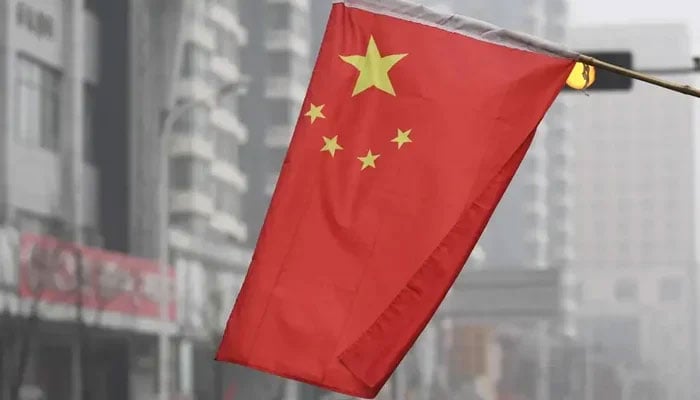
The just-concluded annual sessions of the National People's Congress, China's top legislature, endorsed the main economic targets proposed by Premier Li Qiang in the Government Work Report, including a GDP growth rate of around 5.0 per cent and a consumer price index increase of around 2.0 per cent. After successfully meeting the 5.0 per cent GDP growth target in 2024, China continues to reassure the world of its ability to sustain stable growth.
Internationally, there have been misleading theories propounded about the so-called slowing of the Chinese economy. After achieving an extraordinary annual average GDP growth of around 10 per cent for four decades since its reform and opening-up in 1978, it is reasonable for a mature economy like China to shift gears for high-quality momentum. It is ironic that other advanced economies achieving 2-3 per cent growth rate is celebrated but China's 5.0 per cent growth is dismissed as evidence of underperformance.
Today's China is the world's largest trading nation, importing and exporting almost $6 trillion worth of merchandise. It is also the world's factory with 30 per cent of the global manufacturing capacity, exceeding that of the United States, Germany, France and Japan combined. China has already become the world leader in solar panels, batteries, wind turbines and electric vehicles to mitigate carbon emissions.
China's success in countering challenges has been buttressed by strong foundational pillars on which the economy is built, marked by flexibility and agility to quickly adapt to changing circumstances.
A country once heavily reliant on coal power has become the world leader in renewable energy in just a few years. People all over the world are left impressed by the marvel of the infrastructure of high and durable quality that has transformed China, connecting various distant parts of the country into a unified market economy, and making the flow of goods competitive.
The real story is its silent revolution in building human capital. The qualities of discipline, entrepreneurship, effort and strong ethics already inherent in the working-age population have been fortified by investment in science, technology, engineering and mathematics at the formal school and university levels, while developing technical and vocational skills. This combination of high-end scientists and engineers working with well-trained and skilled shop floor technicians has brought about the revolution.
Just to cite one figure: Until 2000, the United States produced more PhDs in STEM (science, technology, engineering and mathematics) subjects. By 2017 the two countries equaled the number but by 2025 China produced 70,000 PhDs while the US turned out only 35,000. In all, about six million young Chinese trained abroad, mostly in the US, the United Kingdom, Canada and Australia, and then returned home between 1978 and 2021, according to data from the Center for China and Globalization, a Beijing-based think tank. Some of them were funded to set up their own laboratories under a government support program. Data from the United Nations Educational, Scientific and Cultural Organization showed over one million Chinese youths are studying abroad, making China the world's largest source of students.
Chinese universities such as Tsinghua University and Peking University are now rated among the world's top universities. The number of STEM graduates produced annually is five million out of 12 million students. The team members at DeepSeek, a Chinese artificial intelligence firm that has shaken Silicon Valley, were all trained in Chinese universities. Investment in research and development — among the highest in the world — is beginning to pay off and will continue to provide the edge to China.
China's State system is run by technocrats and highly educated officials who are selected on merit and their promotions are based on performance and output on the job. The unique feature of the governance system in China is that policies are made at the central level but implementation takes place at the local level. Greater devolution of power, authority and resources have led to efficient allocation and utilisation of resources. State guidance at the macro level and market mechanisms at the micro level explain rapid growth spurts and technological uptake in such a short span of time. Fast decision-making, tight cost controls and first-rate management characterize the Chinese governance system.
China creates the framework for the market and promotes entrepreneurship, protects private property rights and ensures the economic actors contribute towards the planned goals.
Intangible goods — systems, rules and policies — increase production efficiency, promote competition, facilitate specialisation, protect the environment, and reduce risks and uncertainty. The private sector accounted for nearly all the growth in employment and two-thirds of overall growth between 1978 and 2012. The share of state-owned enterprises has declined from two-thirds in 2000 to one-third. Local governments improve the local business environment to allow village enterprises to compete in attracting investment and developing infrastructure.
Strong integration with the global economy and opening up to foreign investors have produced a cadre of highly competent professionals, especially managerial and technical professionals who have incorporated best global practices in their operations. A high savings rate has made it possible to invest in large infrastructure projects and raise productivity. The large and growing middle-income group with aspirations for global goods and services is a positive for China even if international trade and capital flows are disrupted.
These foundational pillars will enable China to meet fierce global trade turbulence and other challenges in future with fortitude.
This piece was originally published in: China Daily earlier this month. The writer is the author of ‘Governing the ungovernable’.


