
Choked Pakistan
Lahore, which is culturally and economically heartbeat of country, has in recent years also become synonymous with toxic smog
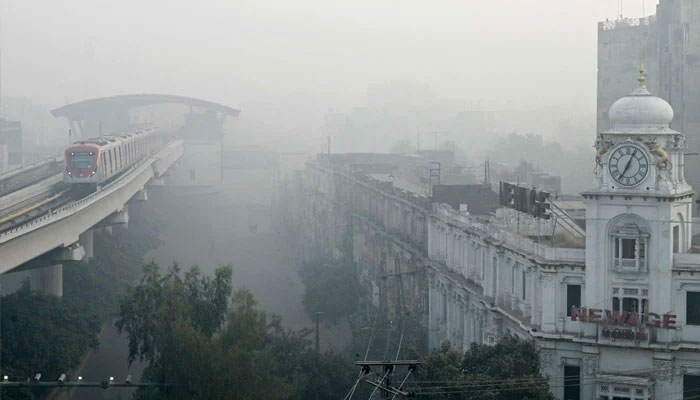
In an unprecedented environmental disaster, Pakistan finds itself situated right at the heart of catastrophe. It is increasingly becoming one of the most polluted nations globally, as a result of the bad air quality levels that place the lives of city residents – such as those in Lahore — at risk.
These environmental impacts have not elicited meaningful action from the state, leaving affected individuals to bear the brunt of an ever-polluted atmosphere, untreated sewage and ever-mounting environmental debts.
Recent data has confirmed Pakistan's place as one of the three most polluted countries in the world, while some reports have even suggested that it has now taken over the second spot. In cities such as Lahore, Faisalabad, and Peshawar, the AQI goes above 300 most of the time, which is in the hazardous category and is known to cause serious respiratory, cardiovascular and premature mortality conditions. The World Health Organization's safe air quality standard is something no city in Pakistan meets at the moment.
Lahore, which is culturally and economically the heartbeat of the country, has in recent years also become synonymous with toxic smog. This usually takes place in the winter when emissions from crop burning, vehicles and industries slowly trap toxic air over the city. The government, in response, promises school and office closure but sadly remains ineffective and does little to deal with the roots of the crisis.
While air pollution grabs the headlines, Pakistan faces a more dire situation with water pollution. Just out of Karachi, an estimated 700 million gallons of untreated sewage flow directly into the Arabian Sea daily. Along with it goes most industrial waste, medical discharge and household sewage which turn the coastlines into more or less a toxic soup of pollutants. In some areas of Karachi, the marine ecosystem seems to be collapsing. The beaches in Karachi, which were once the spots for weekend getaways, have now become spaces for throwing diseased waste.
And there is a pin-drop silence from policymakers. No substantial investment has been made in the sewage treatment plant and the city drainage system, built decades ago, continues to collapse under the weight of urban sprawl. All this points not only to ecological destruction but also to severe health implications. It means there will be massive outbreaks of cholera, typhoid and skin infections in coastal communities.
The economic cost, in this case, is mind-boggling. Figures suggest that due to diseases, economic disruptions and the impacts of climate change, Pakistan runs up an environmental debt of nearly Rs1 billion per day. The amount goes far above and beyond what the country is investing in priority social sectors and yet there is no clear policy roadmap to lower this financial burden.
The deepening ecological crisis also imperils the economic future of the nation. Productivity is under the assault of polluted air, tourism is at its unhappy best in weak environmental conditions and misery due to scarcity of water, and Pakistan is losing its potential to maintain economic growth.
So, what needs to be done? The unmistakable environmental crisis of Pakistan bears no truth: it is the evidence and accumulated works of many wrong policies and systemic neglect. The things the government needs to do are: one, declare an Environmental Emergency. Such a declaration would go a long way not only in bringing home the gravity of the situation but also in mobilizing resources towards the fight against pollution at both the national and international levels.
Two, invest in air quality. There should, therefore, be legislation on emission standards for vehicles as well as initiatives in making alternative greener forms of energy the national energy solutions. Three, develop a plan for sewage treatment. The untreated sewage problem of Karachi needs to be addressed on a large scale immediately with major plants for treatment and strictness in rules on industrial waste disposal.
Four, enforce environmental laws. Many industries show no signs of relenting in their environmental pollution. Heavy fines and strict enforcement must become the norm.
And finally, promote afforestation and green initiatives. Replication of urban forests like the Clifton Urban Forest in Karachi is encouraged in various major cities to help combat pollution.
At the breakneck speed at which deterioration unfolds, Pakistan’s environment speaks volumes about the price the nation once failed to pay for inaction. Clear skies and clean water — rightfully sustainable for the people of Pakistan — come with just one condition: urgency. This is the moment before it becomes irreversible.
The writer is an expert onclimate change and sustainabledevelopment and the founder of the Clifton Urban Forest. He tweets/posts @masoodlohar and can be reached at:mlohar@gmail.com


