
Billion of Indians have no spending money: report
In fact, this has been a long-term structural trend that began even before pandemic
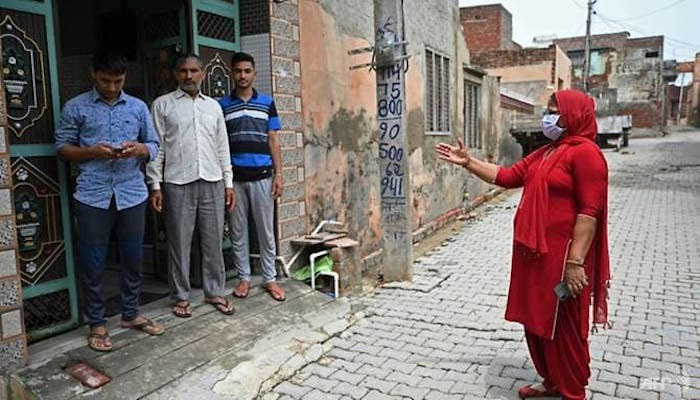
NEW DELHI: India is home to 1.4 billion people but around a billion lack money to spend on any discretionary goods or services, a new report estimates.
The country’s consuming class, effectively the potential market for start-ups or business owners, is only about as big as Mexico, 130-140 million people, according to the report from Blume Ventures, a venture capital firm.
Another 300 million are “emerging” or “aspirant” consumers but they are reluctant spenders who have only just begun to open their purse strings, as click-of-a-button digital payments make it easy to transact. What is more, the consuming class in Asia’s third largest economy is not “widening” as much as it is “deepening”, according to the report. That basically means India’s wealthy population is not really growing in numbers, even though those who are already rich are getting even wealthier.
All of this is shaping the country’s consumer market in distinct ways, particularly accelerating the trend of “premiumisation” where brands drive growth by doubling down on expensive, upgraded products catering to the wealthy, rather than focusing on mass-market offerings.
This is evident in zooming sales of ultra-luxury gated housing and premium phones, even as their lower-end variants struggle. Affordable homes now constitute just 18% of India’s overall market compared with 40% five years ago. Branded goods are also capturing a bigger share of the market. And the “experience economy” is booming, with expensive tickets for concerts by international artists like Coldplay and Ed Sheeran selling like hot cakes.
Companies that have adapted to these shifts have thrived, Sajith Pai, one of the report’s authors, told the BBC. “Those who are too focused at the mass end or have a product mix that doesn’t have exposure to the premium end have lost market share.”
The report’s findings bolster the long-held view that India’s post-pandemic recovery has been K-shaped -- where the rich have got richer, while the poor have lost purchasing power. In fact, this has been a long-term structural trend that began even before the pandemic. India has been getting increasingly more unequal, with the top 10 percent of Indians now holding 57.7 percent of national income compared with 34 percent in 1990. The bottom half have seen their share of national income fall from 22.2 percent to 15 percent.
India’s middle class -- which has been a major engine for consumer demand -- is being squeezed out, with wages pretty much staying flat, according to data compiled by Marcellus Investment Managers. “The middle 50 percent of India’s tax-paying population has seen its income stagnate in absolute terms over the past decade. This implies a halving of income in real terms [adjusted for inflation],” says the report, published in January.
“This financial hammering has decimated the middle class’s savings -- the RBI [Reserve Bank of India] has repeatedly highlighted that net financial savings of Indian households are approaching a 50-year low. This pounding suggests that products and services associated with middle-class household spending are likely to face a rough time in the years ahead,” it adds.
The Marcellus report also points out that white-collar urban jobs are becoming harder to come by as artificial intelligence automates clerical, secretarial and other routine work. “The number of supervisors employed in manufacturing units [as a percentage of all employed] in India has gone down significantly,” it adds. The government’s recent economic survey has flagged these concerns as well.







-
 'Buffy' Star Nicholas Brendon's Death Case Takes Massive Turn
 -
 FKA Twigs Takes Legal Stand Against Ex Shia LaBeouf
 -
 ‘Progressive’ Kate Middleton Snubs Outdated Royal Etiquette
 -
 Kylie Kelce Explains Why She Avoids Raising Kids With 'silver Spoon'
 -
 Meghan Markle Is Above Royal Family ‘empty Threats,’ Says Insider
 -
 Anne Hathaway Opens Up About 'defeated' Feeling As Working Mom
 -
 Shamed Andrew Should Testify In Epstein Case As ‘act Of Service’
 -
 What Really Happened Before Nicholas Brendon Was Found Dead At Home?
 -
 Sarah Ferguson Branded ‘most Famous Missing Person’ In UK Right Now
 -
 Why King Charles Does Not Need A Driving License? Expert Reveals
 -
 Did Graham Norton Really Sign NDAs For Taylor Swift’s Wedding?
 -
 ‘Polite’ King Charles Treats Staff Better Than ‘boorish’ Andrew
 -
 Princess Beatrice's Husband Raises Eyebrows With Deleted Instagram Post
 -
 Dua Lipa 'snubs' Priyanka Chopra
 -
 Will Taylor Frankie Paul Still Get Her 'Bachelorette' Salary?
 -
 'Harry Potter' Returns: First Glimpse Of HBO's New Series