
Banks disburse Rs1.26tr in agriculture loans in H1FY25
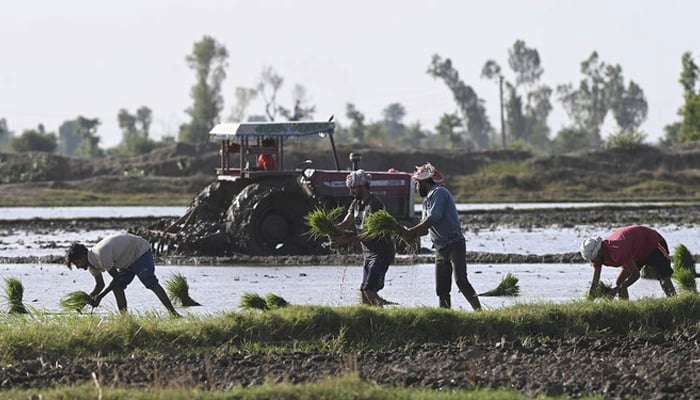
KARACHI: Banks extended farm credit amounting to Rs1.26 trillion in the first half of fiscal year 2025, with the number of borrowers increasing modestly to 2.86 million, the central bank said in a statement on Friday.
The State Bank of Pakistan (SBP) convened the Agricultural Credit Advisory Committee (ACAC) meeting in Multan, reaffirming its commitment to boosting agriculture financing and driving sustainable growth in the agriculture sector.
In his keynote address, Governor of the SBP Jameel Ahmad stressed the need for the banks to expand their rural presence by designating more branches for agri-lending and deploying additional agricultural credit officers to increase the number of small borrowers, particularly in underserved and unserved areas.
In FY24, a record credit disbursement of Rs2.21 trillion was witnessed, reflecting a 25 per cent annual increase, which assisted farmers in managing input costs and improving productivity. Looking ahead, Ahmad urged the banks to fully implement their agricultural credit expansion plans and invest in human resources, infrastructure and digital technologies to better serve the farmers. He encouraged financial institutions to collaborate with relevant government departments, fintech, microfinance institutions and agri-tech companies to deliver end-to-end digital loan solutions and advisory services tailored for small farmers.
The SBP’s governor underscored the vital role of agriculture in the economy, highlighting its contributions to food security, rural livelihoods, and its integration with the industrial and services sectors. While acknowledging the sector’s persistent challenges -- low productivity, climate change impacts and limited financial inclusion -- he urged banks to prioritise agricultural finance as a core and viable business line.
He noted that the agriculture sector achieved remarkable growth during FY24. In the first quarter of FY25, however, agricultural growth slowed down to 1.2 per cent from 8.1 per cent last year and has resulted in a relatively slower GDP growth of 0.9 per cent against 2.3 per cent recorded in the same period last year. He sees signs of a modest wheat crop, highlighting the need for resilience and innovation in agriculture for sustained growth.
Ahmad highlighted three key areas for stakeholders to focus on to uplift the agriculture sector. First, addressing the climate change challenges calls for targeted strategies to mitigate risks and enhance resilience by adopting climate-smart agriculture, green financing, and farmer training to ensure food security and sustainable growth. Second, leveraging modern technology is crucial for transforming Pakistan’s agriculture.
Globally, geospatial technologies are transforming agriculture by enabling precise crop monitoring, enhancing resource management, and minimising production risks. Pilot projects in Pakistan can adopt these tools to enhance productivity and reduce resource waste. Third, enhancing focus on the livestock sector, which contributes 14 per cent of GDP and 2.1 per cent of the country’s total exports, offers a massive opportunity for diversifying income streams and reducing dependency on traditional crop cycles by creating exportable surplus. Adopting advanced technologies like efficient breeding, improved dietary regimes, and manure management systems can increase productivity and also align with Pakistan’s climate goals to reduce greenhouse gases by 50 per cent till 2030.
While listening to the issues faced by farmers from Balochistan, Ahmad shared that the SBP will take the lead and convene all the stakeholders, including relevant government departments, banks, farmers’ associations, and service providers in Quetta, to take a holistic approach to agriculture credit bottlenecks faced by farmers in Baluchistan. This should be followed by other provinces as well.
A key highlight of the meeting was a session on climate-smart agriculture, which provided actionable insights on leveraging geo-spatial technologies for precision crop monitoring, optimising resource allocation, and mitigating climate risks. The session also showcased the Climate Resilience Fund, a World Bank initiative, as a vital financing opportunity for microfinance banks to support climate adaptation strategies in agriculture.







-
 Paul Simon Goes Unfiltered On Elvis Presley’s Later Career And Film Choices
 -
 'Gilmore Girls' Most Hated Character Is Getting Major Redemption Online
 -
 Alix Earle Opens Up About Age-gap Dating After Tom Brady Speculation
 -
 US And Iran Report Progress On Talks Ending War
 -
 Lena Dunham Recalls Husband's First Impression Of Her
 -
 King Charles Charity Ends Chelsea Flower Show
 -
 'The Mandalorian And Grogu' Face Limits Of Force At Box Office
 -
 Prince William Reveals Name Of Princess Charlotte's Favorite Football Team
 -
 Prince William And Harry’s Uncle Gets Beloved Painting Back After Wedding
 -
 CDC Expands Mandatory Ebola Screening To Atlanta’s Hartsfield-Jackson International Airport
 -
 Idris Elba Gets Candid About James Bond Casting Rumours
 -
 Miley Cyrus Fiancé Maxx Morando Mocked Over Walk Of Fame Photoshoot
 -
 Kyle Busch's Family Reveals NASCAR Racer's Cause Of Death
 -
 China’s DeepSeek Restructures Pricing With A Permanent 75% Cut On V4-Pro AI Model
 -
 Whereabouts Of Katie Price's Husband Lee Andrews Confirmed By His Father
 -
 UK Dog Owners Could Regret It For Life If They Ignore These Heatwave Rules