
Goal to end extreme poverty by 2030 ‘out of reach’: World Bank
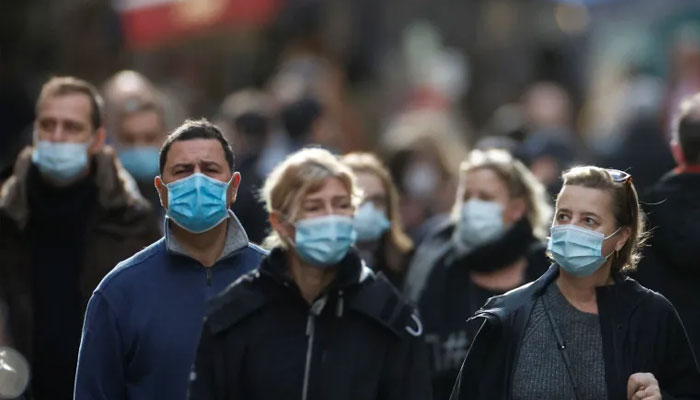
WASHINGTON: A global target of ending extreme poverty by 2030 is “out of reach,” said the World Bank on Tuesday, adding it could take three decades or more to do so.
“Global poverty reduction has slowed to a near standstill, with 2020-30 set to be a lost decade,” according to a new report assessing progress on eliminating poverty after the Covid-19 pandemic.
The world is experiencing serious setbacks after decades of progress, noted World Bank senior managing director Axel van Trotsenburg.
This comes amid overlapping challenges including slow economic growth, the Covid-19 pandemic, as well as climate shocks.
He warned that with these crises, “a business-as-usual approach will no longer work.”
Almost 700 million people, or 8.5 percent of the global population, live on less than $2.15 daily -- the threshold for extreme poverty.
This is set to remain at 7.3 percent in 2030.
Today, extreme poverty remains concentrated in countries with low growth and fragility, many in Sub-Saharan Africa, the World Bank said.
And 44 percent of the world´s population lives on below $6.85 a day, which is the poverty line for upper-middle-income countries.
“The number of people living under this poverty line has barely changed since 1990 due to population growth,” the bank noted.
It added that “future poverty reduction requires economic growth that is less carbon emissions-intensive than in the past.”
Nearly one in five people are expected to be hit by a severe weather shock in their lifetime, and will struggle to bounce back from it, according to the World Bank.The report said there had also been little progress on another development goal – to reduce inequality. While the number of countries with especially large gaps between rich and poor had declined from 66 to 49 over the past decade, the percentage of people living in countries with high levels of inequality had remained unchanged at 22 percent. These countries were concentrated in Latin America, the Caribbean and sub-Saharan Africa.
Max Lawson, the head of inequality policy at Oxfam, said: “With the richest 1 percent capturing more wealth than the bottom 95 percent, it is little wonder that it will take a century to end poverty. Rapidly and radically reducing inequality in every country should be the absolute top priority of the World Bank.
“We agree with the World Bank that ordinary people across the world are facing a lost decade, which will scar a whole generation, but at the same time the richest are looking at their best decade ever and these two things are closely linked.”







-
 'Hollyoaks' Star Keiron Richardson Confirms Speculation About Major Character Exit
 -
 King Charles, Harry Reconciliation: Royal Expert Reflects On 'work Going On Behind The Scenes'
 -
 Palace Shares Rare Update On King Charles’ State Visit To See Donald Trump
 -
 Garth Brooks's Comeback Fear Exposes Deeper Dependence After Rape Accusations
 -
 SpaceX Kicks Off IPO Process, Eyes Record $75 Billion Offering
 -
 Where Dak Prescott And Sarah Jane Ramos Stand About Their Relationship As Canceled Wedding Nears
 -
 Sarah Ferguson To Come On ‘Traitors’ Or ‘Big Brother’? Plans Come To Light
 -
 Misua, 'Drag Race: Philippines,' Breathes Her Last At 27
 -
 US Targets China Chip Sector With New Export Curbs On ASML
 -
 Kelly Ripa Makes Bombshell Confession About Pregnancy After 23 Years
 -
 King Charles True Feelings Show 'thawing' Relations With Eugenie And Beatrice Amid Andrew Scandal
 -
 Trump Administration Labeled ‘misogynistic’ Following Dismissal Of Pam Bondi And Kristi Noem
 -
 Trump Mocks Starmer As UK–US Tensions Rise Over Defence
 -
 'Peaky Blinders' Has Major Casting Shakeup For Lead Role In Upcoming Sequel Series
 -
 Quantum Computing Threat: Why Global Cybersecurity Could Collapse Soon
 -
 Jessica Simpson Reveals Rare Approach To Mastering 'Daisy Duke's Glow