Asylum seeker lifts South Korea hopes at Homeless World Cup
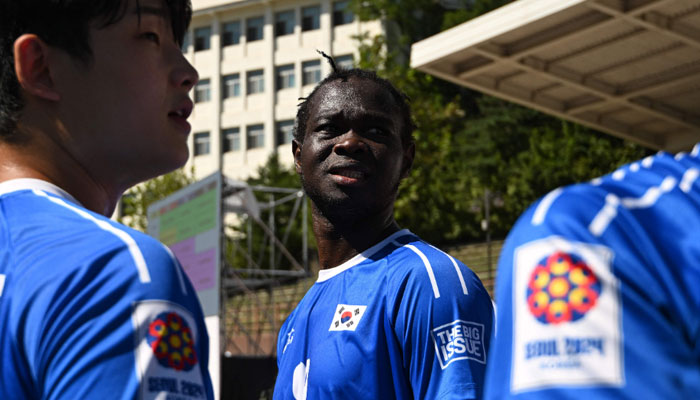
SEOUL: Fleeing civil war in his home country Cameroon, Fossi Wandji found himself stuck in Incheon airport terminal for a year when his attempt at obtaining asylum from South Korea was rejected.
But the Asian nation is now counting on him to boost its chances at the Homeless World Cup tournament -- something that could in turn bolster his bid at winning the right to stay on in South Korea.
Wandji, 27, is playing on a squad with seven other South Korean players in the tournament, which showcases national teams made up of young, unhoused people, refugees, and those who have battled substance abuse.
The tournament, newly backed by global football body FIFA, is hosted by Asia for the first time this year since it began in 2003. The event has already sparked a feel-good documentary starring Bill Nighy, plus a 2023 Korean movie called “Dream”.
But Wandji’s experience is also reminiscent of another movie, Tom Hanks’ “The Terminal”, in which the protagonist was forced to live in an airport as he was denied entry to the United States but unable to return to his own country because of a military coup.
“I left Cameroon because Cameroon had a war,” Wandji told AFP on the sidelines of the football field at Seoul’s Hanyang University. While he was trying to flee, a contact who was helping him suggested South Korea could be a good place to seek refuge. So, in October 2022, Wandji boarded a plane to Seoul.
But South Korea’s Justice Ministry immediately rejected his claim on his arrival at the airport, blocking him from leaving the terminal while he sought a reversal of the decision. While he waited, the Terminal 2 transit area became his temporary home. “I had some place where you can put a blanket,” he said.







-
 Canadian PM Visits China After A Decade Of Diplomatic Strain: What Deals Are In Focus?
 -
 New York Plans Limited Rollout Of Self-driving Taxis
 -
 Sarah Ferguson Faces Painful Choice Between Peace, Family Bond
 -
 Nvidia Clarifies ‘no Upfront Payment Needed For H200 Chips Production’
 -
 Africa First: Nigeria Set To Approve Landmark AI Rules For Digital Economy
 -
 WhatsApp Tests Built-in Supervision Feature Long Missing From The App
 -
 Iceberg A-23A Turns Blue As Scientists Warn Collapse Is Imminent
 -
 FIFA Selects Stats Perform For Betting Data And Live Streaming
 -
 Is Jessica Simpson Really Joining 'The Bachelorette'?
 -
 Brayden Point Injury Raises Concern After Early Exit For Tampa Bay Lightning
 -
 Meghan Trainor Addresses 'toxic Mom Group' Rumours Again
 -
 Mattel Autistic Barbie Doll Aims To Boost Representation And Inclusion
 -
 William Makes Calculated Move To Future-proof His Public Role Amid Harry Return
 -
 Elijah Wood Breaks Silence On Possible Return To New 'Lord Of The Rings' Film
 -
 Aaron Rodgers Wife: What The NFL Quarterback Has Said About His Marriage
 -
 Buckingham Palace Shuts Down Claims It Can Step In On Harry’s Security