
Pakistan’s climate triumph at COP28
As Pakistan grapples with the profound challenges of climate change, the recently concluded 28th Conference of the Parties (COP28) stands out as a pivotal moment in the nation’s journey towards climate resilience.
Pakistan’s commitment to combat climate change was underscored by the unveiling of revised Nationally Determined Contributions (NDCs), signaling a bold move towards achieving a 50% reduction in predicted emissions by 2030.
In a strategic step, a comprehensive National Adaptation Plan, and the submission of the first Biennial Update Report showcased Pakistan’s transparency and planning prowess. The rapid operationalization of the Loss and Damage Fund, with an impressive $575 million committed, positioned Pakistan as a proactive advocate for real climate action on the world stage.
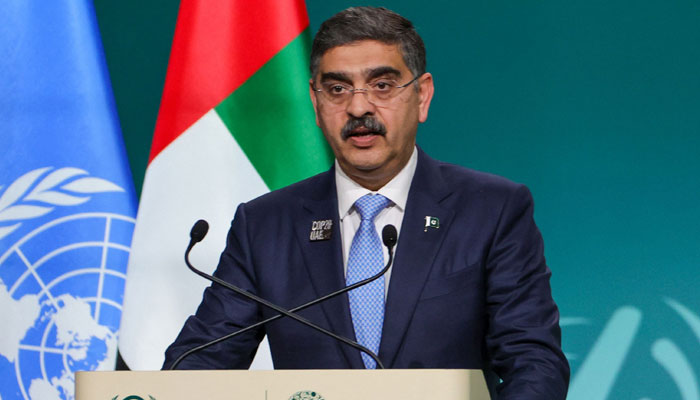
Caretaker Prime Minister Kakar delivered a poignant address to the global community during COP28, emphasizing the imperative of unified action against climate change. His announcement centered around the Living Indus initiative, demonstrating the government’s dedication to nature-based solutions and ecosystem-based initiatives. ‘Recharge Pakistan,’ a transformative $77.8 million initiative, took center stage as a flagship project, harnessing nature for climate change adaptation.
Global attention also turned to the admirable efforts of the Kashmir Orphans Relief Trust (KORT), as it was awarded the prestigious $100,000 Zayed Sustainability Prize. This recognition from the UAE, known for its commitment to sustainability and humanitarianism, not only strengthens KORT’s position as a pioneer in sustainable education but also underscores the worldwide community’s acknowledgment of the crucial role educational institutions play in combating climate change.
While celebrating achievements, it’s essential to acknowledge the challenges ahead. Ensuring accessible financial resources for large-scale initiatives, such as ‘Recharge Pakistan,’ remains a significant hurdle. Policy implementation grapples with funding constraints, skepticism, technical resource inadequacies, and a lack of sectoral policy coordination. Grassroots involvement faces challenges due to the scarcity of knowledge and technical capacities, hindering effective policy execution.
Despite being among the top 10 most climate-vulnerable countries, Pakistan’s emissions don’t proportionally reflect its vulnerability status. This unique position makes Pakistan a crucial player in global climate resilience efforts. As a party to the Paris Agreement, Pakistan’s nationally determined contributions (NDCs) align with the global goal of limiting temperature rise. Regionally, Pakistan’s initiatives contribute to resilience and cooperation in South Asia, addressing shared environmental challenges and transboundary impacts.
‘Recharge Pakistan’ emerges not only as an environmental initiative but also as a catalyst for job creation. Collaborative investments with the United States and the UAE not only meet clean energy goals but also boost economic growth.
Syed Shahid Kazmi, the writer is a country coordinator of Pakistan Humanitarian Forum


