Every monsoon now brings not just rain, but heartbreak. Pakistan stands at a crossroads, where the climate crisis is no longer a distant threat: it is here, drowning our cities, burning our crops and each season pushing our poorest into deeper poverty. Among those hardest hit are women, who bear the brunt of this ongoing cycle of destruction. You! takes a look…
For generations, the women of Sindh have prayed for rain along with the long lives, health, and prosperity of their male family members. Traditional Sindhi songs and folklore are rich with stories where rain is a blessing. The peacocks dance, the fields bloom, the air smells of earth’s joy. Children play in puddles while women laugh under grey skies. Rain meant life.
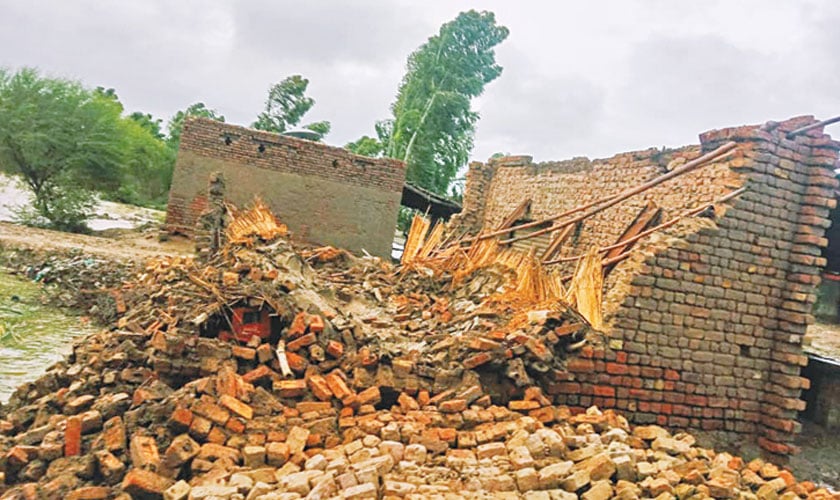
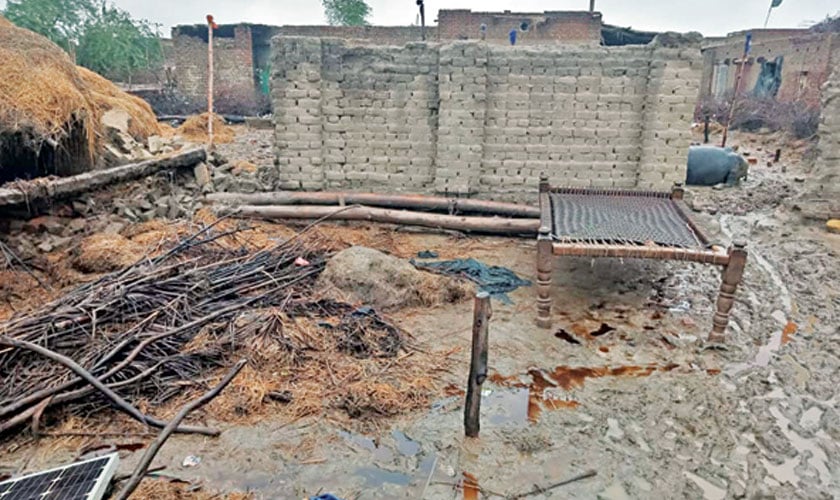
But in 2022, that life-giving rain became a weapon. The skies opened for days without pause. Dadu and other districts were swallowed by floodwaters that refused to leave. Natural waterways like the Puran and Hakro blocked for years due to unchecked encroachments and poor planning failed to channel the excess water away. What should have flowed became trapped, turning towns into lakes. The MNV (Main Nara Valley) drain, which has twice drowned the district in the past, added to the devastation. Recently, the MPA from Khairpur Nathan Shah raised this issue on the assembly floor, warning that before history repeats itself with another flood, urgent efforts must be made to repair the drain.
Women at the frontline of suffering
This wasn’t the first time Sindh had seen such devastation. In 2010, heavy rainfall in the Kirthar Mountains of Balochistan poured into Sindh’s north-western districts, unleashing massive floods in Dadu and Qambar-Shahdadkot.
As part of a disaster assessment team in Dadu in 2010, I visited villages where women were living in the open under a searing summer sun. They bathed in polluted rainwater because there was no alternative, developing painful skin irritations. When I, as a female researcher, asked questions about their specific needs, the answers revealed a glaring gap: relief operations had almost no gender sensitivity. Women told me they lacked basic necessities - extra clothes, sanitary pads, towels, powders, and medicines for skin infections, especially around intimate areas affected by polluted water, heat, and humidity. Little girls suffered the same way, but these needs were invisible in official relief packages.
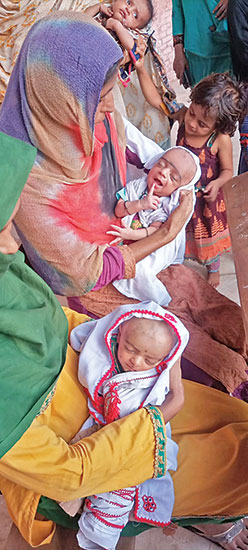
Farzana Qassim Airy, awarded for her contributions as a social activist, recalled her work during the 2022 floods in Jamshoro, where she organised humanitarian support and mobilised philanthropists to assist displaced families. She shared that women and girls bore the brunt of hidden suffering in the camps. Many girls struggled to manage their periods without privacy or supplies. Lactating mothers, weakened by lack of nutrition, were unable to produce enough milk to feed their babies. Safety and harassment were constant fears, forcing some families to return to their partially submerged homes rather than endure the insecurity of camp life.
Farzana also observed an alarming rise in early-age marriages, particularly among displaced families from Shahdadkot and Dadu who had migrated to Jamshoro camps. These marriages, often without dowry or celebration, were a desperate attempt by families to reduce their burden.
Girls faced degrading washroom conditions - pit latrines were placed in open spaces where their shadows could be seen, prompting mothers to shield them with rillis or large chadars for privacy.
She further reported that the lack of basic facilities and food drove many girls to leave their homes altogether. Some of these cases resulted in the girls ending up in shelter homes, from where they were later returned to their families through government intervention. These incidents were formally reported in the affected districts.
Beyond the physical hardships, Farzana noted the mental toll. Women endured increasing domestic violence, with husbands and mothers-in-law becoming more aggressive under the strain of displacement and loss. “These are not just stories of floodwaters,” she said. “They are stories of dignity stripped away, of safety stolen, and of rights ignored. Until these issues are addressed alongside physical reconstruction, recovery will never be complete.”
Every monsoon now brings not just rain, but heartbreak. The 2025 floods in Pakistan have claimed over 650 lives nationwide since late June, including about 171 children and 94 women. In Khyber Pakhtunkhwa, flash floods and cloudbursts proved particularly deadly - Buner district alone has suffered roughly 200 fatalities. The southern parts of the province are devastated; entire families lost their lives, homes were swept away, electricity and water supplies were disrupted, and communities remain stranded. The scale of destruction is staggering - and tragically, far exceeds early estimates.
But far from the headlines, it is women who bear the brunt of this ongoing cycle of destruction. When villages are wiped out and shelters collapse under pressure, pregnant women, nursing mothers, and young girls - already among the most marginalised - become the most vulnerable. Humanitarian assessments following the 2022 floods indicate that approximately 650,000 pregnant women are living in flood-affected areas, without access to safe birthing facilities, trained midwives, or basic hygiene supplies. Of these, up to 73,000 are expected to give birth within the next month, urgently needing skilled birth attendants and essential new-born care.
Waterborne illnesses run rampant; in many relief camps, over 70 per cent of women present symptoms of infections like UTIs due to poor sanitation and limited menstrual supplies.
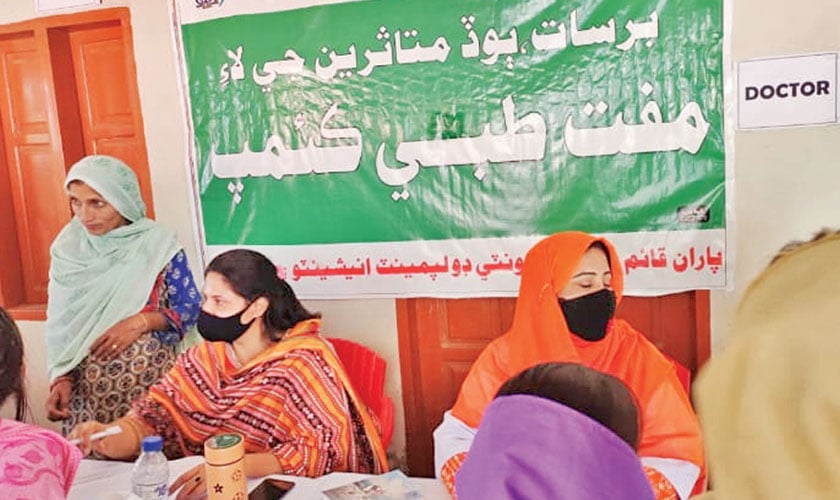
Even in dire circumstances, it is community women who step forward - like the female medical staff who braved flooded zones by donkey cart to deliver babies or provide aid. Yet when the floodwaters recede, they are often left with rubble, debt, and shattered livelihoods. One woman from Sindh lost months’ worth of crops and her livestock, and now carries debts exceeding 300,000 rupees - all while caring for her family alone. This isn’t just a disaster - it’s a deeply gendered crisis, repeated with every storm and worsened by economic strain.
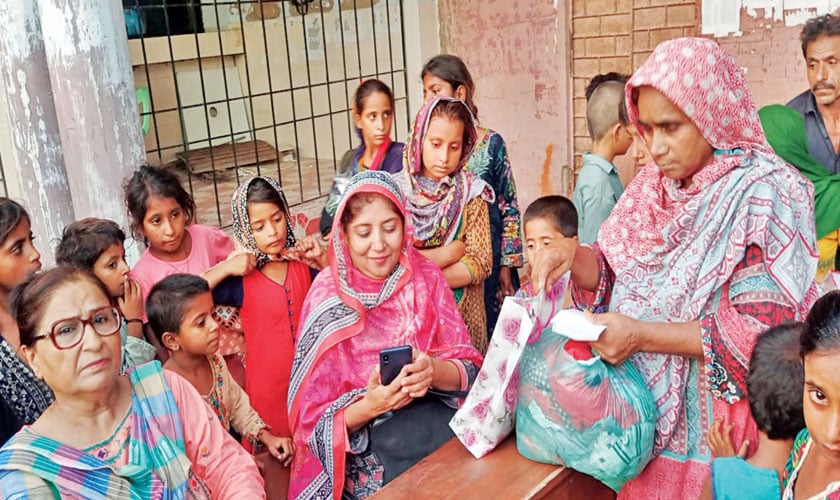
Nazeer, President of the Society for Women Rights and Development (SWoRD), a women-led organisation, shared her experiences and observations, “When I managed a flood-affected camp in Qasimabad, Hyderabad, I witnessed not only the devastation of homes and livelihoods, but also the slow erosion of dignity. Many of the families I worked with migrated to Karachi in search of survival. Some of them - once proud agricultural labourers who lived with respect in their villages - are now forced to beg near Abdullah Shah Ghazi’s mazaar. Women, men, and even children spend their days begging just to repay debts back home, while relying on langar for daily meals. This is the cruel transformation the floods have forced upon them - from self-reliance to dependence, from dignity to desperation.
The tragedy deepens with stories of violence: a young flood-affected girl, reduced to begging at a signal, was lured by men offering rations, only to suffer the horror of gang rape. These experiences show us that the flood crisis is not just about water and displacement - it is about the stripping away of safety, dignity, and humanity from the most vulnerable.”
From my own work and the testimonies of fellows like Farzana and Nazeer who have responded to floods across Sindh and southern Punjab, one truth stands out: women and children face unique and disproportionate risks in climate disasters.
In the 2022 floods, women in makeshift camps often lacked safe, private spaces for changing clothes or bathing, exposing them to harassment.
During the 2010, 2011 and 2022 floods, many pregnant women in relief camps had no access to maternal healthcare, leading to preventable complications and deaths.
Girls frequently dropped out of school permanently after displacement, either because schools were destroyed or because families prioritised boys’ education in times of scarcity.
These are not side stories - they are central to understanding how climate disasters deepen inequality.
The 2022 floods impacted 33 million people, destroyed nearly 900,000 homes, and devastated schools, livestock, and entire communities - disproportionately affecting women and girls, with no reprieve. Loss and Damage funding must go beyond bricks and mortar. It must empower safe birthing clinics, clean water and sanitation, mental health services, and livelihood restoration - particularly for women leading households and farming communities.
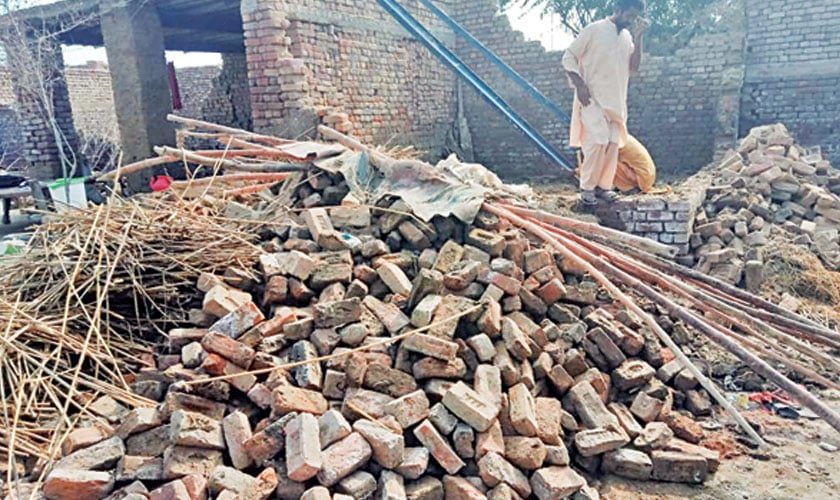
Pakistan has secured $1.4 billion from the IMF’s climate resilience fund, alongside broader economic support - but loans mean heavier debt, and no guarantee that money reaches the most vulnerable. Women demand more grant-based, community-led support that ensures transparency and direct access. Activists highlight that without oversight, aid risks being diverted away from those who most need it - women in tents, fields, and fragile shelters.
Local networks, such as the Indus Consortium, are insisting that women’s safety, dignity, and agency must guide policy - not just relief efforts. Clean water wells, mobile clinics staffed by women, privacy protections in camps, and access to income-generating tools are all non-negotiable.
Loss and Damage is not charity. It is a recognition that women - who bear the invisible costs of every flood - deserve real justice in rebuilding, rather than being side-lined by debt-laden recovery efforts.
In response to these repeated disasters, a network of grassroots organisations, led by the Indus Consortium, has developed a community-led Loss and Damage framework for Pakistan. This framework is not a top-down government plan. It draws on voices from the frontlines, especially women, farmers, and fisher folk, and proposes:
*Direct access to Loss and Damage funds for community-based organisations.
*Gender-sensitive recovery plans that address health, sanitation, and protection needs.
*Livelihood restoration with climate-resilient agriculture and income options for women.
*Debt relief as a climate justice measure.
Such a framework ensures that funding actually reaches those who need it most - not just through big infrastructure projects - but in rebuilding lives with dignity.
When negotiators gather at climate summits to discuss the Loss and Damage Fund, they often speak in abstract numbers. But for the women of Khairpur Nathan Shah who lost their homes, for the girls in Qambar-Shahdadkot who missed years of schooling, and for the farmers in Naokot whose fields were swallowed twice in a decade - the number is not the point. The point is whether the funding can prevent this suffering from repeating endlessly.
Global action must connect with local wisdom. Communities already know what they need. Women have been warning about water channels, encroachments, and poor planning for years. Yet these warnings rarely make it into policy - until after disaster strikes.
Call to action
Pakistan stands at a crossroads. The climate crisis is no longer a distant threat; it is here, drowning our cities, burning our crops, and pushing our poorest into deeper poverty. But it is also revealing our deepest inequities - gender inequities, governance failures, and economic vulnerabilities.
*We must treat women not just as victims, but as leaders in disaster preparedness and recovery.
*Make gender sensitivity a non-negotiable standard in all relief and recovery plans.
*Ensure Pakistan’s Loss and Damage framework is implemented with full community participation.
*Demand that global climate finance is grant-based, not debt-based.
I remember that rain was once a metaphor for love in Sindh. It can be again - if we learn from our mistakes, if we invest in resilience, and if the global community finally delivers climate justice.
But if we continue as we are - blocking the MNV, Puran, and Hakro rivers with short-sighted development, ignoring the voices of women in camps, and waiting for the next deluge to force action - then the rain will remain our foe.
The women of Pakistan deserve better. The girls who lost their schools deserve better.
The farmers whose fields turned into lakes deserve better.
Loss and Damage is not charity. It is a debt the world owes us - a debt that must be paid before the next storm comes.
Fiza Qureshi is a development professional and an environmentalist. Currently she is working as Campaigner with Climate Action Network International.
She can be reached at fizaqureshi044@gmail.com